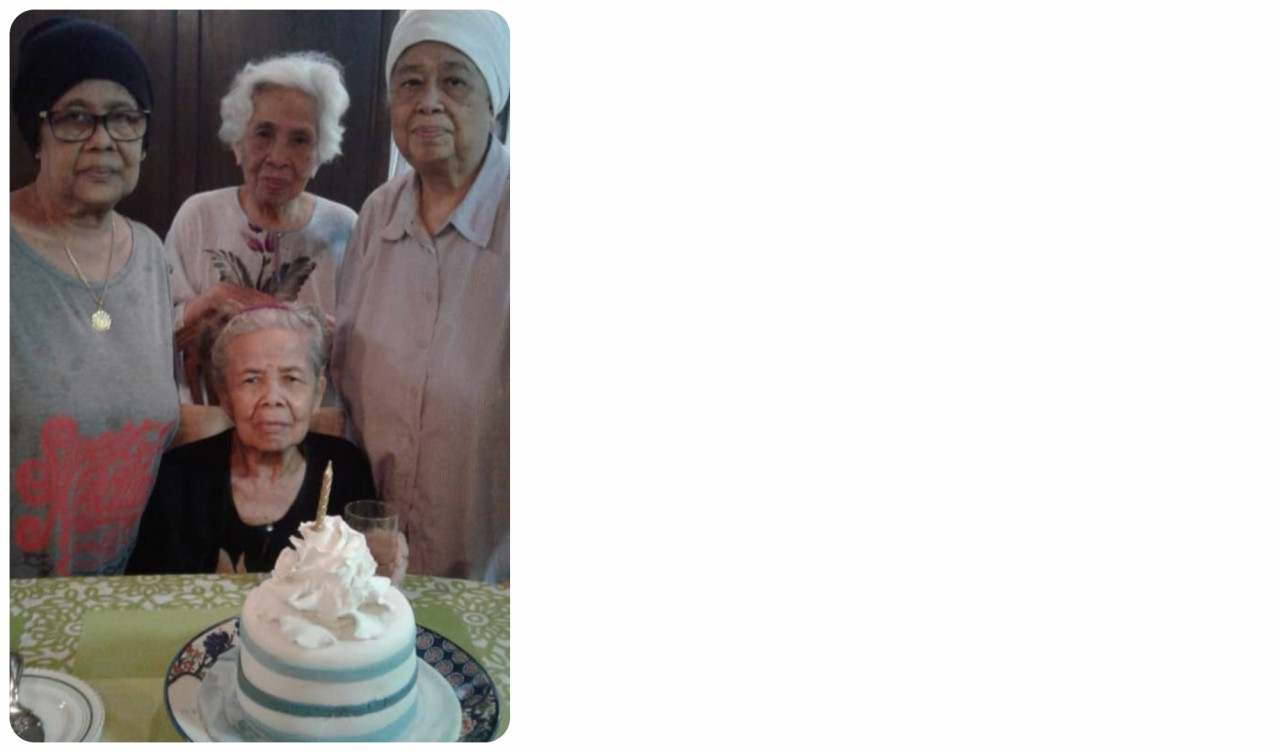
A FEW weeks before the Merdeka Day celebration in 2020, my sisters, Kakak and Oji, and I recited the Rukun Negara with our mum and two of our aunties, Wan Chor and Aunty Dareair (pronounced dare + air).
We sat them down on three chairs arranged in a row on Mak’s porch and positioned ourselves behind them. My niece, Daneah, readied the video camera placed strategically in front of us and told us to begin reciting the pledge on the count of three.
“One, two, three, begin,” she said. “Kepercayaan kepada Tuhan,” we chorused. “Kesetiaan kepada Raja dan Negara,” we continued. My eyes wandered to the pink furry microphone Daneah was holding towards us.
“Ain, look at the camera,” Daneah chided in her gentle voice. “Sorry. Got distracted by the woolly microphone.” I apologised. “I suppose we have to start over,” I said sheepishly. We decided to have Mak say a few words as an introduction before we recited aloud the Rukun Negara again.
In the first recording, we were too monotonous. In the second, we tried raising our right hand while saying the pledge but we all ended up looking stiff and much too serious. Finally, on the third take, we sounded almost perfect, more relaxed and, I must say, quite patriotic.
As Daneah showed Mak, Wan Chor and Aunty Dareair the final recording, I turned my gaze towards them. It was a joy to see them laughing and talking animatedly to each other.
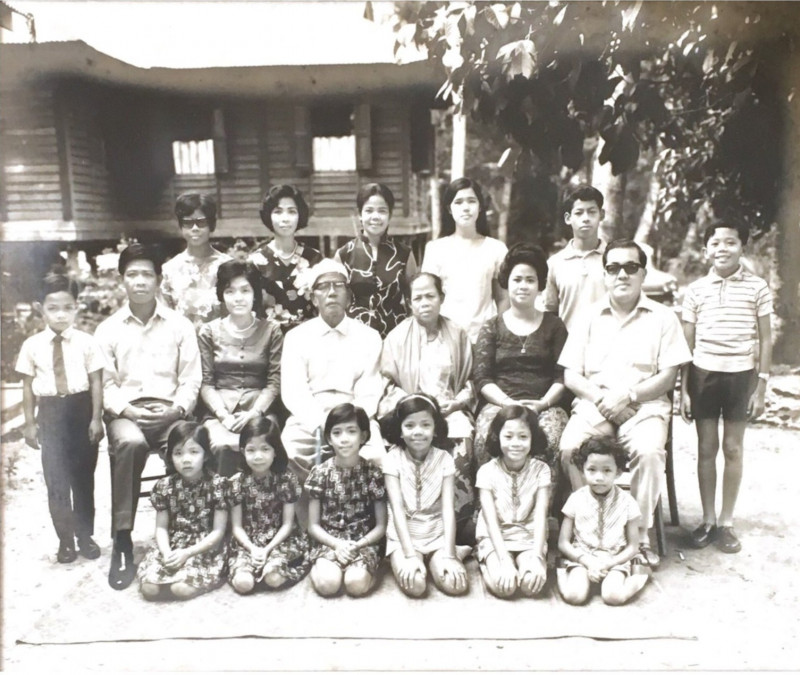
Growing up, I watched my mother’s interaction with her sisters and learned about the importance of sisterly love. Mak grew up in a small, sleepy town in Central Perak called Parit. The distinguishing landmark of this little town is the clock tower – a classic architectural structure, built in 1957 and painted bright yellow designating the town centre.
Parit does not have much to offer except for some remaining architecture structures from the colonial days such as the post office, police station, Iskandar Shah School and some old shophouses that line the main street.
When we were children, we would visit my grandparents and aunties every school term break. And although there was nothing much to do there, we were always excited. Through our innocent eyes, Parit was magical and full of wonderful places to explore and new adventures to look forward too.
As Babah drove past the clock tower, we already knew that Opah’s house was just a few minutes away. Next, we needed to cross a short bridge that rattled as Babah drove the car slowly across to the other side. A few more minutes and we would see Opah’s wooden house. Babah would toot the car horn and out came my aunties ready to greet us.
Wan Chor, Mak Busu, Aunty Kiah and Aunty Dareair, are Mak’s sisters. Wan Chor is the oldest, followed by Mak, then Mak Busu, Aunty Kiah and Aunty Dareair. Wan Chor would take charge of us. She would prepare food for us, made sure we bathed and later would roll out mattresses, stuffed with kapok (Java cotton) on the floor for us to sleep on.
Mak Busu and Aunty Kiah would spoil us rotten by playing and baking with us. But Aunty Dareair, being the youngest aunty, was in a manner of speaking, different. She was like a child herself. We would run away from Aunty Dareair because she was fond of grabbing us and smothering us with her suffocating hugs and kisses.
When it was time to leave, usually after a few days, my aunties would pack fresh food and goodies for us to take home. There would be jars of salted duck eggs, pickled maman (stinkweed) and pickled petai (stink beans), which had been painstakingly prepared weeks before in anticipation for the visitors from Kuala Lumpur (orang KL).
They would also include ‘biskut lutut’ (dried bread biscuits), our favourite treat, especially dunked in tea sweetened with condensed milk, and various other sweets and traditional desserts. Our car boot would be packed full with our luggage and these goodies.
As we bid goodbye, my aunties and Mak would cry. Their tears would flow unchecked at the thought that it’ll be another two or three more months before they would see each other again.
Now, 50 years later, my mum and aunties are still as close as ever but, sadly, everyone has moved out of the Parit house. Aunty Kiah and Mak Busu stay with their children in Kuala Lumpur while Wan Chor And Aunty Dareair are with Mak in Petaling Jaya. In normal circumstances, they would meet up every two weeks, often at my mum’s house and at other times, they would speak to each other via the telephone.
Every Friday, my siblings and I together with our families and some cousins would gather at Mak’s house for dinner, all four generations of us. Mak would prepare many ethnic Malay dishes to eat with white rice and every week she would change up the menu.
But there will always be a tray of ulam (Malay salad) consisting of fresh leaves, shoots, and roots mostly picked from Mak’s garden and eaten raw with sambal belacan (shrimp paste sambal) or sambal tempoyak (fermented durian sambal). Mak says that ulam is the secret to youthful skin and longevity.
This weekly get-together is something we look forward to after a long stressful week. We enjoy each other’s company, support each other’s pursuits and would help any family member who needs assistance or advice.
Mak’s relationship with her sisters have taught us about family love, loyalty and unity, which we have passed forward to our children. I see it in the way my children interact with each other and with their cousins and in the way they show their love for one another.
I see it in the way they support one another and how proud they are of each other’s achievements devoid of any feelings of jealousy or rivalry. I see it in the way my eldest daughter, Liyana, has taken over some of her late father’s duties by giving her siblings their monthly allowance and helping me to oversee them with so much love.
Wan Chor, Mak, Mak Busu, Aunty Kiah and Aunty Dareair each have their unique personality traits.
Wan Chor is the storyteller. Even though she is in her 90s, her mind is sharp and she still remembers all the stories about each of us during our childhood. She has taught me to treasure all my memories no matter how insignificant it may seem.
Mak has shaped me to become what I am today through her no-nonsense approach of telling me about my bad attitude including all the unpleasant details. Yet she is witty and kind with a great sense of humour.
Mak can describe a situation with words that could make something serious sound so funny. I still use some of the phrases that Mak used on us to reprimand my children.
Mak Busu is very caring. She is always doing little things that showed me how much she loves me. She has taught me to be kind and caring and to appreciate every little act of kindness and to be aware that little things do matter. It is the little things that she did for me that I remember the most.
Aunty Kiah’s most beautiful trait is her generous nature. She would share whatever she has, no matter how little, with us. She sacrificed her time to bake Hari Raya cookies for us, an occasion my siblings and I looked forward to every year until she got married and moved away. From Aunty Kiah, I have learned that generosity means giving more than just your money; it is also about sacrificing your time and effort.
Aunty Dareair is lovable, jovial and does not seem to have a care in the world. She has taught me to be more relaxed and to not get too agitated over small matters.
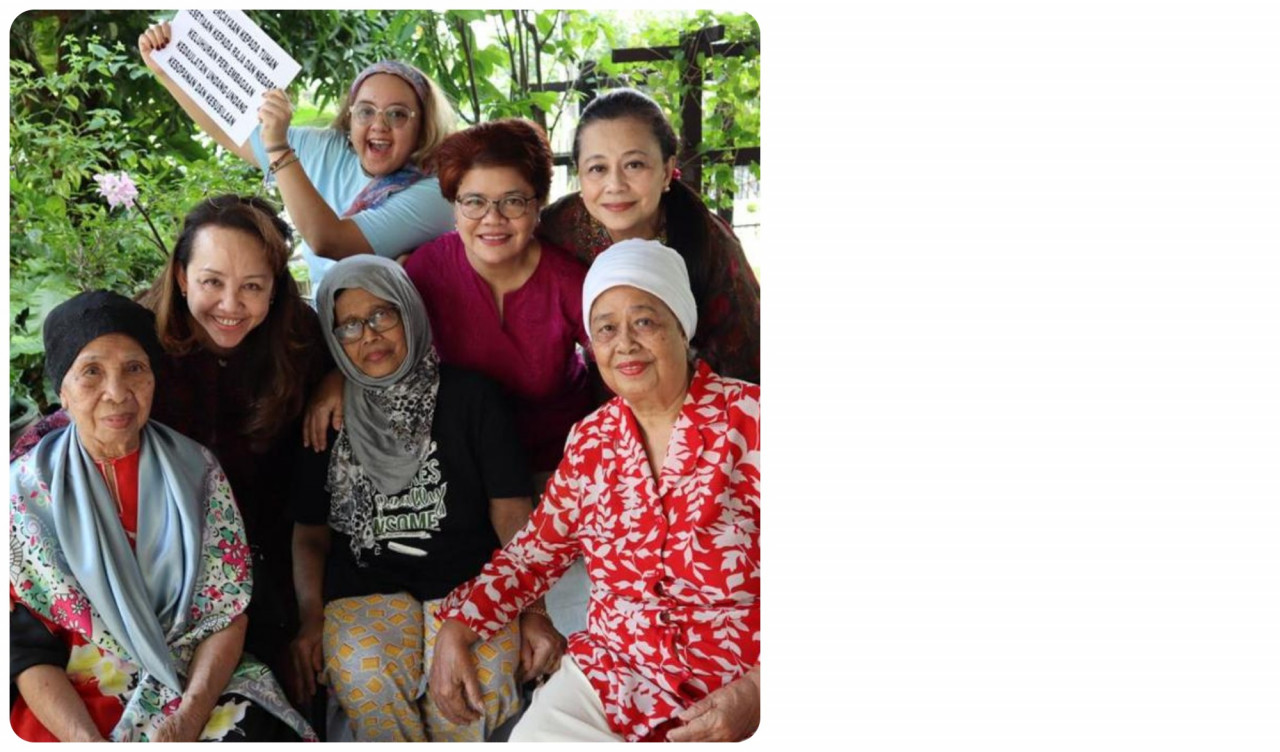
Even though Mak is not the oldest among her siblings, she has become the matriarch who holds the family together. And it is her tower of strength that everyone admires. How lucky am I to have Mak and my beautiful aunties, who are like my second mothers, still in my life today?
Wan Chor, Mak, Mak Busu, Aunty Kiah and Aunty Dareair are all in their twilight years now but they are still each other’s best friends, confidantes, soul mates and heroes. They show their love not so much through words but through their actions and their willingness to make sacrifices for each other.
They are the epitome of unconditional sisterly love. No words of love were ever uttered between them but yet all we can feel when they are together are their love for one another. It is reflected in the way they look at each other, the happiness that shines through their smiling faces whenever they are together, their hearty, genuine laughter and most of all the love that is extended to include all of us: their children, grandchildren, great-grandchildren, nieces and nephews. – The Vibes, January 31, 2021