AGAIN and again - during the peak of this Covid-19 wave and in the March 2020 MCO - we have heard health experts and activists saying, “Please adhere to the new norm.” There are many who nod in agreement but to be honest, how many of us nodding know what the new norm is? Are you following the new norm? What is the new norm? I hope that this article will cover about 10 percent of what the new norm is and how it impacts us all in our daily lives.
Very briefly, let us take a basic look at the science behind Covid-19 so that we understand why the new norm is needed and its importance in our efforts to stop the spread of infection.
Covid-19 spreads via droplets and has the potential to remain on materials for up to a few hours. It can be contracted by droplets coming into contact with mucosal areas (eyes, nose, and mouth). Thus, it is recommended that we wash our hands regularly to prevent transmission. Most of the people who get Covid-19 remain asymptomatic (without any symptoms) but are still potent in transmitting the disease to others. Others who are symptomatic develop symptoms such as fever, headache, cough, runny nose, loss of smell and / or taste, just to name a few. Also, those of high risk are with immunity impairment (weakened immune systems like those with HIV, uncontrolled diabetes, the very young and the elderly, etc.).
So, now - what is the new norm?
At the very top of the list, we have to cover our mouths and noses with a face mask. In the past, one would not think to cover one’s face – there was no reason for it. However, now it has become a norm and the law that we must mask ourselves when out in public.
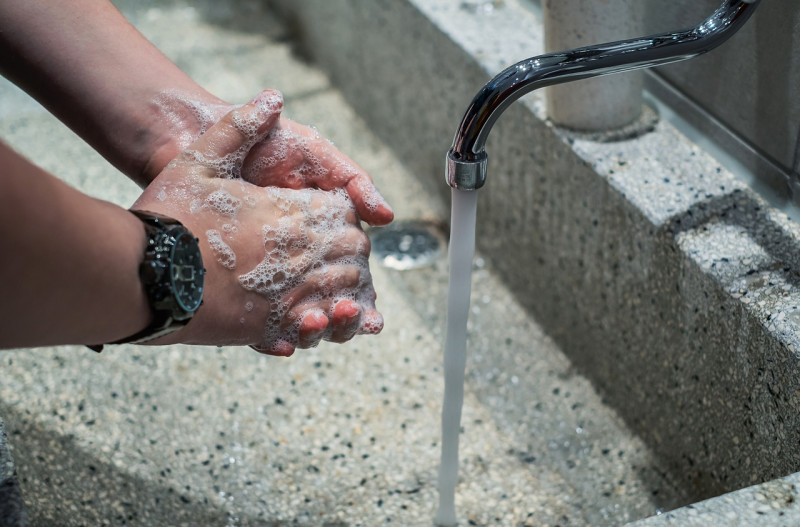
Hand washing and hand hygiene. In the past, many people did not see how important this habit was until lately. It is not only rinsing hands with water - the added use of soap / disinfectant has become absolutely vital. This helps in destruction of the virus that might be on our hands from droplet contact, thus reducing our chances for contracting Covid-19. This includes sanitising our hands with alcohol every time after coming into contact with anyone or any material, be it door handles, food packaging, etc.
Reducing physical contact with others. This includes shaking hands or bersalaman. Instead, we can show the “hand-over-heart” gesture to express our greeting. Hugging is also discouraged for the moment.
The way we eat out has also changed. The new norm is for places to prepare take-away. This also includes the use of disposable utensils. Even buffets have changed in how they are run, with servers plating your dish rather than you helping yourself and risking the contamination of entire platters of food.
We are now living predominantly online. We know that from reducing human contact - which is impossible in its entirety - people have resorted to holding face to face interaction by having online meetings. This has boosted many apps and has brought home the importance of stable and fast internet connections. It has also impacted how education must change and how jobs have also gone online, as many are now working remotely.
Sanitation in public places has changed - for the better. The regular sanitisation of public toilets, public areas like petrol stations (especially the petrol nozzle handles), lifts and escalators have been made compulsory and follow strict SOPs.
The compulsory checking-in with QR codes, temperature scanning and the provision of hand sanitisers in public areas and premises. This new norm is now an everyday habit - it is now mandatory to check-in with QR codes / pen and paper along with the temperature checks. Not allowing people into the premises if they have a high temperature or symptoms (especially in schools and government buildings) is to be expected. This has been incorporated in public areas and facilities (even e-hailing services).
The insistence on physical distancing everywhere. This has been made compulsory especially in areas where there are crowds. If you think about it, this has extended to every single part of our daily lives- even queuing up requires physical distancing, let alone seating in public areas or whilst eating. Also, the new norm of setting appointments so that there is no crowding of people has also become typical (for example in vet practices, dentists’ and doctors’ offices). This then gives rise to the increase usage of online services to settle our tasks and work where possible.
The use of additional PPE. Like it or not - the use of face shields along with surgical masks, gowns and gloves has increased tremendously. This also includes the use of sanitisation gels as people regularly make a habit of cleaning their hands knowing that they are regularly coming into contact with questionable surfaces. This has also given rise to questions about the quality and efficacy of the sanitisers and masks available to us.
The practice of uncontrollable reflexes like sneezing and coughing have gone from open-air abandon, into the elbows to prevent further spread. Realise it or not - we have become more vigilant towards our elderly and young children to protect them from Covid-19. Institutionalised populations such as orphans, geriatrics, and prisoners have also been given attention, especially with the recent spread. This will pursue a revamp on visits and an upgrade on facilities so that physical distancing will be feasible.
Like it or not, our lives have changed. Covid-19 has changed our outlook on life and how we interact, work and play. This is the way we are going to live from now on. This includes masking ourselves, constant vigilance in hand hygiene, disinfecting materials, physical distancing and a whole set of new (and necessary) SOPs to prevent the spread.
Stay safe everyone. – The Vibes, October 19, 2020
Dr. Arvinder Singh HS MBBS(AIMST,Mal) MSc Health Research (RCSI,Ireland), Occ. Health Doctor (OHD) (NIOSH, Mal HQ/18/DOC/00/00169), Diploma in Football Medicine (FIFA) is a Medical Officer (Research) at the Institute of Clinical Research Malaysia with a special interest in mental health, infectious diseases, diabetes, occupational health, sports medicine and shockwave therapy.