FUTURE pandemics will happen more often, kill more people and wreak even worse damage to the global economy than Covid-19 without a fundamental shift in how humans treat nature, the United Nations' biodiversity panel said Thursday (October 29).
Future pandemics will happen more often, kill more people and wreak even worse damage to the global economy than Covid-19 without a fundamental shift in how humans treat nature, the United Nations' biodiversity panel said Thursday.
Warning that there are up to 850,000 viruses which, like the novel coronavirus, exist in animals and may be able to infect people, the panel known as IPBES said pandemics represented an "existential threat" to humanity.
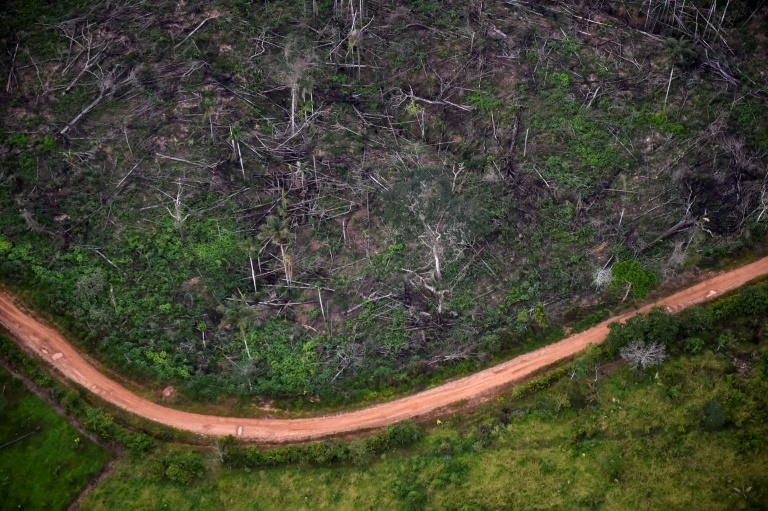
Authors of the special report on biodiversity and pandemics said that habitat destruction and insatiable consumption made animal-borne diseases far more likely to make the jump to people in future.
"There is no great mystery about the cause of the Covid-19 pandemic - or any modern pandemic," said Peter Daszak, president of the Ecohealth Alliance and chair of the IPBES workshop that drafted the report.
"The same human activities that drive climate change and biodiversity loss also drive pandemic risk though their impacts on our agriculture."
The panel said that Covid-19 was the sixth pandemic since the influenza outbreak of 1918 - all of which had been "entirely driven by human activities".
These include unsustainable exploitation of the environment through deforestation, agricultural expansion, wildlife trade and consumption - all of which put humans in increasingly close contact with wild and farmed animals and the diseases they harbour.
Seventy percent of emerging diseases - such as Ebola, Zika and HIV/AIDS - are zoonotic in origin, meaning they circulate in animals before jumping to humans.
Around five new diseases break out among humans every single year, any one of which has the potential to become a pandemic, the panel warned.
Land use
IPBES said in its periodic assessment on the state of nature last year that more than three-quarters of land on Earth had already been severely degraded by human activity.
One-third of land surface and three-quarters of fresh water on the planet is currently taken up by farming, and humanity's resource use has rocketed up 80 percent in just three decades, it said.
IPBES conducted a virtual workshop with 22 leading experts to come up with a list of options that governments could take to lower the risk of repeat pandemics.
It acknowledged the difficulty in counting the full economic cost of Covid-19.
But the assessment pointed to estimated costs as high as $16 trillion as of July 2020.
The experts said that the cost of preventing future pandemics was likely to be 100 times cheaper than responding to them, "providing strong economic incentives for transformative change".
"Our approach has effectively stagnated," Daszak said.
"We still rely on attempts to contain and control diseases after they emerge, through vaccines and therapeutics."
'Withering reminder'
The IPBES suggested a global, coordinated pandemic response, and for countries to agree upon targets to prevent biodiversity loss within an international accord similar to the Paris agreement on climate change.
Among the options for policymakers to reduce the likelihood of a Covid-19 re-run are taxes or levies on meat consumption, livestock production and other forms of "high pandemic-risk activities".
The assessment also suggested better regulation of international wildlife trade and empowering indigenous communities to better preserve wild habitats.
Nick Ostle, a researcher at the CEH Lancaster Environment Centre, Lancaster University, said the IPBES' assessment should serve as a "withering reminder" of how reliant humanity is on nature.
"Our health, wealth and wellbeing relies on the health, wealth and wellbeing of our environment," said Ostle, who was not involved in the research process.
"The challenges of this pandemic have highlighted the importance of protecting and restoring our globally important and shared environmental 'life-support' systems." – ETX Studio, October 30, 2020