Science

NASA says probe successfully stowed sample from asteroid

Scientists hope the collected fragments will help unravel the origins of our solar system

Updated 5 years ago · Published on 31 Oct 2020 7:00AM

NASA says probe successfully stowed sample from asteroid
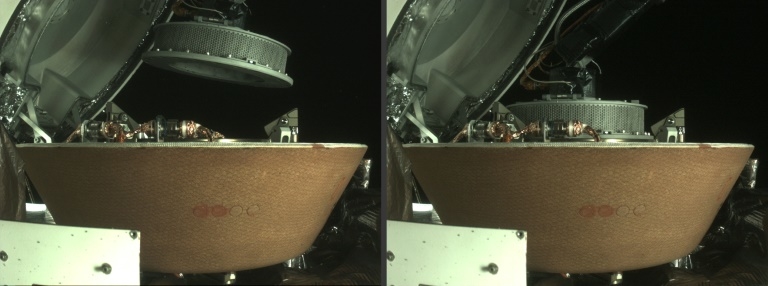
NASA said it hoped to be able to maneuver Osiris-Rex's robotic arm which had be holding the leaking particles to a storage capsule near the center of the spacecraft, drop off the sample, and close the capsule's lid. – ETX Studio pic, October 31, 2020

NASA said Thursday (October 29) its robotic spacecraft Osiris-Rex was able to stow a rock and dust sample scooped up from the asteroid Bennu, after a flap that had wedged open put the mission at risk.

"We are here to announce today that we've successfully completed that operation," said Rich Burns, the mission's project manager.

The probe is on a mission to collect fragments that scientists hope will help unravel the origins of our solar system, but hit a snag after it picked up too big of a sample.

Fragments from the asteroid's surface in a collector at the end of the probe's three-meter (10-foot) arm had been slowly escaping into space because some rocks prevented the compartment from closing completely.

That arm is what came into contact with Bennu for a few seconds last Tuesday in the culmination of a mission launched from Earth some four years ago.

On Thursday, NASA said it had been able a day earlier to maneuver the robotic arm holding the leaking particles to a storage capsule near the center of the spacecraft, drop off the sample and close the capsule's lid.

It was a delicate two-day procedure, requiring the team at each step to assess images and data from the previous step.

The probe is 200 million miles (320 million kilometers) away, so it takes 18.5 minutes for its transmissions to reach Earth, and any signal from the control room requires the same amount of time to reach Osiris-Rex.

"My heart breaks for loss of sample," said Dante Lauretta, the mission's chief scientist, but he noted that they had successfully stowed hundreds of grams (several ounces) of fragments, far in excess of their minimum goal.

"Now we can look forward to receiving the sample here on Earth and opening up that capsule," he said.

Osiris-Rex is set to come home in September 2023, hopefully with the largest sample returned from space since the Apollo era. – ETX Studio, October 31, 2020

Related News

World / 5mth

SpaceX launches its biggest, most beefed-up Starship on test flight (video)

Malaysia / 10mth

Part of object suspected to be from space found on Pekan beach

Wellness / 10mth

Penang to ensure room for exercise and social development activities, says CM

Malaysia / 1y

Supermoon and Taurid meteor shower expected tonight

Culture & Lifestyle / 1y

'Meniti Cakerawala' dance theatre odyssey set to fascinate Penangites

World / 3y

July 2023 marks hottest month on record since 1880

Spotlight

Business

Ringgit gains as oil prices plunge on hopes of Iran conflict de-escalation

Events

UKM to establish academic research platform named after Dr Wan Azizah

Malaysia

Deepavali preparations destroyed as flash floods inundate Sungai Buloh homes

Malaysia

Melaka polls: Calm campaign puts focus on what parties can offer voters

Malaysia

Anwar challenges Hadi over ‘Dajjal’ label

Malaysia

Shuhaily remains AKPS chief pending official transfer order, says lawyer

Malaysia

Najib's former wife Tengku Puteri Zainah passes away

Malaysia

Matrade exposes scam involving fake procurement orders, advance payment demands

By Alfian Z.M. Tahir

Malaysia

“Don’t panic,” Govt assures stable essential goods supply amid geopolitical tensions, monsoon threat

You may be interested

Community

AWS targets 445,000 civil servants in nationwide AI drive

By Alfian Z.M. Tahir

Events

Focus Point expands into premium eyewear market with new Johor Bahru outlet

By Alfian Z.M. Tahir

Community

Mother’s 30-minute wait for mall lift highlights plight of parents with strollers

By Alfian Z.M. Tahir

Events

UKM to establish academic research platform named after Dr Wan Azizah