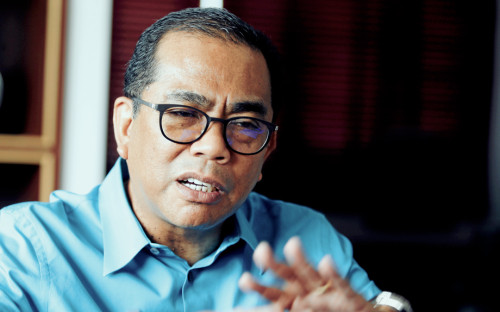
KUALA LUMPUR – Focusing on the urgent need to recognise and protect the rights of all Malaysians to bodily autonomy, UNFPA Malaysia on behalf of the United Nations in Malaysia, Singapore and Brunei Darussalam kicked off the second annual Malaysia Women & Girls Forum (MWGF) last Friday with a keynote address from Khairy Jamaluddin, Minister of Health Malaysia.
Themed “Bodily Autonomy: Ensuring Rights & Choices for Malaysia's Women & Girls,” the forum was live-streamed on Facebook and featured academics, advocates, activists, media, civil society organisations (CSOs), government and opposition representatives and members of the public.
With three plenary sessions and two keynote presentations, MWGF addresses the challenges in achieving and embedding bodily autonomy in our society, the role the media plays in promoting gender equality and youth-centric issues that reared their heads during the pandemic such as period spot checks and rape culture in schools.
The forum featured recommendations from speakers and a list of resolutions that will be presented to the government of Malaysia.
In his keynote address, Khairy emphasised that the wellbeing of a nation’s women and girls is the wellbeing of the nation itself, a crucial aspect of determining the nation’s success.
"We cannot progress nor make advancements as a nation if we do not have the full participation and properly invest in our female population. That is a simple fact. To do that, we must remove every social, legal, economic and healthcare impediment that hinders their development.”
In her welcome remarks, United Nations Resident Coordinator for Malaysia, Singapore & Brunei Darussalam Karima El Korri described women’s autonomy and unfired ability to exercise control over their bodies as “an absolute human right”.
“Realising this right and protecting autonomy is not just about securing access to health. It’s about breaking those barriers that undermine women’s agency and capabilities. It is about questioning those norms and practices that violate women and girls’ right to privacy, dignity and self-respect.”
While Malaysia has made progress on various sustainable development goals (SDGs), progress on a host of critical accelerators of gender equality and the empowerment of women and girls has been slow, said Karima, pointing to insufficient political will, a measure of denial, poor financing, weak law enforcement mechanisms and resistance within families, communities, and society at large as key causes for this lag.
Meanwhile, United Nations Population Fund (UNFPA) Malaysia Representative Dr Asa Torkelsson emphasised the negative impact the pandemic had left on women and girls but acknowledged that it presented new opportunities to seek novel ways to bridge the myriad social, legislative, logistic, behavioural and economic gaps prompted by Covid-19 and accompanying lockdowns.
“We have witnessed a so-called shadow pandemic, including increases in domestic and intimate partner violence, and escalating online gender-based violence and sexual harassment – especially targeting young girls, with lasting impacts including on mental health and wellbeing,” she said.
MWGF 2021 streamed live on UNFPA Malaysia’s Facebook page.
As the nation moves to passing sexual harassment laws to protect women in the workplace, MWGF seeks to foster an open dialogue and encourages the participation of the media, private and public sectors in sharing perspectives and formulating action plans to safeguard, promote and recognise bodily autonomy an essential human right. – The Vibes, December 18, 2021