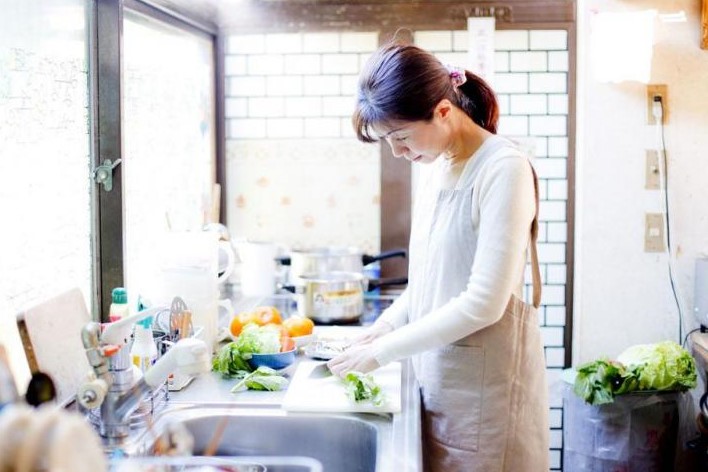
WOMEN in Malaysia allocate up to 25.5 per cent of their daily time, or about 6 hours and 7 minutes a day, to unpaid domestic work and caring for others.
The increased time commitment reflects the gender gap in the country, compared to men, who only spend about 18.1 per cent of their daily time on these activities.
Chief Statistician, Datuk Seri Dr Mohd. Uzir Mahidin said that overall, Malaysians aged 15 and above allocate an average of 5 hours and 12 minutes a day to unpaid work, which acts as an important support to the well-being of the household.
“Although these activities are not directly recorded in the formal economy, these published statistics provide a valuable insight into the value of time contributed by women.
“This is very important as a basis for formulating policies related to work-life balance, social development, the care economy and gender equality to increase national productivity,” he said in a statement.
According to Mohd. Uzir, the survey also found that the location of the home only has a limited influence on the time use patterns of residents.
“Residents in rural areas allocate 21.7 per cent or 5 hours and 13 minutes of their daily time, while residents in urban areas recorded 21.5 per cent or 5 hours and 10 minutes.
“For the breakdown by age group, the highest commitment was recorded by individuals aged 45 to 54 with 23.8 per cent (5 hours 43 minutes per day), reflecting greater domestic responsibilities in the middle stage of the life cycle,” he said.
According to ethnic data, the Others group recorded the highest percentage of time at 23.7 per cent, followed by Malays (22.6 per cent) and Chinese (20.5 per cent).
Meanwhile, Mohd. Uzir said that the involvement of Malaysians in unpaid domestic work was found to be higher than the average for member countries of the Organisation for Economic Co-operation and Development (OECD).
“Women in OECD countries on average only spend around 17 per cent of their daily time, while men internationally recorded around 9 to 11 per cent for domestic activities.
“This finding shows that the unpaid workload in Malaysia is still high for both genders, where recognition of the economic value of care is very important to create a more equitable distribution of responsibilities,” he said. – July 2, 2026