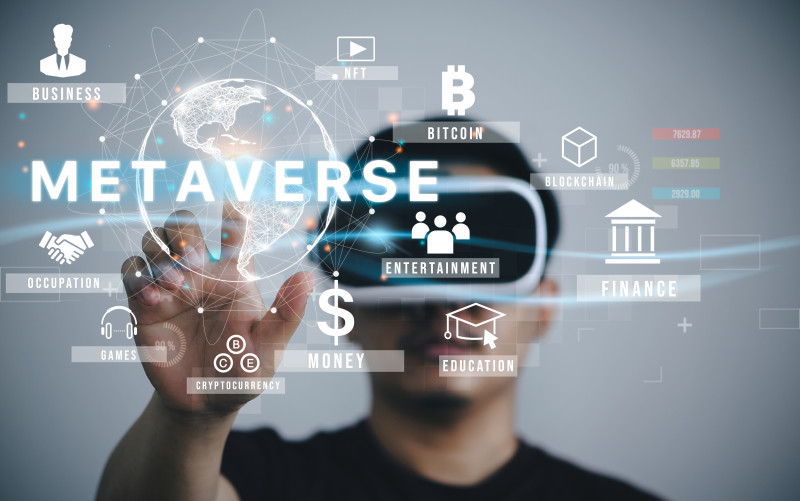
SOUTH Korea is embarking on the development of its own digital universe, the K-metaverse, as part of a program worth more than US$7.5 billion (about RM31.42 billion). A metaverse academy will be created to train future experts as well as a Korean language institute dedicated to technology to promote Korean culture.
Is the K-metaverse the first government-backed digital universe? The South Korean Ministry of Science and ICT (MIST) will allocate US$7.5 billion to its Digital New Deal programme to develop its own metaverse and AI research.
Its goal? To become the fifth-largest metaverse market within five years. For now, South Korea ranks 12th in terms of market share in the metaverse sector, according to a Yonhap News report.
To achieve its goal, the government plans to create a metaverse academy to encourage education and train 40,000 experts in the sector by 2026. In addition, in order to promote its culture, a Korean metaverse language institute will be established to introduce the country's art and culture to foreigners in its digital world.
Capitalising on the K-phenomenon
To realise its alternative digital universe, the government plans to develop a special Korean metaverse platform that integrates cultural content.
The objective is twofold: to offer Korean cultural products visibility among the largest number of people and to capitalise on the global phenomenon of Korean entertainment such as the successful 'Squid Game' TV series.
The Korean government will be behind much of the content available on the platform.
The Digital New Deal is not only aimed at the development of the Korean metaverse, but also at the creation of other technologies. Of the US$7.5 billion in the plan, 20% is to be allocated to projects described as "social overhead capital."
More concretely, these include missions to implement autonomous driving technology on two-thirds of the national roads to allow autonomous vehicles to constantly exchange data with one another. Some 65% of the funds will be spent on projects related to artificial intelligence.
Meanwhile, just 9% of the funding will be dedicated to the development and promotion of the K-metaverse. Nevertheless, South Korea's positioning in the matter could give ideas to other countries... – ETX Daily Up, January 29, 2022