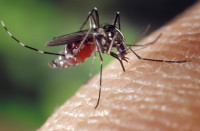
MOSQUITO-borne diseases already kill more than one million people and infect up to 700 million each year.
Rising global temperatures are causing an expansion in the areas in which mosquitoes thrive, putting communities at higher latitudes and altitudes at risk of outbreaks and making more months each year favourable to disease transmission in places already prone to mosquito-borne disease.
It’s a pandemic the World Health Organization is mobilising a global response to with its recently launched Global Arbovirus Initiative. The initiative will focus resources on risk monitoring, pandemic prevention, preparedness, detection and response to mosquito-borne viral infections, including dengue, chikungunya, Zika and yellow fever.
“There is an urgent need to re-evaluate the tools at hand and how these can be used across diseases to ensure efficient response, evidence-based practice, equipped and trained personnel and engagement of communities,” says Dr Mike Ryan, head of the WHO Emergency Programme.
Endemic already across sub-Saharan Africa, Southeast Asia and Latin America, mosquito-borne diseases are re-establishing in populations in different parts of the world.
The Early Warning System for Mosquito-Borne Diseases (EYWA) shows an upward trajectory in Europe, with malaria cases increasing by 62% and dengue, Zika and chikungunya increasing eight-fold in the past decade.
Extreme flooding in Germany last year alone saw mosquito numbers swell up to ten times the usual estimates.
Eastern Australia is another recent example of mosquitoes expanding to new geographies. The region is currently grappling with its first major outbreak of Japanese encephalitis, a mosquito-transmitted viral infection more commonly found in rural southeast Asia and the Pacific Islands.
Recent extreme flooding events along the east coast of Australia combined with warm temperatures have been described as creating a “perfect storm”, allowing the virus to move further south and gain a foothold in the country.
Warmer temperatures and increased rainfall provide conditions directly favourable to mosquito breeding, but climate change can also increase mosquito-borne disease risk in less obvious ways.
For example, when households store water in response to drought, this can increase local mosquito breeding sites and disease risk. Land-use changes can also drive migration to cities, increasing the population at risk of explosive outbreaks of dengue and other mosquito-borne diseases.
Increased global connectivity presents unique risk factors for infectious disease spread, allowing pathogens to travel further and faster than ever before. But environmental and socioeconomic factors, such as urban planning, housing design and population growth, are likely to mediate the impact of climatic events and climate change on mosquito-borne disease distribution.
One study in Brazil looked at the association between rainfall patterns and dengue and found that dengue risk was elevated following extreme rainfall in rural areas and following drought in urban areas.
Many of the methods used to combat mosquito-borne diseases – including both conventional approaches like insecticide spraying and novel techniques such as the release of sterile male mosquitoes – focus on the suppression of mosquito populations, and need to be reapplied regularly to keep mosquito numbers in check.
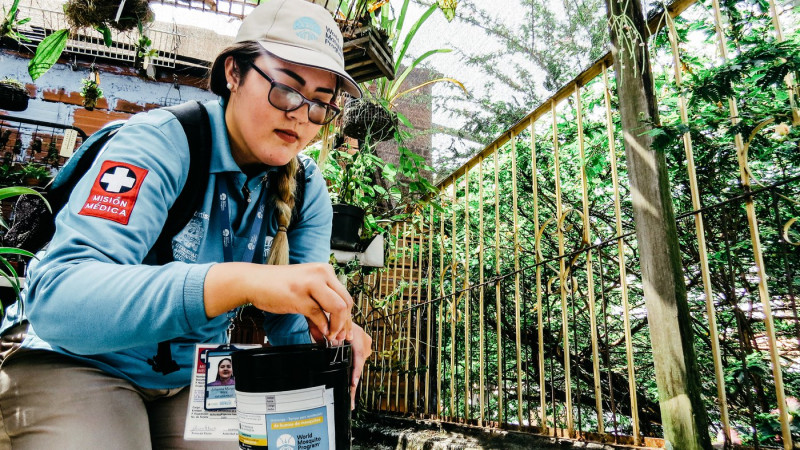
Vaccines for dengue and other mosquito-borne viruses are not yet widely available, leaving an unmet need for effective and sustainable interventions to control mosquito-borne diseases. One such intervention is the Wolbachia method, developed by the World Mosquito Program and currently in use in 11 countries.
A common natural bacteria found in about 50% of insects — Wolbachia is introduced in the female Aedes aegypti mosquitoes, preventing them from transmitting viruses to humans. The Wolbachia-carrying mosquitoes are then released in areas where mosquito-borne diseases are endemic.
As they breed with wild mosquitoes, the number of mosquitoes with Wolbachia grows over time until it remains high and further releases are not needed.
In Yogyakarta, Indonesia, a three-year randomised controlled trial was carried out and saw a 77% reduction in dengue incidence and 86% reduction in hospitalisations in Wolbachia-treated communities.
Disease surveillance is also another important aspect of combating mosquito-borne diseases. One recent study discovered that through monitoring and identifying hotspots of dengue, researchers could help create predictive maps for future outbreaks of other diseases such as Zika and chikungunya.
They collected data between 2008 and 2020 from cities in southern Mexico and found that there was a 62% overlap of hotspots for dengue and Zika, and 53% for cases of dengue and chikungunya.
In Southeast Asia, the Dengue Forecasting Model Satellite-based System (D-MOSS) gathers satellite data with local insights from partners on the ground about dengue cases, primarily in Malaysia, Sri Lanka and Vietnam.
It aims to provide advanced intelligence to government officials to control outbreaks. Similarly, Nasa scientists are working with local governments and public health officials in the US to help map the locations of disease-carrying mosquitoes and keep communities safe.
Understanding and predicting the rise and spread of mosquito-borne diseases helps governments factor health-related costs into public policy.
As Dr Anthony Fauci, director of the National Institute of Allergy and Infectious Diseases in the US, so gravely put it: “Any virus that can efficiently infect Aedes aegypti also has the potential access to billions of humans.” – The Vibes, April 13, 2022
Katie Anders is the director of Impact Assessment at the World Mosquito Program. She has worked in epidemiological research and public health practice for 15 years in the UK, Vietnam and Australia, and has expertise in the design and implementation of field trials, disease surveillance, and clinical research.
The World Mosquito Program receives funding from The Bill & Melinda Gates Foundation, Yayasan Tahija, Indonesia, The Wellcome Trust, USAID, The Australian and Queensland Governments, Australian Government’s Department of Foreign Affairs and Trade (innovationXchange), New Zealand Aid Programme, The Brazilian Government, The UK Government, International Community Foundation – Candeo Fund, The Gillespie Family Foundation, Foundation for the National Institutes of Health, New England Biolabs, KPMG, Earth Corporation, Macquarie Foundation, The Rotary Foundation, Sid and Fiona Myer and the Myer Family.
Published under Creative Commons and in partnership with 360info.org