PREVENT new businesses that don't sell artisanal products from opening. That's the latest idea from the city of Venice, designed to protect its historic centre from the effects of mass tourism.
Visited by some 30 million people every year, 'the floating city' has, over the past three decades, continually come up with new measures aimed at preserving its fragile architectural and historical heritage, classified as a World Heritage Site by Unesco.
No eating or drinking on Piazza San Marco
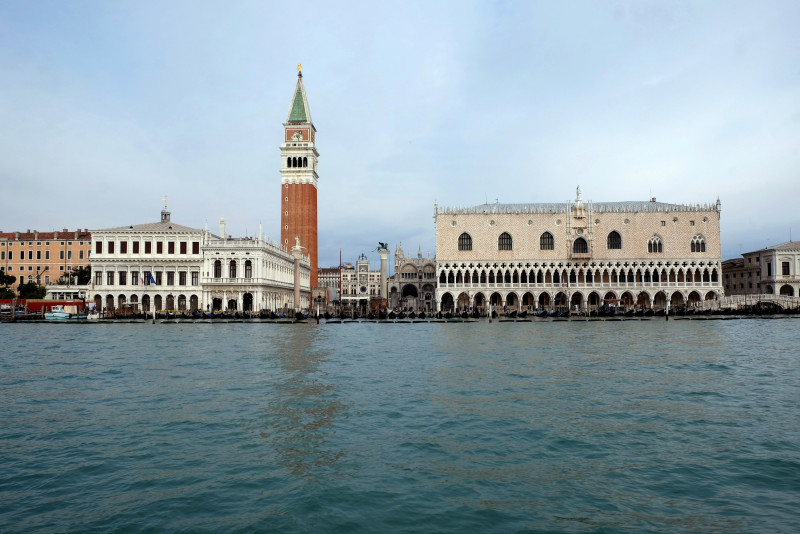
A must-see for anyone visiting the 'city of bridges' for the first time, Piazza San Marco is one of this historic Italian destination's unmissable spots. The site is so full of charms, in fact, that many a tourist has become so caught up in the moment that they find themselves sitting on the steps of the Ducal Palace...
But this seemingly innocent act has become an offence as it is formally forbidden to eat or drink in this iconic square. The municipality implemented this measure in 1987. And it's not theoretical – the police are watching! A fine of up to €500 (about RM2,342) can be levied.
In 2019, a couple of German tourists were fined €950 after being caught brewing coffee at the bottom of the steps of the famous Rialto bridge. The travellers were also asked to leave the city.
In addition, you should be aware that the municipality's police force also prohibits the use of bicycles or any other means of transportation in the popular area of Piazza San Marco.
Use of water guns to shoo away seagulls
Visitors of the past few weeks may have noticed that some tourists are placing a water gun on their table at lunchtime. A display designed to chase away the seagulls that swarm Piazza San Marco dreamed up by the city's association of hoteliers.
It's a trick someone noticed a short time ago, and the toys need to be orange, a colour that these seabirds can't stand. The Gritti Palace and the Monaco & Grand Canal are among the hotels that have integrated water guns into their room kits.
No feeding the pigeons
For more than two decades, Venice has been trying to protect its walls from damage inflicted by pigeons. Back in 1997, the municipality decided to prohibit the feeding of pigeons in order to help maintain the cleanliness of all the surfaces that contribute to the city's splendour with a fine of €500 for those breaking the rule.
While the original law had treated Piazza San Marco as an exception, pigeons are such a plague on Venice that the ban was extended to include this area in 2008.
Respect Venice!
In 2017, Venice decided to make things ultra-clear via a campaign relayed on social networks asking tourists to respect the city.
The message, identified by the hashtag "#enjoyrespectvenezia," consists not only in reminding visitors of the current regulations, such as forbidding eating and drinking on the steps of Piazza San Marco, but also offers advice such as not taking too much time photographing the Bridge of Sighs or idling on the Rialto Bridge, at the risk of creating a pedestrian traffic jam.
Visit Venice virtually
In spite of the numerous rules intended to keep tourists' behaviour in line with the preservation of Venetian heritage, one might think that the city has long been in denial about its numerous draws for tourists. But in fact, the opposite is true.
Proof that it aims to help tourists – in 2011, the municipality launched a site of virtual tours where you can navigate within images shot at 360 °, whether in the street or at water level in the canals.
An initiative in which hoteliers and restaurateurs can also participate in order to facilitate the organisation and preparation of their stay in the city of canals.
No to new fast-food restaurants
Strolling through the narrow streets of Venice with a slice of pizza in your hand or a portion of local fritto misto (a fish fry typical of Italian cuisine) – this is a habit that the municipality set out to combat by prohibiting in 2017 the opening of new fast food outlets.
Clearly, Venice wanted to curb the emergence of these restaurants offering menus for eating on the go. At the time, the city's head of tourism said that fast food was "not compatible with the preservation and development of the cultural heritage of Venice."
When it comes to fast food and Italy, tempers have been flaring for a long time now. Venice was in fact following in the footsteps of Verona, which banned the opening of new kebab restaurants a year earlier.
Meanwhile, the opening of a McDonald's restaurant just a few steps from the Vatican garnered controversy back in 2016. A cardinal even wrote to Pope Francis to intervene.
At the end of 2016, the mayor of Florence denied the opening of an American fast-food restaurant in the Piazza Del Duomo, one of the most important squares in the Tuscan capital.
... and no to cruise ships
As of August 1, 2021, cruise ships of more than 25,000 gross tonnes and measuring more than 180 metres in length are no longer allowed to enter the basin and canal of the Venice lagoon as well as the Giudecca canal.
Only the smallest ships are allowed to bring their 200 or so passengers to the vicinity of Piazza San Marco. The giants of the seas must be satisfied with the industrial port of Marghera.
An entry ticket to the historic centre
Starting this summer, if you come to spend a day in Venice without having booked accommodation, you will need an entrance ticket, which gets scanned at the gates installed at the entrance of the historical centre.
Visitors can expect to pay an entry fee of between three and ten euros, depending on the season and tickets will need to be booked in advance. Police will thus be able to count the exact number of visitors who stroll through the streets and canals of Venice every day, distinguishing them from the locals. – AFP, April 21, 2022