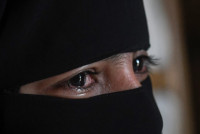
ZAHID (not his real name) was born in Myanmar in 1970. He fled his home with seven of his children and just the clothes on their back in 2017 after armed groups began systematically killing people in nearby villages.
Five years on, Myanmar’s Ministry of Foreign Affairs has said it’s readying for the return of ‘displaced persons from Rakhine state’.
Zahid, a Rohingya, is unlikely to return. He’s just one of several refugees living in Bangladeshi camps your correspondent interviewed between 2019 and 2021.
Zahid’s family are one of more than 190,000 households considered refugees by the United Nations High Commissioner for Refugees, and he is one of the nearly 1 million people who have migrated to Bangladesh’s greater Cox’s Bazar area. It is among the world’s most densely populated refugee camps.
Even before the violence began, Zahid was made stateless in his own country. Rohingya were excluded from a list drawn up in 1982 of 135 ethnic groups granted citizenship in Myanmar. They lost their rights of ownership to their properties and any legal claim to their homes. Rohingya were dubbed ‘resident foreigners’ or ‘Bengalis’, and with no legal lineage to national races, became alien to their lands.
Zahid recalls the death of his father due to lack of hospital treatment 21 years ago. His family tried to get the permission required from the Burmese army for access to a hospital. They were refused. There are many similar stories of Rohingya being denied access to urgently needed medical care.
Zahid’s siblings and children never had a chance to study beyond Grade 10. No official permission was given for higher education. And those who could study up to Grade 10 still would not be given a job. Religious education was barred and Rohingya could not go to a mosque from 6pm to 6am.
Zahid’s Rohingya neighbours were often blamed for theft, robbery or murder. He saw an innocent man caught and beaten after the man was falsely accused of a robbery Zahid had seen someone else do.
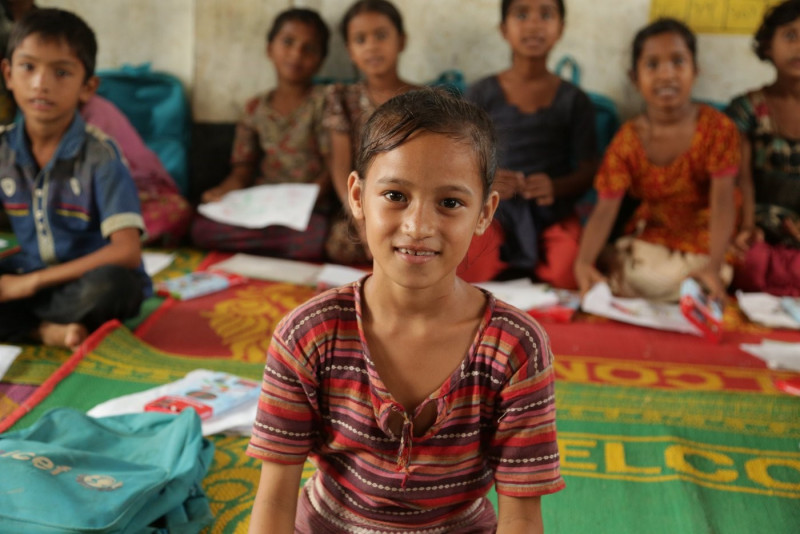
Now a sub-block leader in Camp-13 in Ukhiya, Cox’s Bazar, Zahid lives with his family in a house made of canvas and bamboo and survives on various relief items including rice and pulses.
There is a school for the children in the camp, and mosques for residents to pray in. Zahid and his family can get proper medical treatment in the camp hospital. But the hospitals do not remain open at night.
Asked if he wished to return to his ancestral home in Myanmar, Zahid said yes, he wants to go back to Maungdaw. But his memory of multiple accounts of violence in Myanmar remains nerve-racking for him and his family members. He wants to believe the Burmese government will give them citizenship and take them back with open arms. But he has a profound lack of confidence in his government’s declared intention to resolve things by bringing Rohingya back to Myanmar. Progress in state-level negotiations has not been visible on the Burmese side.
Myanmar has failed to protect its own citizens against the perpetrators of violence – regimes, security institutions and other persecutors. Myanmar needs to transform its behaviour as a state and reform its political-military structure to accommodate minorities and ensure they are treated equally.
Without further political and structural reforms the potential for violence against Rohingya remains, worsening the uncertainty for Zahid and others like him who still hope to return to their homeland. – The Vibes, June 20, 2022
Niloy Ranjan Biswas, PhD, teaches International Relations at the University of Dhaka. He has written extensively on peacebuilding, peacekeeping, preventing violent extremism, and refugees and forced migration issues. This life-story of a camp-based Rohingya was collected as a part of a research project Rohingya Journeys of Violence and Resilience in Bangladesh and its Neighbours, supported under the UK Government’s Global Challenges Research Fund (GCRF).
Published under Creative Commons and in partnership with 360info.org