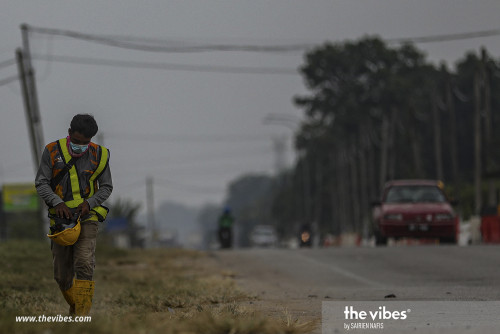
.jpg)

BUTTERWORTH – Effluent from Kg Selamat pig farms will now be buried at a 0.8ha trench site after polluting the nearby Sg Kereh for more than 40 years.
At a press conference yesterday, state Agrotechnology, Food Safety, Rural Development and Health Committee chairman Dr Norlela Ariffin said the proposed site will involve acquisition of government land and should be far from residential areas and water resources.
“Most of the existing pig farms are small. They have pig manure sewage treatment ponds on their premises, but they are not used.
“The site will be used to bury solid waste from the animals. The trench should be about 1.2m deep.”
She said the proposal will be tabled at the next state exco meeting.
“So far, we have only found land with a temporary occupation licence near the river. It will be used as a pig manure sewage plant that will use a bioprocess technology."
Meanwhile, Bernama reported that from next month, the Penang Veterinary Services Department will issue licences for livestock breeding and farm activities. Those without these licences will be subject to compounds not exceeding RM15,000.
“In addition, all pig farms must be upgraded to the modern pig breeding system by December 31, next year, before the modern pig-breeding system enforcement begins on January 1, 2022. If they still have no licence and permission from the local authority, their farms can be demolished.
“The department has received licence applications for 126 farms from March 1 to October 7. However, an extension was given to pig farmers and applications were accepted until November 27.
“All applications must have permission to plan and contain relevant documents, such as land grants and pig farm building plans,” she was quoted as saying.
There are currently 166 pig farms in operation in the state. She said 126 pig farms in Penang have applied for livestock activity licences.
Norlela said inspections found that 11 farms have been completely upgraded to the closed system, 57 farms are in the process of upgrading and 58 farms have yet to be upgraded.
She said the department also found that pig farming in the state did not comply with the prescribed capacity of pigs, namely between 1,750 and 700 pigs per hectare (depending on the size of the pig), and a sewage pool capacity of 40 litre for each pig in a day.
“Revenue from the sales of pigs in Penang reaches RM268 million a year. Farmers should be able to buy liquid-solid separator machines that cost between RM10,000 and RM15,000 to manage sewage waste so as not to pollute rivers, the sea and crops.”
Earlier, The Vibes had reported that Norlela and her team found that a pig manure treatment facility next to the farms in Kg Selamat had obtained a temporary occupation licence.
Norlela's statement follows an expose by The Vibes that nearly 50 pig farms in Kg Selamat, in northern Seberang Prai, are believed to have been operating without licences for more than 40 years.
The situation has resulted in more than 1,000 residents, especially in neighbouring Kg Tok Bedu, suffering from the stench emanating from Sg Kereh, which is polluted by effluents from these farms. – The Vibes, December 16, 2020

.jpeg)