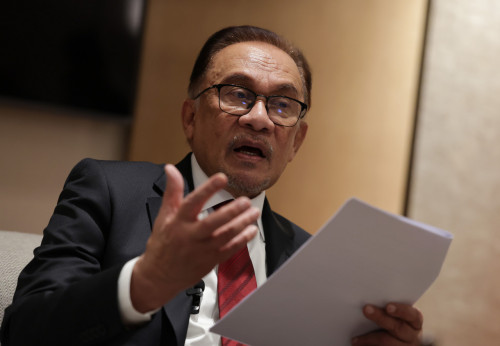

National Water Services Commission (SPAN) chairman Charles Santiago said better water management strategies are urgently needed in view of the global water crisis.
Among these strategies, he said, include greater conservation, legislation, and voluntary commitments aimed at realising social well-being and economic growth.
He said climate change has now evolved to become a "climate emergency" and requires people, governments and the private sector to think for out-of-the-box solutions.
“Old approaches can no longer be used to resolve new problems.
“Weather-related uncertainties together with prolonged droughts, rain and floods pose a serious threat to not just the weather but water security,” said the former Klang MP.
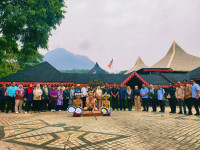
He was speaking at the Sustainability Environment Asia 2024: Driving Innovations for a Sustainable Circular Economy at the Kuala Lumpur Convention Center.
Deputy Prime Minister II Datuk Sri Fadillah Yusof officiated the event.
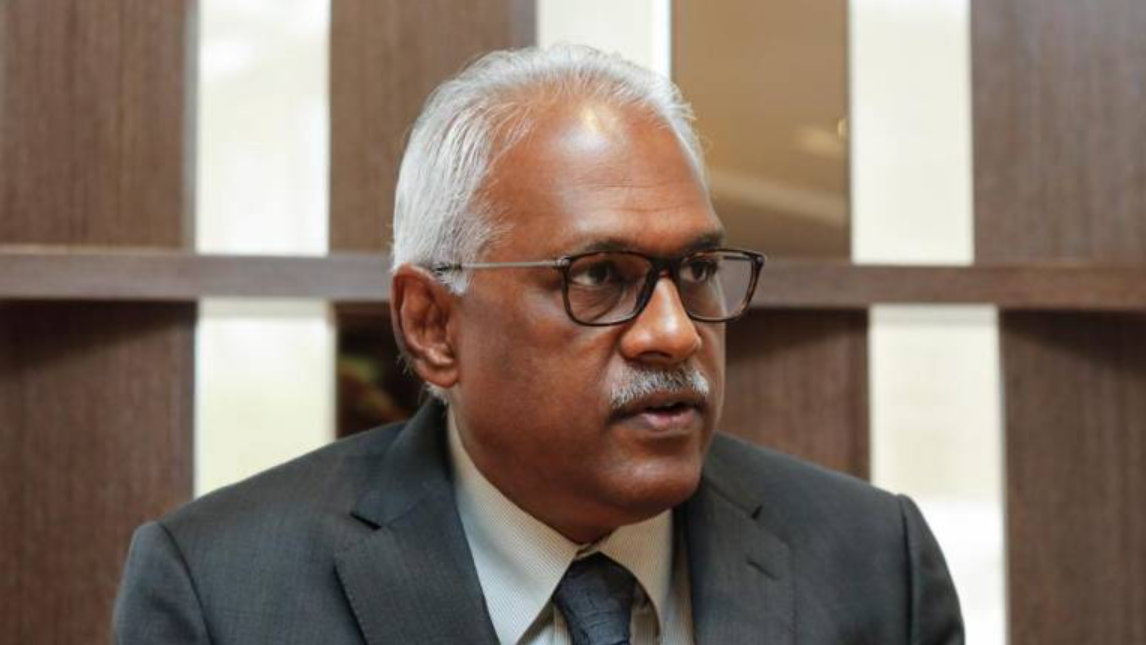
Santiago also said that water conservation strategies need to be included in environmental social governance (ESG) initiatives.
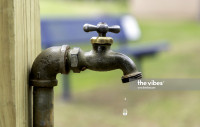
They include the opening up of new ‘taps’, a zero discharge policy, a water conservation surcharge, and a mandatory water efficiency management system.
"The water ecosystem is a victim of the climate emergency. The planet has already crossed the critical 1.5°C warming threshold, resulting in intense, uncertain, and prolonged droughts, rain, and floods. This places immense stress on water security."
Up to 216 million could be displaced
The World Bank says climate emergency-related disasters could displace up to 216 million people from their countries by 2025, which could lead to conflicts in the future.
The latest United Nations Emissions Gap Report, warns us that drastic cuts to greenhouse gas emissions are urgent.
Failing which the world will be on track for a catastrophic 3.1°C temperature rise.
It will have devastating impacts on people, economies, and critical access to water.
In Malaysia, the climate emergency is not a future threat- it’s an existing one, Santiago said.
200 days of heat by 2050 in Malaysia
By 2050, Malaysia is projected to experience up to 200 days of extreme heat annually, accompanied by storms and floods.
Santiago urged stakeholders to venture aggressively into the new solutions of rainwater harvesting: given Malaysia’s significant rainfall, harvesting should be actively promoted as an alternative resource.
There is also reclaimed water which can be used in a variety of economic activities such as construction, agriculture, and industrial sectors.
There is also a need to reduce leakages and pilferage, deemed as non-revenue water.
Malaysia currently loses a third of its treated water due to NRW, costing the nation billions annually.
The country also needs to reduce water consumption which now stands at 247 litres per capita per day (LCD).
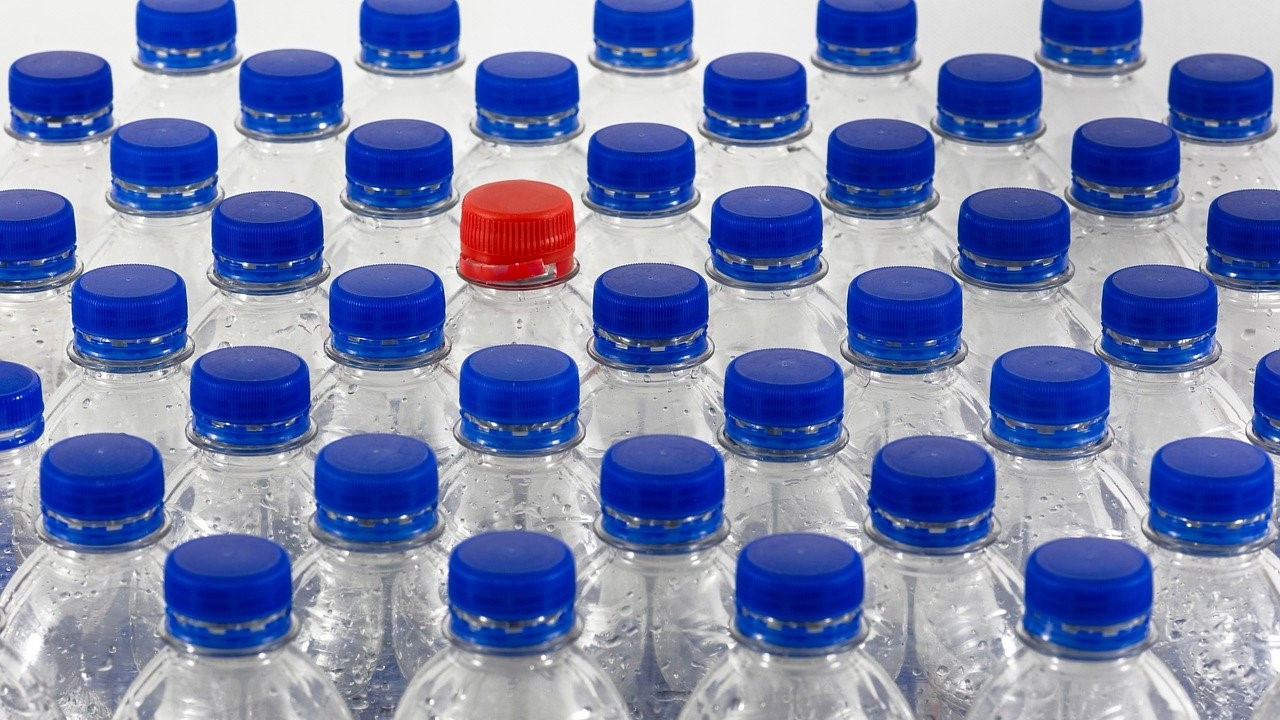
It is equivalent to 155 bottles of mineral water (1.5 litres each).
This is significantly higher than the World Health Organisation's (WHO) recommended level of 165 LCD.
Other solutions include the zero discharge policy where incentives can be given to require all industries to treat and recycle their wastewater without releasing it into the natural water bodies.
Malaysia should also introduce surcharges to promote prudent water use.
The tax would emphasise water’s scarcity value and encourage conservation at every level of society, he added.
He also called for the setting up of a water efficiency manager to be set up in the private sector to promote the latest measures to fight climate emergencies. - The Vibes, November 15, 2024.