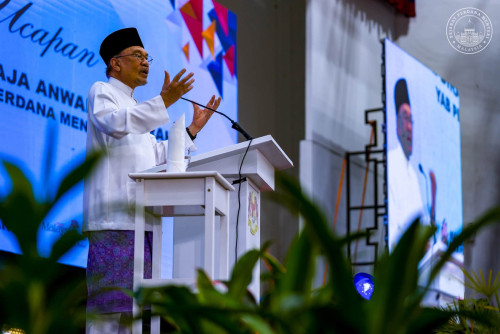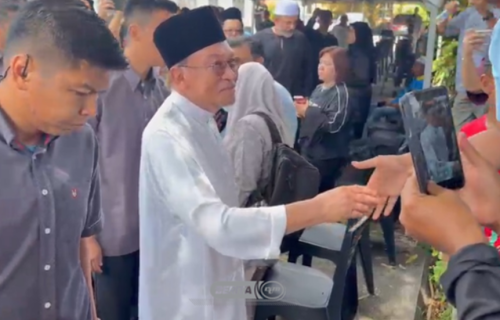
Prime Minister Datuk Seri Anwar Ibrahim has called on all Malaysians to foster unity, appreciate the country's rich diversity, and strengthen the spirit of love and mutual understanding In conjunction with the Thaipusam festival.
The annual Hindu festival, which is widely celebrated in Malaysia, is not just a religious observance but a powerful symbol of perseverance, sacrifice, and inner strength in the face of life's challenges, he said.
The Prime Minister emphasised that for the Hindu community, Thaipusam represents much more than a festival. It is a time for deep reflection and a manifestation of discipline and resilience, as devotees navigate personal struggles and express their devotion through acts of sacrifice.
“The celebration is a reflection of the collective strength of the people, as thousands gather to make vows and carry out sacrifices, standing united in values of love, respect, and mutual understanding,” Anwar wrote in a Facebook post.
He highlighted the spirit of unity in diversity that Thaipusam embodies, underscoring its significance in a multicultural society like Malaysia.
“The festival is a testament to how different communities can come together in a harmonious environment, fostering respect and camaraderie.
“In a world that is increasingly uncertain, mutual respect and acceptance of our differences should be the foundation of our unity. Instead of creating division, the uniqueness of our cultures should become a source of strength,” he said.
Anwar added, Malaysia’s richness in cultural diversity is a treasure that should be celebrated, not exploited for discord. He called on Malaysians to view these differences as opportunities to learn from one another and build stronger connections.
"Only by understanding and respecting one another can we ensure that Malaysia remains a civilised, dignified, and prosperous nation for all its citizens," he added.
At dawn of Thaipusam
Thaipusam, which takes place on the first full moon of the Tamil month of Thai, is celebrated with devotion and grandeur by Hindus across Malaysia.
The festival marks the victory of Lord Murugan over the demon Surapadman, as depicted in Hindu mythology. Devotees believe that Goddess Parvati bestowed a divine spear (vel) to Lord Murugan to aid him in his triumph, a story that forms the basis of the celebration.
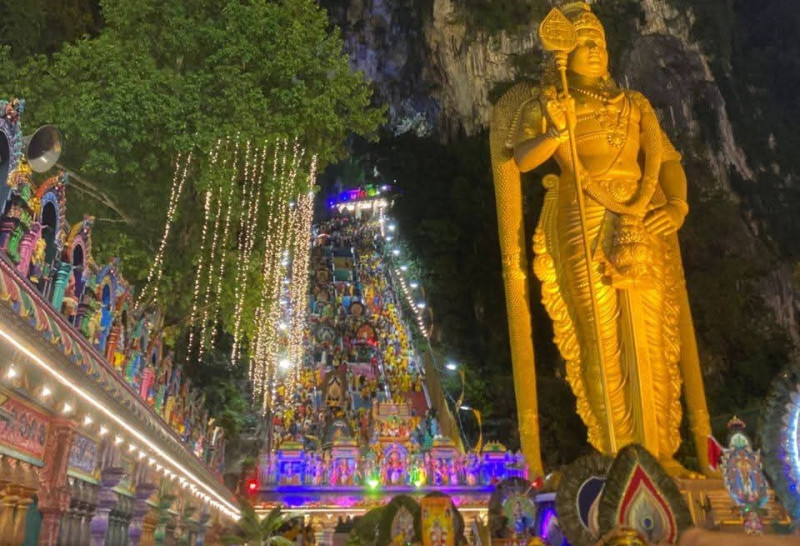
The celebrations at Batu Caves, one of the most significant pilgrimage sites for Thaipusam in Malaysia, are expected to see thousands of devotees and visitors this year.
Traders in the area are anticipating many opportunities in business, as the streets will be filled with the sights and sounds of the festival, with devotees carrying offerings, such as milk pots and kavadis, and performing ritual acts such as breaking coconuts.
In the days leading up to Thaipusam, devotees engage in intense spiritual preparations, including fasting, maintaining a vegetarian diet, and refraining from smoking and alcohol.
This 48-day period of self-discipline, known as “mandala,” also includes abstaining from shaving or cutting hair.
On the day of Thaipusam, devotees don yellow attire, bathe, and then walk barefoot to the temple, where they offer their prayers and perform various rituals.
A significant aspect of Thaipusam is the tradition of carrying the kavadi, which symbolises a burden or offering.
This practice has its roots in the legend of Idumban, a demon who carried two hills on his shoulders in repentance and later sought the blessings of Lord Murugan.
The kavadi, often adorned with hooks, is carried by devotees as an act of surrender and devotion. Some devotees pierce skewers through their cheeks or bodies, entering a trance-like state induced by the rhythmic beat of the urumi melam drums, which allows them to endure the pain.
Other rituals performed during Thaipusam include the carrying of milk pots for the deity’s bathing ceremony and the symbolic act of shaving one’s head. These acts of devotion are viewed as a form of penance and a means of seeking blessings for personal or spiritual growth.
While Thaipusam is celebrated in countries with significant Tamil populations, such as India, Sri Lanka, Mauritius, and Singapore, the largest and most elaborate celebrations outside India take place in Malaysia.
The festival continues to be a powerful reminder of the strength of faith, the importance of sacrifice, and the deep sense of community that binds Malaysians of all backgrounds together. - February 11, 2025