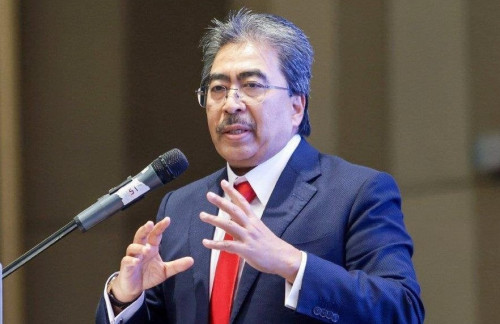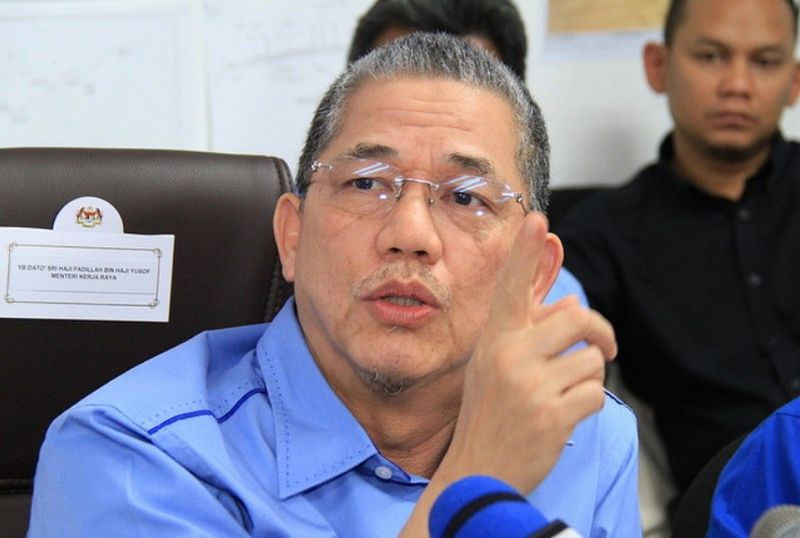
DEPUTY Prime Minister Datuk Seri Fadillah Yusof, chaired the first meeting of the Special Committee on Addressing the Decline in National River Water Quality (JKKAS) for 2025 today, to monitor and improve the quality of river water nationwide through integrated management strategies and actions.
In a statement released by the ministry, it said this initiative is part of the government's ongoing commitment to protecting invaluable water resources for the well-being of the people and the sustainability of the environment.
Fadillah, who is also the Minister of Energy Transition and Water Transformation (PETRA), said JKKAS represents the government's commitment to controlling environmental pollution and ensuring the effective implementation of strategies aimed at improving river water quality.
The committee's work involves engaging all relevant stakeholders in these efforts, providing a platform for sharing information, best practices, and innovative solutions for enhancing river water quality.
“State governments have presented their plans and actions to ensure that strategies for improving river water quality are implemented comprehensively and effectively for the benefit of future generations, the ministry said.
In a media briefing following the meeting, Fadillah informed the public that JKKAS had agreed on key actions for state governments which include periodic desludging of individual septic tanks, particularly for state government premises and agencies, to reduce the burden of river pollution.
He added that the committee had agreed to implement the Integrated Water Resources Management (IWRM) approach, which aligns with the AIR2040 Action Plan.
This approach will empower existing agencies to address wastewater pollution and non-point source (NPS) pollution in reservoirs, ponds, and lakes.
JKKAS also supported the proposal to delay the monthly water return charges imposed by the State Authorities on Indah Water Konsortium Sdn Bhd (IWK) under the Zero Discharge Policy (ZDP) until the full implementation of the water reuse project.
In efforts to address river pollution, Fadillah announced that JKKAS had encouraged the use of the innovative NAHRIM Environmental Dredging System (NEDS).
This system reduces contaminated sediment without significant impact on aquatic ecosystems, promotes local products, generates profits, and is more cost-effective compared to traditional methods.
The National Green Trail (DSK) program will also be strengthened through the involvement of state governments and various stakeholders, providing added value in terms of physical development and infrastructure.
This initiative is aimed at further enhancing Malaysia's commitment to addressing the pressing issue of water quality and pollution in the nation's rivers.
"Through these measures, we aim to ensure that the management and preservation of water resources will not only benefit the current generation but also safeguard these vital resources for the future," Fadillah said. – February 26, 2025