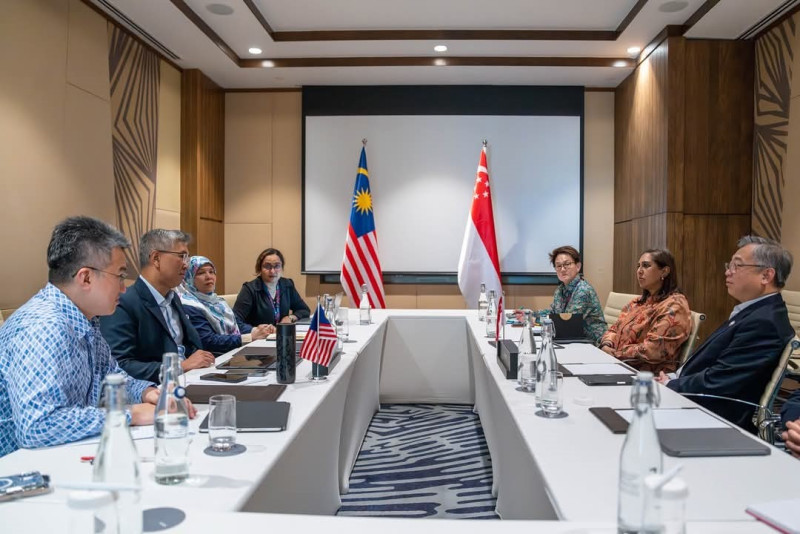
THE United States’ proposed tariffs will be one of the main topics under discussion at the upcoming 31st ASEAN Economic Ministers' (AEM) Retreat, scheduled to take place tomorrow, Minister of Investment, Trade, and Industry (MITI), Tengku Datuk Seri Zafrul Abdul Aziz, confirmed.
The AEM Retreat, which is being held from February 26 to 28 in Desaru, Johor, will address not only the potential impacts of these tariffs on trade but also explore broader concerns such as technology security, supply chain issues, and enhancing economic resilience, all grounded in ASEAN's cooperative principles.
Bernama reported Tengku Zafrul highlighting that US President Donald Trump’s proposed tariff plans, which include a 25 per cent tariff on imports of key sectors such as automobiles, semiconductors, and pharmaceuticals, will be examined in detail during the retreat.
These tariffs could have significant consequences for ASEAN countries, and finding a collective response will be a major aspect of the retreat's agenda.
Despite the growing tensions between the US and China, which have led to escalating trade conflicts, Tengku Zafrul expressed a cautious stance regarding the potential benefits these tensions might bring to ASEAN nations.
"I do not wholly agree that the US-China tensions directly benefit ASEAN," Tengku Zafrul said.
"While ASEAN’s trade with both the US and China is substantial, any disruption in the economies of these two global giants will undoubtedly have repercussions on ASEAN as they together account for almost 45 percent of the world’s GDP."
The minister said the interconnectedness of global economies and the need for ASEAN countries to remain vigilant in managing the spillover effects of policies such as sanctions, tariffs, and export restrictions that could harm regional stability.
He added the necessity of a careful and balanced approach to market liberalization across ASEAN member states to stimulate sustained economic growth.
"Countries will always seek to protect industries they believe are not yet prepared for fair competition, but we need to establish clear milestones and timelines for market openings, especially within ASEAN," he said.
Tengku Zafrul also spotlighted the ASEAN Trade in Goods Agreement (ATIGA) and the ASEAN Digital Economy Framework Agreement (DEFA) as integral initiatives reflecting ASEAN’s commitment to multilateral trade and deeper economic integration within the region.
However, he pointed to the persistent challenge of protectionism, particularly within the services sector, which remains a significant obstacle to deeper regional cooperation.
"There is more protectionism in the services sector than in the goods sector, and this is an area where we need to foster greater openness to enhance economic cooperation," he stated.
Tengku Zafrul’s remarks set the stage for crucial discussions on how ASEAN can navigate global trade tensions while strengthening its own economic ties and preparing for future challenges in the evolving global marketplace.- February 28, 2025