PRIME MINISTER Datuk Seri Anwar Ibrahim has reaffirmed ASEAN’s collective rejection of unilaterally imposed tariffs, stressing that such actions contradict the principles of multilateralism and free trade.
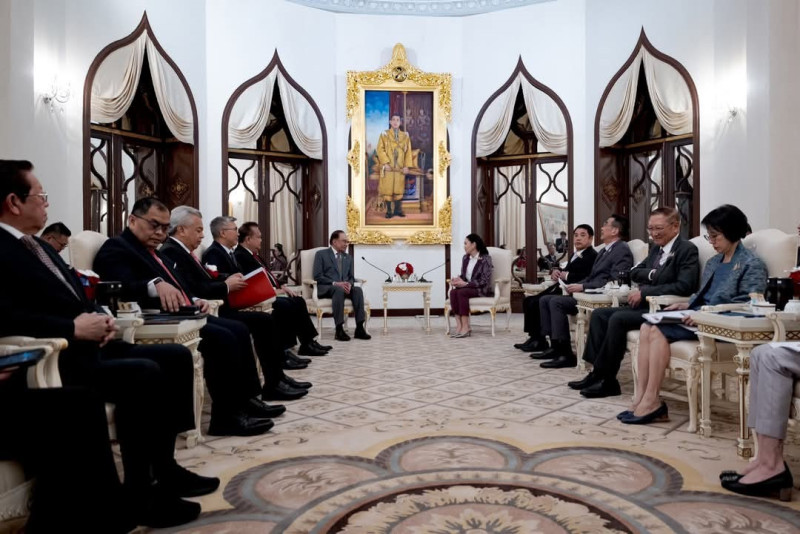
Speaking at the end of a two-day working visit to Thailand, Anwar confirmed that he and his Thai counterpart, Paetongtarn Shinawatra, discussed recent tariff measures introduced by former US President Donald Trump under the Reciprocal Trade and Tariffs Policy.
"We have built an ASEAN consensus. ASEAN supports free trade and multilateralism. We take the position that we do not agree with any unilateral imposition of tariffs, as it runs contrary to the principles of multilateral arrangements," Anwar told reporters at a press conference in Bangkok.
He said the meetings between ASEAN Trade and Finance Ministers were partly convened to coordinate regional responses to the new US tariffs, which have drawn sharp criticism across the bloc.
Anwar also expressed satisfaction with the alignment of views among ASEAN member states and key regional partners, including Japan and New Zealand.
"I am pleased that the Prime Minister of Japan Shigeru Ishiba, Prime Minister of New Zealand Christopher Luxon, and ASEAN leaders collectively agree on the need to utilise multilateral mechanisms and engage in dialogue with the United States," he said.
Both ASEAN and Malaysia have indicated they will not pursue retaliatory tariffs, instead preferring to resolve the dispute through diplomatic channels and multilateral negotiations.
Under the policy introduced on 3 April, the Trump administration imposed a minimum 10 per cent tariff on all imports, with significantly higher rates applied to many ASEAN countries.
Cambodia faces a total of 49 per cent in baseline and retaliatory duties, followed by Laos (48 per cent), Vietnam (46 per cent), and Myanmar (44 per cent).
Thailand is subject to 36 per cent, Indonesia 32 per cent, while Brunei and Malaysia both face 24 per cent. The Philippines and Singapore face 17 per cent and 10 per cent respectively.
The reciprocal tariffs are currently under a 90-day suspension for most countries, excluding China, which remains subject to full duties. – April 18, 2025