MALAYSIA is poised to secure between US$5 billion and US$10 billion in trade and investment opportunities with Russia within the next five years, as both countries intensify bilateral collaboration in strategic sectors.
According to Muhammad Kamil Abdul Munim, Political Secretary to the Prime Minister, the official visit by Datuk Seri Anwar Ibrahim to Russia has opened avenues for robust economic engagement, particularly in high-tech industries and halal commerce.
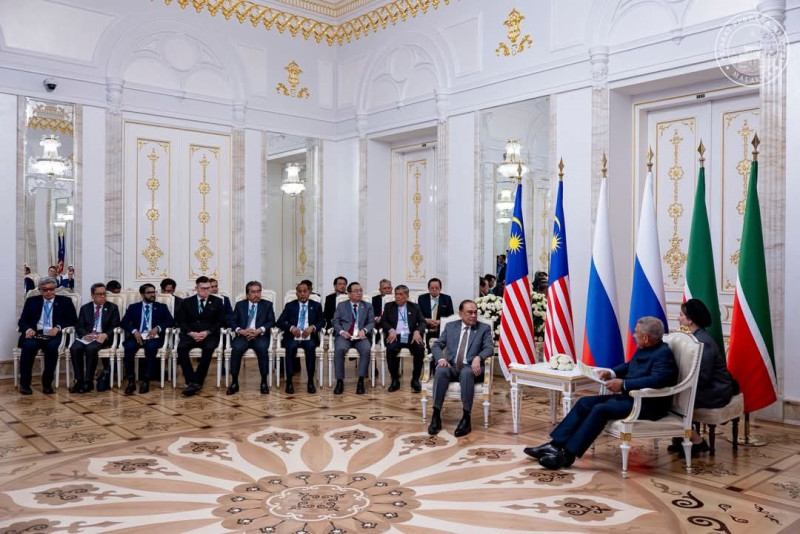
"The investment potential in the coming years is substantial, and if everything proceeds smoothly, we anticipate between US$5 billion and US$10 billion in trade and investment flows that could be realised between Malaysia and Russia," Kamil told reporters at the Kazan Kremlin, during the Prime Minister’s meeting with Rustam Minnikhanov, Rais (Head) of Tatarstan.
The visit to Kazan marks the second leg of a four-day official tour of Russia that commenced in Moscow on 13 May.
Kamil highlighted Russia’s strengths in aerospace, artificial intelligence and halal production—areas that align closely with Malaysia’s developmental priorities.
A significant outcome of the visit includes the anticipated resumption of direct flights between Moscow and Kuala Lumpur by Russian airline Aeroflot. This move is expected to stimulate two-way tourism and ease business travel.
"This is very important, especially given the significant increase in tourist arrivals between the two countries over the past two years," Kamil noted.
"We see genuine demand, and the reopening of this route will serve as a catalyst for economic exchange and people-to-people relations."
Another key development is the signing of a letter of intent by Malaysia’s Ministry of Agriculture and Food Security to begin importing meat products from Russia. In return, Malaysia will lend its expertise in enhancing Russia’s halal certification capabilities, an area in which the country is globally recognised.
Kamil also confirmed that additional memoranda of understanding (MoUs) are in the pipeline, covering digital technology, education and agricultural innovation.
"Both governments have pledged to act promptly on the MoUs previously signed and are committed to implementing them," he said.
On the matter of Western sanctions against Russia, Kamil reaffirmed Malaysia’s opposition to unilateral measures and its continued adherence to an independent foreign policy.
"Malaysia does not support unilateral sanctions and continues to seek constructive solutions to facilitate cross-border dealings with Russia," he stated.
Despite current geopolitical challenges and financial transaction barriers stemming from sanctions, both governments are said to be working closely to navigate these obstacles. Bilateral trade flows, Kamil added, remain on an upward trajectory, buoyed by increasing Russian exports to Malaysia and greater engagement from both public and private sectors.
"This visit is a major success for Malaysia," said Kamil.
"In the current global climate, this is an outstanding achievement and a bold move by the Prime Minister to assert Malaysia’s independent foreign policy while safeguarding the nation’s interests."
On arrival in Kazan, Anwar was received by Rustam Minnikhanov and honoured with a traditional Tatar welcome featuring *chak-chak* and *karavay*, ceremonial sweets symbolising the Tatar-Russian custom of guest hospitality.
The leaders convened at the Kazan Kremlin to reinforce bilateral ties through regional partnerships.
“I reaffirmed Malaysia’s commitment to expand collaboration in trade, Islamic finance and the halal industry, while agreed to deepen trade and investment ties, including active Malaysian participation in the Kazan Forum,” said Anwar.
Rais Minnikhanov expressed gratitude for Malaysia’s support for the Strategic Vision Group “Russia–Islamic World,” and the continuation of dialogues aimed at promoting interfaith understanding and inclusivity.
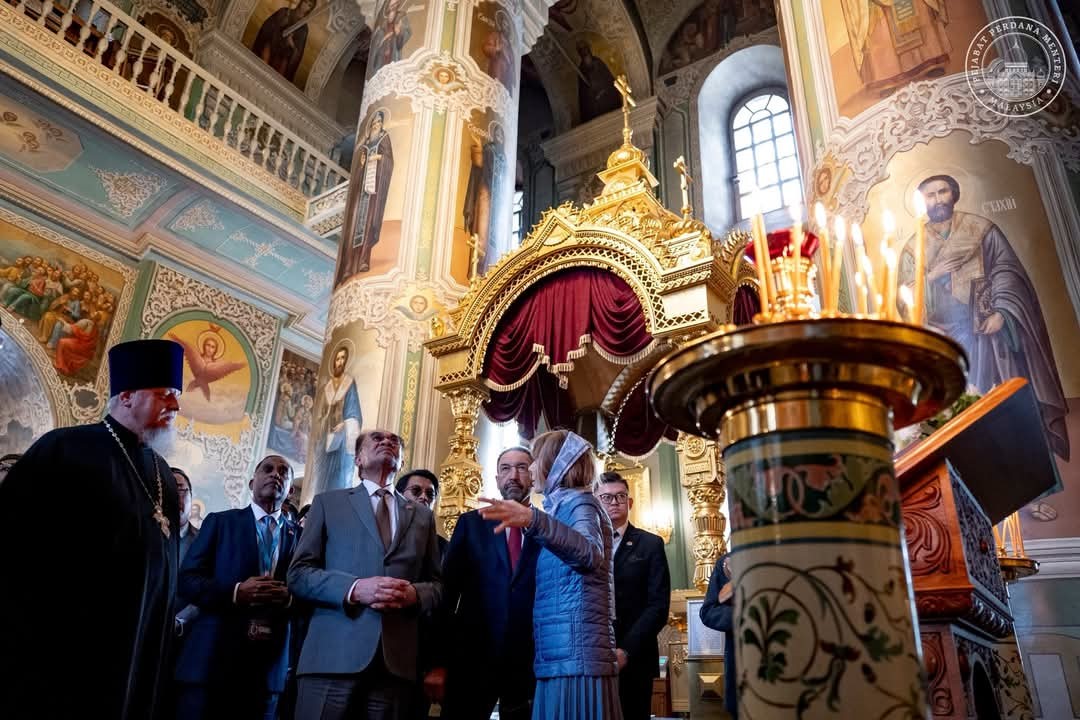
Following the meeting, the Prime Minister visited the 16th-century Cathedral of the Annunciation in the Kazan Kremlin, describing it as “an awe-inspiring Orthodox structure” representing the region’s cultural and architectural heritage.
Directly opposite the cathedral stands the Kul Sharif Mosque, a key symbol of Islamic civilisation in Tatarstan.
“The presence of these two houses of worship side by side reflects the enduring spirit of harmony and interfaith coexistence that defines this land,” said Anwar. - May 16, 2025