MINISTER of Economy, Datuk Seri Rafizi Ramli has underlined the growing momentum behind the Johor-Singapore Special Economic Zone (JS-SEZ), stressing that today’s Letter of Intent (LoI) signing with six international and regional banks marks the “first decisive step of realising the economic vision we laid out.”
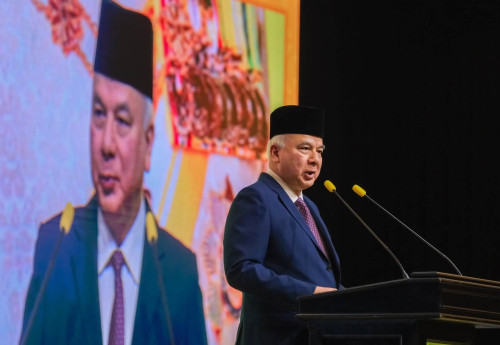
“When we inked the signing of the Johor-Singapore Special Economic Zone earlier this year, it might seem to some, that this was a guaranteed outcome… The truth is more complicated than that,” said Rafizi during JS-SEZ Partners’ Dialogue: Advancing Facilitation event in Kuala Lumpur today.
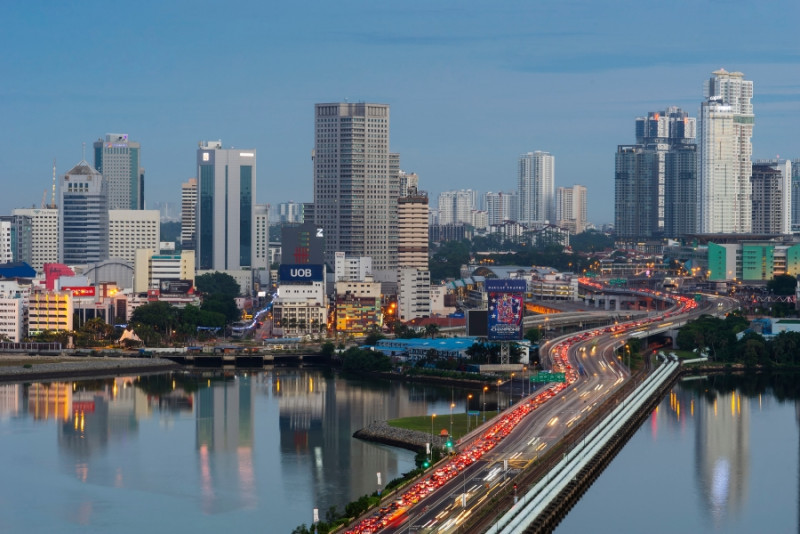
First proposed at the 16th Joint Ministerial Committee on Iskandar Malaysia in July 2023, the JS-SEZ emerged from a collaborative vision between Singaporean Minister Desmond Lee and Johor Chief Minister Datuk Onn Hafiz Ghazi, combining Johor’s growth potential with Singapore’s investment appeal.
Rafizi noted that Singapore is already Johor’s second-largest foreign investor, contributing roughly 70 per cent of the state’s manufacturing-related foreign direct investment. The SEZ, he said, offered a path forward by “forgo (ing) past misunderstandings to seize on present opportunities.”
For the first time, both countries agreed to establish a cross-border task force — a break from previous models, such as the Southern Corridor, where Malaysia acted unilaterally. “This was a different model… where both countries would be equally invested,” he said.
Although the two-year timeframe to finalise the SEZ was halved, Rafizi emphasised that true success would lie not in signing documents, but in seeing “a serious and tangible uptick in economic activity,” including investor influx and SME relocations.
“To many, the question now is whether JS-SEZ will achieve its purpose, or be another well-intentioned attempt to bridge both countries,” he said.
In response, the Malaysian government has announced its partnership with a diverse set of financial institutions — including Bank of America, HSBC, Sumitomo Mitsui Banking Corporation, CGS International Securities, Maybank, and CIMB — to facilitate trade finance, investment guarantees, and credit lines, particularly targeting the green, digital, and creative sectors.
“These banks are not just capital providers — they are the eyes and ears of their institutional and SME clients globally,” Rafizi said. “Having the buy-in from these anchors of the financial system is perhaps the best show of progress and belief in JS-SEZ to date.”
Four key pillars underpin today’s LoI: financing support for strategic sectors; global promotion and stakeholder engagement; research and market intelligence; and the upcoming launch of the JS-SEZ Blueprint — a master document to guide future investment and policymaking.
“Think of it as a one-stop document for potential investors, policymakers, and the general public,” Rafizi said.
Looking ahead, he acknowledged public scepticism about the continuity of the initiative. “Policy continuity should never depend on the sitting administration of the day… My time here is temporary.”
He added, “JS-SEZ, in many ways, is a promise to the future — that young Malaysians and Singaporeans can coalesce for the betterment of each other’s livelihood… as long as we are mindful of our duty as stewards for the coming generations, I believe, it won’t be the last time either.” - May 19, 2025