MALAYSIA’S national utility company Tenaga Nasional Berhad (TNB) will invest RM43 billion to upgrade the national grid, Prime Minister Datuk Seri Anwar Ibrahim announced on Monday, as the country intensifies its transition towards a more sustainable and resilient energy ecosystem.
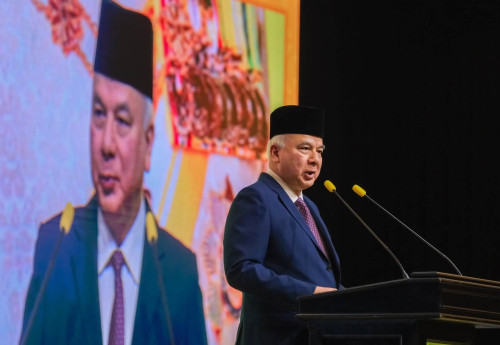
Speaking at the Energy Asia 2025 Conference in Kuala Lumpur today, Anwar said the grid enhancement will integrate artificial intelligence and battery energy storage systems, aiming to improve flexibility and long-term resilience.
“We must invest to boost efficiency and reduce emissions in our existing energy systems — a daunting task, given that fossil fuels still account for nearly 80 per cent of global supply,” he said.
“Most importantly, this transition must be anchored in equity,” he added, warning that decarbonisation efforts that overlook the needs of vulnerable communities risk deepening inequality.
On regional cooperation, the Prime Minister highlighted ASEAN’s progress in implementing pragmatic decarbonisation pathways, including the ASEAN Framework and Roadmap for Carbon Capture and Storage (CCS), which aims to harmonise policies and facilitate cross-border flows of capital and carbon.
“Malaysia is playing its part. Earlier this year, we passed the Carbon Capture, Utilisation and Storage Bill 2025, providing a regulatory foundation for this rapidly evolving sector,” he said.
State oil company Petronas, Anwar noted, is spearheading efforts to develop three CCS hubs in Malaysian offshore waters. These hubs will serve not only the oil and gas sector but also high-emissions industries that are difficult to decarbonise.
Malaysia’s CCS projects involve more than 10 international partners, including companies from Japan and South Korea, as well as global energy giants such as Total and Shell.
“Petronas is also collaborating with ENEOS Corporation, Mitsubishi, and JX Nippon to explore CO₂ transport and storage from Tokyo Bay to Malaysia,” he added, calling CCS both a key decarbonisation tool and a promising new revenue stream for the region.
ASEAN Power Grid MoU to Standardise Regulations and Technical Framework
Also at the conference, Deputy Prime Minister Datuk Seri Fadillah Yusof confirmed that an enhanced memorandum of understanding (MoU) for the ASEAN Power Grid (APG) is expected to be finalised by year-end.
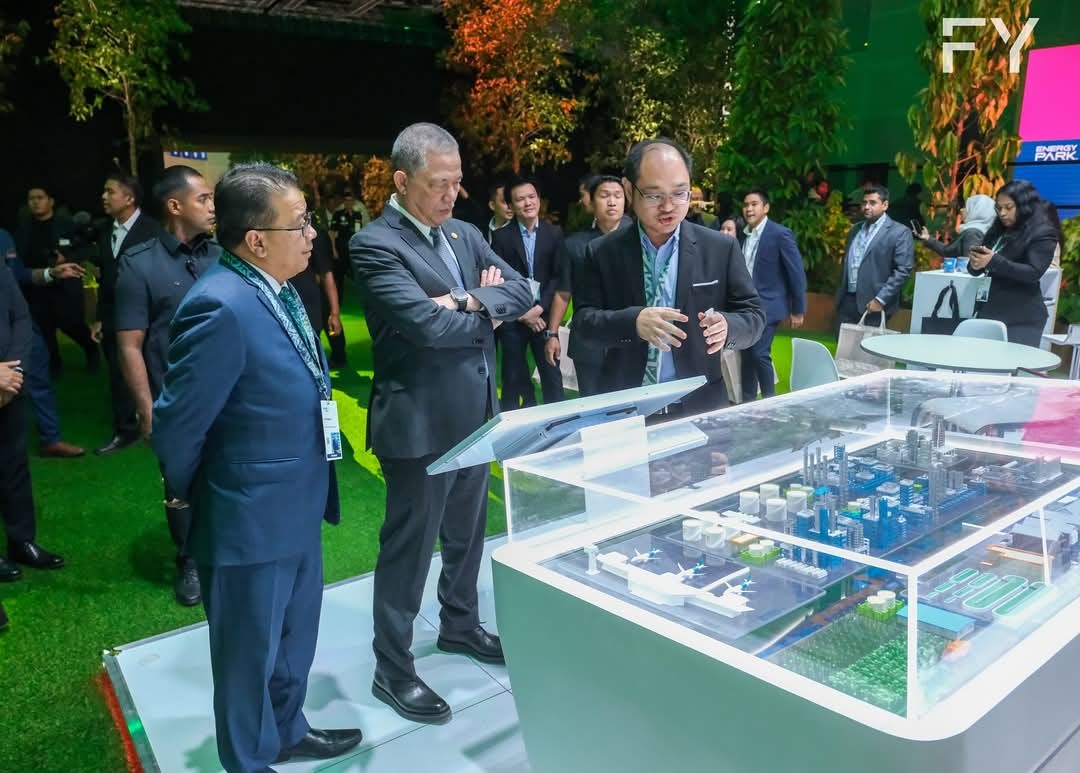
The updated MoU will address three core areas: regulatory harmonisation, technical alignment, and the establishment of a financial framework to support implementation.
“If we can reach consensus on these principal issues, the agreement could be operational under the Philippines’ chairmanship next year,” Fadillah said during a ministerial plenary titled ‘Enabling Asia’s Future Energy Ecosystem’.
The APG, launched in 1997, aims to interconnect electricity networks across ASEAN's 10 member states, with full regional integration targeted by 2045.
As ASEAN Chair in 2025, Malaysia will prioritise regional energy integration. “Vietnam, Cambodia and Laos have hydropower and wind. Malaysia has solar, and Indonesia has ocean energy,” Fadillah said. “If we combine our strengths, ASEAN could emerge as a leading global supplier of renewable energy.”
He also revealed that ASEAN is exploring the establishment of a regional regulator to streamline project development and standardise rules.
The 43rd ASEAN Senior Officials’ Meeting on Energy, held in conjunction with the conference, will focus on finalising the APG MoU and drafting subsea cable guidelines — including plans to export hydropower from Sarawak to energy-demanding zones in Southeast Asia. - June 16, 2025