PRIME MINISTER Datuk Seri Anwar Ibrahim has urged Thailand and Cambodia to de-escalate tensions and return to the negotiating table following renewed military clashes along their disputed border.
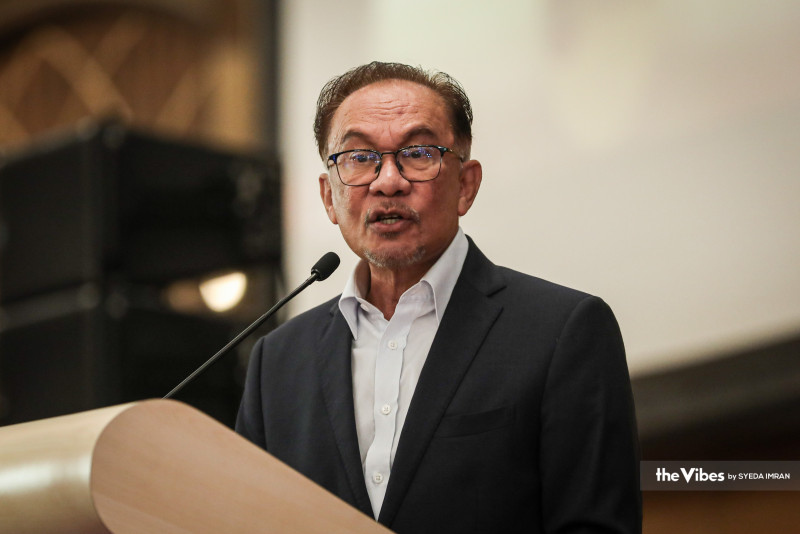
Speaking after delivering his keynote address at the ASEAN Semiconductor Summit 2025 (ASEMIS) today, Anwar described the latest skirmish between Thai and Cambodian troops as “deeply concerning” and confirmed his intention to speak with both countries’ leaders later in the day.
“They’re important members of ASEAN; they’re very close to Malaysia, and I have been messaging both the Prime Ministers,” he said.
“The least we can expect is for them to stand down, and hopefully to try and enter into negotiations. They have tried, but I still think peace is the only option available.”
Anwar added that he had held initial talks last month with Cambodian Prime Minister Hun Manet and the now-suspended Thai Prime Minister Paetongtarn Shinawatra, and is keen to continue dialogue.
Thailand’s former defence chief Phumtham Wechayachai was recently appointed acting Prime Minister after the Constitutional Court suspended Paetongtarn pending an ethics investigation.
Responding to a question on the conflict’s possible impact on trade, Anwar said it was “too premature” to assess, but noted both countries remained committed to ASEAN’s goals.
“I think it’s temporary. Both have their countries' interests at heart. Both want a peaceful resolution of the conflict, and both want to keep ASEAN engaged. And we’ll do precisely that,” he said, reaffirming Malaysia’s active role as 2025 ASEAN Chair.
Diplomatic relations between Cambodia and Thailand have sharply deteriorated since 28 May, following a border clash in the contentious Preah Vihear region. The Thai government downgraded ties with Cambodia on Wednesday, after a Thai soldier was injured by what it claimed was a newly planted landmine.
In retaliation, Cambodia lowered its diplomatic relations with Thailand to the lowest level on Thursday.
According to reports, one Cambodian soldier was killed, while a Thai civilian lost his life and three others—including a five-year-old child—were seriously injured in a clash early Thursday in the disputed area.
The two nations have long contested the 817-kilometre undemarcated border, a lingering source of tension that continues to strain regional relations.
Malaysia Secures Over RM63 Billion in Semiconductor Investments Under NSS
Meanwhile, Anwar announced that Malaysia has secured over RM63 billion in investments under the National Semiconductor Strategy (NSS) as of March 2025, placing the country on track to become a regional leader in high-tech manufacturing and innovation.
The Prime Minister revealed that RM5 billion came from domestic sources, while RM58 billion was contributed by foreign investors. Prominent projects include Carsem’s energy-efficient packaging for AI and electric vehicle (EV) applications, Infineon’s silicon carbide (SiC) power fabrication facility, NXP’s semiconductor components, Syntiant’s MEMS microphone and sensors, and Plexus’s printed circuit board production.
Anwar said the NSS aims to cultivate ten homegrown semiconductor firms with annual revenues exceeding US$1 billion, and 100 others with revenues over RM1 billion.
“Malaysia now has at least 13 homegrown companies across the semiconductor value chain, emerging as potential national champions,” he said, naming Carsem, Inari, Pentamaster, ViTrox, and Kelington among the nine firms expected to surpass RM500 million in revenue this year.
He added that four integrated circuit (IC) design firms—OppStar, SkyeChip, Infinecs, and Experior—are seeing annual growth rates of over 25 per cent, positioning them for long-term success.
“Fifty years from now, we want Malaysia to be able to look back at this moment as the tipping point when the country began grooming its very own Fortune 500 tech companies,” Anwar said. - July 24, 2025