MALAYSIA has called on ASEAN nations to reshape their economic strategies by cultivating a strong regional middle class and developing home-grown multinational corporations (MNCs), in a bid to future-proof the region against global volatility and inequality.
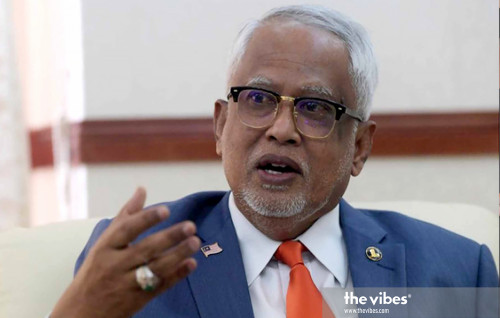
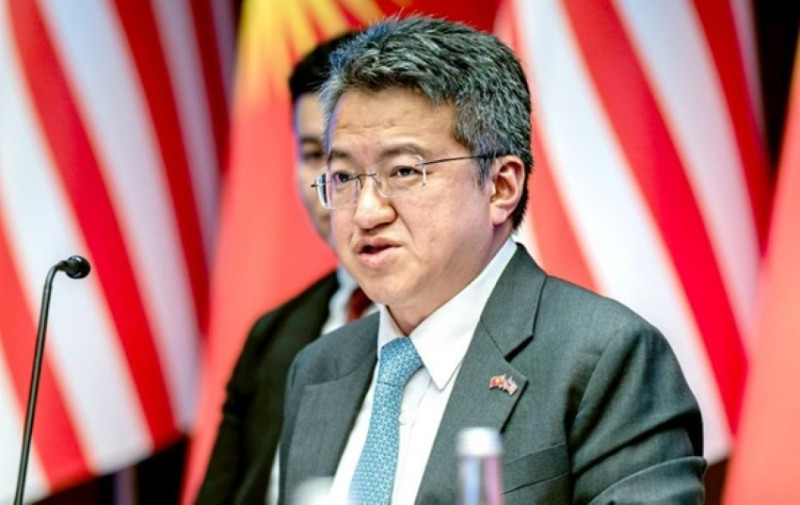
Speaking at the SIDC–CASI Sustainable and Responsible Investment Conference 2025, Deputy Minister of Investment, Trade and Industry Liew Chin Tong said that the long-standing model of export-led growth was no longer viable in a world shaped by geopolitical rifts, environmental crises and widening social divides.
“We must abandon the belief that economic growth alone will solve inequality through trickle-down effects,” Liew told delegates at the Securities Commission Malaysia. “We need to grow the cake and share it more equitably. And we can no longer depend on the United States to remain the world’s consumer of last resort.”
Liew recalled Prime Minister Datuk Seri Anwar Ibrahim’s 2023 launch of the Madani Economy Framework at the same venue, which advocates raising both the economic ceiling and floor — a philosophy he said mirrors the goals of responsible investing and capital market reform.
Tracing Asia’s post-war development model — from Japan’s post-1950s ascent to China’s WTO entry in 2001 — Liew acknowledged the region’s past success in capitalising on young populations and American consumption. However, he warned that this era had definitively passed.
“The Trump tariffs were not an anomaly. They marked a bipartisan consensus in the United States to reduce import dependency. We in ASEAN must now confront the reality that prosperity cannot come solely from exports,” he said. “It’s time to create and sustain vibrant domestic markets. We must ensure our people grow rich before they grow old.”
As co-chair of the ASEAN Geoeconomic Task Force, Liew outlined three pressing regional concerns: the protectionist turn in global trade, the risk of mutual market cannibalisation among Asian exporters, and the need to revitalise ASEAN integration with a forward-looking strategy.
He said capital markets must shift focus from fuelling speculative property cycles to financing innovation, particularly in technologies that serve the needs of developing societies.
“If we redirect investment towards technological capability rather than real estate bubbles, ASEAN can generate its own technological solutions—built for the bottom billions,” he said.
“Malaysia, with its neutrality and centrality in global supply chains, has strategic value,” he added. Citing Prime Minister Anwar, Liew reiterated that “Malaysia is the indispensable middle in the global technology landscape.”
He urged stakeholders to bridge the gap between supporting small and medium-sized enterprises (SMEs) and courting foreign MNCs.
“We often speak of helping SMEs, but do too little to nurture Malaysian and ASEAN technology firms into full-fledged regional and global players. ASEAN deserves its own mini-Samsung, mini-Huawei, or mini-TSMC within the next 20 years.”
Turning to broader structural risks, Liew highlighted growing inequality, climate disruption and ageing demographics as destabilising forces that require a new approach to economic governance.
“The haze that clouds our skyline is not a seasonal nuisance — it is a symptom of a wider climate emergency,” he said. “We cannot separate the environmental, economic and political aspects of our future. They are intertwined.”
Calling for bold and imaginative leadership, Liew said the region must prioritise inclusive growth, social cohesion and technological sovereignty.
“We must shape capital markets and national economies with new ideas — ones that create societies where prosperity is shared, fulfilment is possible, and dignity is preserved. That is what a Madani society demands.”
He expressed hope that the conference would provide a fertile ground for meaningful dialogue and enduring partnerships.
“Let us chart a resilient, just and sustainable future for Malaysia and ASEAN together,” Liew added. - July 29, 2025