THE government has unveiled a raft of regulatory and educational initiatives aimed at protecting children and teenagers from harmful online content, including the phenomenon known as “brain rot”, in response to concerns raised in Parliament by multiple MPs.
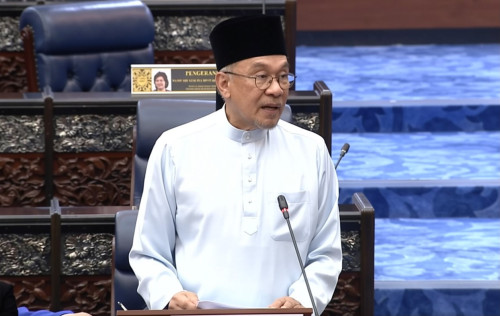
Addressing questions from Datuk Hajah Mumtaz binti Md Nawi (Tumpat), Dato’ Seri Hishammuddin Tun Hussein (Sembrong), and Tuan Haji Mohd Hasnizan Harun (Hulu Selangor), Minister of Communications Datuk Fahmi Fadzil said it was taking a comprehensive approach to curbing exposure to toxic and cognitively damaging digital content, especially on platforms such as YouTube and TikTok.
"As the regulatory body for the communications and multimedia industry, the Malaysian Communications and Multimedia Commission (MCMC) has undertaken continuous engagement with service providers to ensure their algorithms are more transparent and in line with local regulatory expectations," the Minister stated. This includes pushing platforms to limit the visibility of negative or harmful content to young users.
Between 1 January 2022 and 15 July 2025, a total of 1,443 harmful or extreme pieces of content involving children were removed at MCMC’s request, following breaches of the Communications and Multimedia Act 1998 (Act 588) and community guidelines.
To establish a safer and more sustainable digital environment, especially for children and vulnerable users, MCMC has also implemented a new licensing requirement. From 1 January 2025, internet messaging and social media service providers that meet the licensing criteria must obtain a Class Licence under Act 588, thereby becoming accountable for content regulation and algorithm management.
To support this framework, MCMC introduced a Code of Conduct for messaging and social media providers.
This outlines obligations such as age verification, parental control settings, child-friendly safety functions, regular audits of content safety mechanisms, and participation in public digital safety education.
The government has further strengthened its legal arsenal with the introduction of the Online Safety Act 2025 (Act 866), which expands regulatory powers to govern harmful content and mandates that platforms develop safety plans demonstrating compliance. MCMC is currently drafting subsidiary instruments under the Act with a focus on child online protection and risk management.
To reinforce public awareness, the Ministry launched the Safe Internet Campaign (KIS) on 21 January 2025. The initiative aims to educate the public on digital risks and promote safer internet use, targeting 10,000 schools, teacher training institutes, and higher education institutions across the country in collaboration with student councils at public universities.
The campaign also highlights the growing concern over child-generated sexual abuse material (CSAM), often linked to grooming and psychological exploitation. As of 28 July 2025, KIS programmes have been conducted at 559 institutions involving over 60,000 students.
The Ministry underscored that while government policy and platform regulation are key, active parental involvement remains critical. “Parents play a vital role in ensuring children use social media responsibly—monitoring content access, setting screen time limits, and educating them on online safety and privacy risks,” the statement read.
Such multi-stakeholder collaboration, the Ministry said, is essential to create a healthier and more secure digital environment for the nation's youth. - July 29, 2025