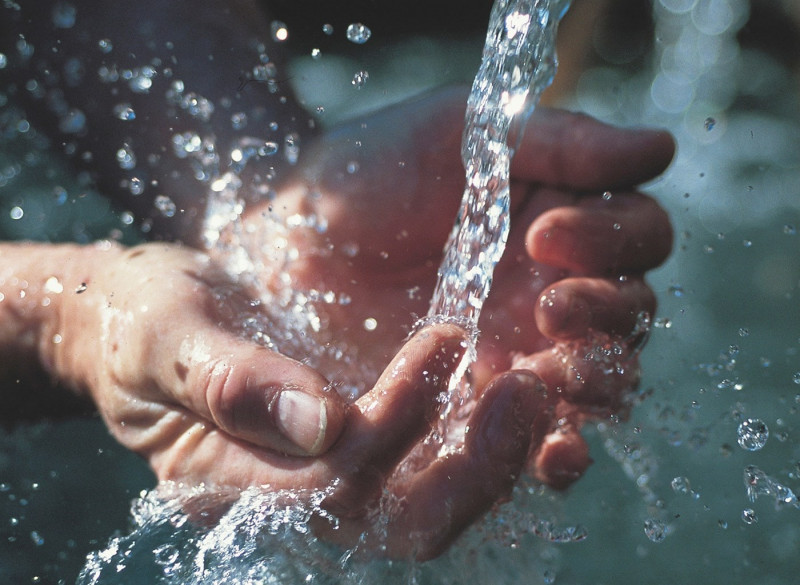
WITH rivers forming the backbone of Malaysia’s water system, conservation efforts and water quality monitoring are proving essential in securing reliable supply—particularly during increasingly erratic dry seasons brought about by climate change.
Although Malaysia is endowed with ample freshwater resources, prolonged droughts have placed stress on raw water storage in dams, particularly in urban regions like the Klang Valley. However, due to sustained infrastructure investments and management, the public has largely continued to enjoy access to treated water.
Rivers serve as the primary raw water source for domestic, agricultural and industrial use in Malaysia, making river care central to water security. In a bid to boost awareness, the Department of Irrigation and Drainage (DID) recently organised Ekspedisi Sumber Air (EKSAN 2025), a water-themed field expedition in Pahang involving nearly 100 participants from public agencies, NGOs, academia and the media.
Bernama reported today that one focal point was Kelau Dam in Felda Kelau, Bentong—a key component of the federal government’s Pahang-Selangor Raw Water Transfer Project. The dam, with a storage capacity of 147.1 million cubic metres, supplies up to 1,890 million litres of raw water daily via a 44.6-kilometre tunnel—the longest of its kind in Southeast Asia—connecting Pahang to the Langat 2 Water Treatment Plant (WTP) in Selangor.
“When the Langat 2 WTP is operational, the Kelau Dam can supply approximately 20 percent of Selangor’s water needs, with the remainder coming from Selangor’s own dams,” said Air Selangor vice-president I Jaffry Rabu.
The RM4.2 billion Langat 2 project, funded by the federal government, has completed its first phase and is expected to become operational by August 2025, addressing persistent water shortages in the Klang Valley.
Elsewhere in the state, participants visited Taman Negara and navigated Sungai Tahan and Sungai Tembeling—tributaries within the Pahang River basin. Stops included Jeram Dedari, a Batek Orang Asli settlement, Lata Berkoh waterfall, and the Kelah Fish Sanctuary.
During the trip, researchers from Universiti Malaysia Terengganu’s Faculty of Ocean Engineering and Informatics demonstrated water sampling and analysis techniques. According to senior lecturer Dr Mohd Sofiyan Sulaiman, river water is assessed using parameters such as pH, dissolved oxygen (DO), biochemical oxygen demand (BOD), chemical oxygen demand (COD), ammoniacal nitrogen (AN), and suspended solids (SS), with these measurements forming the Water Quality Index (WQI).
“Rivers are categorised as Clean (81–100), Moderately Polluted (60–80), or Polluted (below 59). A decline in WQI affects both aquatic ecosystems and the usability of water for domestic and industrial use,” he explained.
Mohd Sofiyan noted that composite sampling is typically conducted at various points along the river at a depth of at least 0.5 metres. On-site pH testing is essential as values can fluctuate quickly with temperature changes.
He further distinguished between raw water sources—rivers, lakes and dams—and treated water supply delivered via water treatment plants. Malaysia currently operates 340 WTPs, with rivers accounting for 80 percent of their raw water intake.
A crucial measure of capacity, he said, is the reserve margin—the difference between supply and demand. “If the demand is 100 million litres and production is 120 million, the margin is 20 percent,” he said.
As of the latest data, Malaysia’s average reserve margin stands at 15 percent, with Penang (30 percent), Perak (26 percent), and Terengganu (25 percent) performing strongest. Higher margins provide a vital buffer during dry seasons.
However, climate change is increasingly disrupting rainfall patterns. “Sometimes we have prolonged dry periods, or rain falls outside catchment zones, missing the key areas entirely,” he said.
To future-proof national supply, Mohd Sofiyan advocated for a detailed Water Stress Index linked to climate projections. “Looking ahead to 2050, we must map resource availability against demand driven by population growth,” he said.
Such tools would help authorities assess whether Malaysia faces no stress or critical water stress and guide long-term planning in a future of growing environmental volatility. - July 31, 2025