THE 13th Malaysia Plan (RMK-13) will place environmental sustainability at the heart of national policy, with major initiatives outlined to address climate change, plastic waste management, and structural improvements in early childhood education.
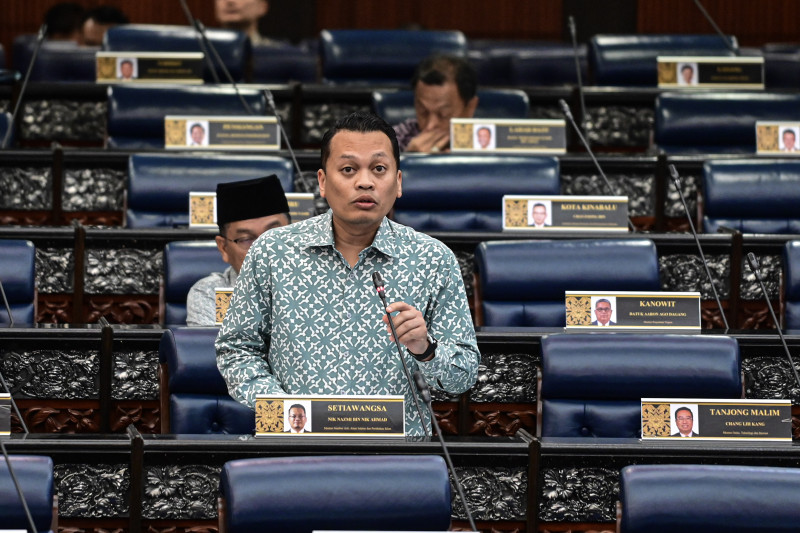
Setiawangsa member of parliament Nik Nazmi Nik Ahmad said under RMK-13, the government will move forward with key climate legislation, including a National Climate Change Act, the introduction of a carbon tax, and the implementation of the Malaysia National Adaptation Policy (MyNAP).
“The plan also sets ambitious energy targets such as achieving a 35 per cent renewable energy mix by 2030 and expanding battery energy storage systems (BESS) in line with the National Energy Transition Roadmap (NETR),” added the former Natural Resources and Environmental Sustainability Minister, in the Dewan Rakyat today.
“Even as some major powers deny climate realities, Malaysia must press forward. Climate change is an undeniable truth, and we must act accordingly,” he said in outlining the policy direction.
In addressing plastic pollution and circular economy goals, Malaysia has made notable strides. Progress includes banning single-use plastics in permanent premises and heritage or environmentally sensitive zones such as forest reserves and marine parks, alongside tightening controls on imported plastic waste.
One step that garnered global attention was Malaysia’s move to restrict plastic imports from the United States, which has yet to ratify the Basel Convention, Nik Nazmi explained.
“We must demonstrate higher ambition. The Global Plastic Treaty is being negotiated at the international level, and Malaysia must be prepared,” he noted.
While some countries have previously taken “idealistic” positions on plastic policy, several have recently moderated their demands. Malaysia, still a developing nation with oil and gas interests, must strike a balance by pursuing a just transition while rejecting “business as usual” as an option.
Despite regional peers like Thailand, Indonesia and the Philippines contributing input to the Global Plastic Treaty’s latest negotiation round (INC-5.2), Malaysia has not yet done so. Policymakers are now considering whether a National Plastics Act is needed to bolster Malaysia’s preparedness and close existing policy gaps, Nik Nazmi told lawmakers.
He also called for more effective enforcement of existing laws, including the Solid Waste and Public Cleansing Management Act 2007, which mandates waste separation but suffers from poor compliance.
“RMK-13 will also usher in a significant shift in education policy by making preschool compulsory from age five. Special emphasis will be placed on expanding preschool access in rural areas as part of wider efforts to break intergenerational poverty through early education.”
He urged the government to consolidate existing government-run preschool services—currently managed separately by the Ministry of Education (MOE), KEMAS, and the Department of National Unity—into a more streamlined national programme.
There is growing concern over the widespread reliance on private Islamic preschool provider PASTI, operated by PAS, particularly among Malay families.
As of 2024, PASTI operates 2,497 centres, employs 9,539 teachers, and enrols over 125,000 children. While affordability and religious instruction are key draws, critics have raised issues around curriculum quality and teacher welfare, he said.
“Some PASTI educators have lodged complaints about poor remuneration, with many receiving only RM600 monthly under the label of ‘volunteers’, thereby sidestepping legal protections under the National Wages Consultative Council Act. These teachers reportedly lack contributions to EPF and SOCSO.”
It is hoped that the Special Committee on Islamic Preschool Education, announced under the National Social Council by Deputy Prime Minister YAB Bagan Datuk, will address these gaps in regulation and oversight.
On child safety, the government reaffirmed its commitment to transparent investigations into the widely reported death of 13-year-old Zara Qairina. The student’s case, which gained national attention after her body was exhumed for further inquiry, has sparked public outcry over bullying in schools.
“As the Prime Minister has promised a fair and transparent investigation, the Education Minister must also refrain from being defensive,” said one statement. “The safety of our children is a fundamental concern for all parents.”
With serious bullying cases drawing increased scrutiny, calls are growing for systemic reforms to ensure that schools become safer, more accountable spaces for every child, Nik Nazmi added. - August 11, 2025