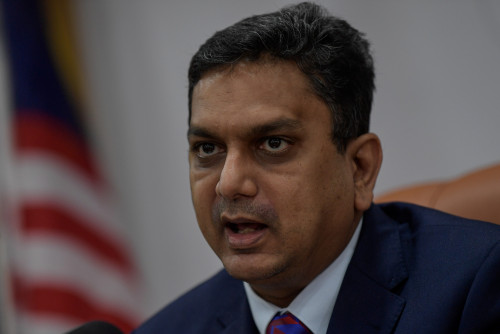
__Akmal_Nasrullah_Mohd_Nasir_.jpg)
THE government has clarified that Tenaga Nasional Berhad (TNB) will not reap excessive profits from the recent 14.2% electricity tariff hike imposed on commercial users from 1 July, assuring that any earnings above the regulated threshold will be returned to the public.
Responding to Bagan MP Lim Guan Eng in the Dewan Rakyat on Wednesday, Energy Transition and Water Transformation Deputy Minister Akmal Nasrullah Mohd Nasir stressed that TNB's profit margins are tightly controlled under the Incentive-Based Regulation (IBR) framework.
“The regulated rate of return for TNB remains at 7.3% under Regulatory Period 4 (RP4), unchanged since 2018,” Akmal said. “Should TNB’s profits exceed this cap, the surplus will be returned to consumers via the Electricity Industry Fund (KWIE).”
He explained that the tariff restructuring was necessary due to evolving dynamics in the electricity supply industry, particularly the imbalance between fixed infrastructure costs (9%) and energy costs (91%) under the previous structure.
While consumers previously paid an average of 55.95 sen per kilowatt hour (kWh) — combining base tariff and fuel cost via the Imbalance Cost Pass-Through (ICPT) mechanism — the new system, effective 1 July 2025, introduces the Automatic Fuel Adjustment (AFA). This has reduced the average maximum tariff under RP4 to 48.64 sen/kWh, representing a 19% overall decrease.
“With similar consumption patterns, domestic and industrial users are likely to see lower monthly electricity bills,” Akmal added. “Only a small portion of non-domestic users will experience any increase.”
In response to calls for the hike to be delayed or staggered, the government said the adjustment was necessary, given that the current tariff table had remained largely unchanged since 2014 despite shifts in cost structures and infrastructure demands.
The 7.3% rate of return is designed to support TNB’s long-term investments, including grid upgrades aligned with the ASEAN Power Grid initiative, construction and maintenance of power plants, smart meter deployment, and the integration of renewable energy as part of Malaysia’s energy transition goals.
The deputy minister also pointed to TNB’s broader contributions to the national economy, noting RM15.75 billion in dividends paid to key government-linked investment companies (GLICs) — including Khazanah Nasional, KWAP, and the Employees Provident Fund (EPF) — between 2018 and 2023.
Additionally, TNB has delivered numerous corporate social responsibility programmes, including initiatives in housing, education, environmental protection, sport, and charitable aid.
“This measured approach ensures that TNB remains financially stable while continuing to provide essential services, contribute to national development, and offer fair returns to shareholders and consumers alike,” he added. - August 13, 2025
.jpeg)