MALAYSIA'S 13th Malaysia Plan (RMK13), set to guide national development from 2026 to 2030, will focus on inclusive and sustainable growth under the principles of Ekonomi MADANI, according to Finance Minister II Datuk Seri Amir Hamzah Azizan.
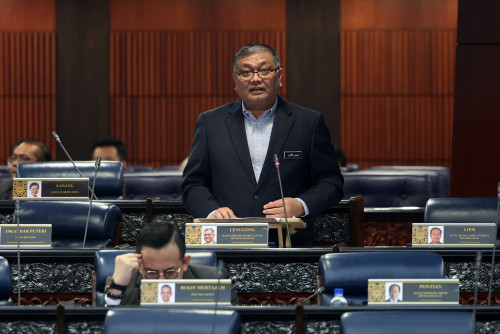
Speaking in the Dewan Rakyat during his winding-up speech on the RMK13 motion, Amir said the government was committed to fiscal prudence, long-term economic reform and targeted development despite continued global volatility.
“Though we inherited a limited fiscal space, the MADANI government has utilised every available resource to prioritise public welfare, despite growing global economic challenges,” he said.
Amir reported that Malaysia's economy remains resilient, with GDP growing by 4.4 percent in both the first and second quarters of 2025. Unemployment has fallen to 3 percent – the lowest in a decade – while inflation reached a 52-month low at 1.1 percent in June 2025.
The ringgit also strengthened by 5.1 percent against the US dollar in the second quarter, making it one of the strongest performing Asian currencies during the period.
He said RMK13 is anchored on three main thrusts: accelerating structural transformation in high-growth, high-value sectors; uplifting quality of life through improved infrastructure and services; and strengthening governance, particularly through fiscal reform aimed at greater integrity, transparency and efficiency.
The government projects average annual GDP growth of 4.5 to 5.5 percent throughout the RMK13 period.
A total of RM611 billion in public investment has been allocated to support these objectives. This includes RM430 billion in development expenditure focused on education, healthcare, flood mitigation and transport; RM120 billion in strategic investments from government-linked companies and investment institutions; and RM61 billion via public-private partnership initiatives.
“Given current global uncertainties, we are avoiding mega-projects with limited direct benefit to the people,” Amir said. “Instead, we are focusing on impactful programmes like rural school and clinic upgrades, which also create economic spillovers and support local SMEs.”
Addressing concerns on national debt, Amir acknowledged that Malaysia's debt burden stands at RM1.3 trillion, or 63.9 percent of GDP as of June 2025.
However, the government has reduced its reliance on borrowings, which have declined steadily from RM99.4 billion in 2022 to RM92.6 billion in 2023, and are projected at RM76.8 billion in 2024.
“Borrowings are channelled strictly towards productive development spending that yields long-term returns,” he said.
He also said that Malaysia’s fiscal deficit has been reduced from 6.4 percent in 2021 to a projected 3.8 percent in 2025.
The government remains on course to achieve its 3.0 percent deficit target and reduce the debt-to-GDP ratio to below 60 percent by 2028, in accordance with the Fiscal Responsibility Act 2023, he added.
The minister said this would be achieved through gradual fiscal consolidation, a broadened revenue base, optimisation of public expenditure, productivity-focused borrowings, and prioritisation of domestic capital markets to minimise foreign exchange risk.
On taxation, Amir confirmed there would be no reintroduction of the Goods and Services Tax (GST). Instead, the government will expand the Sales and Services Tax (SST) with a progressive and targeted structure, effective 1 July 2025.
“The government acknowledges the merits of both GST and SST,” he said. “However, after thorough review, we are retaining SST with a progressive and targeted expansion.”
Under the revised SST regime, essential goods such as basic food, medicines, books and utilities remain exempt.
New SST charges will apply to high-value services, including private schooling above RM60,000 annually, commercial property rentals and financial services.
He said core services such as public healthcare and education for citizens are excluded. SST registration thresholds will remain at RM1 million in taxable turnover, or RM1.5 million in selected sectors, ensuring small enterprises remain unaffected.
The government expects to collect an additional RM5 billion in SST revenue for 2025, rising to RM10 billion in 2026.
These funds, said Amir will support key social and infrastructure priorities, including RM15 billion in direct cash assistance through STR and SARA, an increase in new school construction from 26 to 44, and the upgrade of 543 dilapidated schools. Upgrades to rural clinics will also increase from 422 to 486.
Looking ahead to climate policy, the minister confirmed plans to introduce a carbon tax in 2026, beginning with the steel and energy sectors.
“This measure not only supports industrial decarbonisation but also shields Malaysian exports from EU carbon tariffs,” he said, adding that models from the UK, South Korea, Singapore and Indonesia are being studied to ensure compatibility with Malaysia’s domestic carbon market.
Amir also addressed a range of other issues. A 50 percent vehicle tax exemption for civil servants returning from Langkawi or Labuan will be maintained. Special Tourism and Investment Zones (STIZ) will continue to benefit from tourism tax incentives.
The Lahad Datu Free Trade Zone will remain subject to the Free Zones Act 1990. Road maintenance allocations (MARRIS) will continue based on verified road length, with greater flexibility given to states to maintain unregistered rural roads.
“Fiscal discipline is not merely a policy choice – it is a shared responsibility,” Amir concluded, thanking the 57 MPs who participated in the RMK13 debate.
“With a broadened revenue base and prudent fiscal management, we are not just building a developed nation – we are securing a better quality of life for all Malaysians.” - August 18, 2025