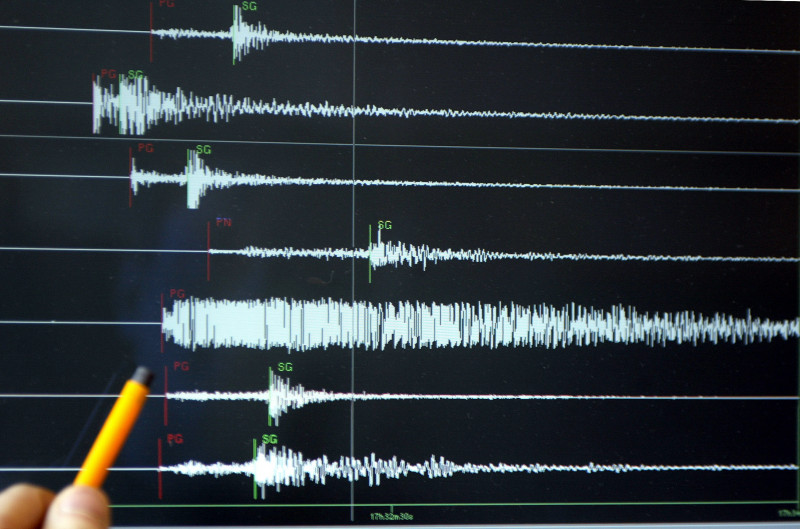
THE Department of Minerals and Geoscience Malaysia (JMG) has proposed the installation of seismic detection equipment in Segamat and other areas, following yesterday’s minor earthquake in Johor.
Director of JMG Johor, Noorazhar Ngatimin, said the proposal forms part of early preparedness measures, though it would require several phases of study, particularly in identified hotspot regions.
“We need to plan the placement or installation of seismic detectors. If necessary, the government will propose several suitable locations for their deployment,” he told Buletin TV3.
“We are still at the study stage to assess suitability, but the recommendation (for seismic detection tools) has already been made so that we can detect such events earlier and conduct studies on the likelihood of recurrence,” he added.
According to Noorazhar, this is not a new initiative. Similar monitoring systems have already been implemented in higher-risk regions.
“In the past, under the 10th Malaysia Plan (RMK-10), we had an active fault project. However, Johor was not identified as an area that required such installations,” he explained.
“Based on previous records, Johor was classified as Category 1 (low-risk), unlike states such as Sabah or Pahang, where seismic detectors have already been installed.”
Reiterating the department’s position, he did not rule out the possibility of similar seismic events occurring in Segamat again, although the timing remains uncertain.
The incident occurred at 6:13am yesterday, when a mild earthquake measuring 4.1 on the Richter scale struck Segamat, Johor.
In a Facebook post, the Malaysian Meteorological Department (MetMalaysia) reported that the epicentre was located five kilometres from Segamat at a depth of 10 kilometres.
Tremors were felt across much of Johor, as well as parts of Negeri Sembilan, Melaka, and southern Pahang.
There was no tsunami threat reported in connection with the event. - August 25, 2025