MALAYSIA reaffirms its commitment to inclusive and sustainable economic growth while calling for deeper ASEAN integration and stronger EU-ASEAN collaboration, as the country hosts the 11th ASEAN-EU Business Summit under its ASEAN Chairmanship.
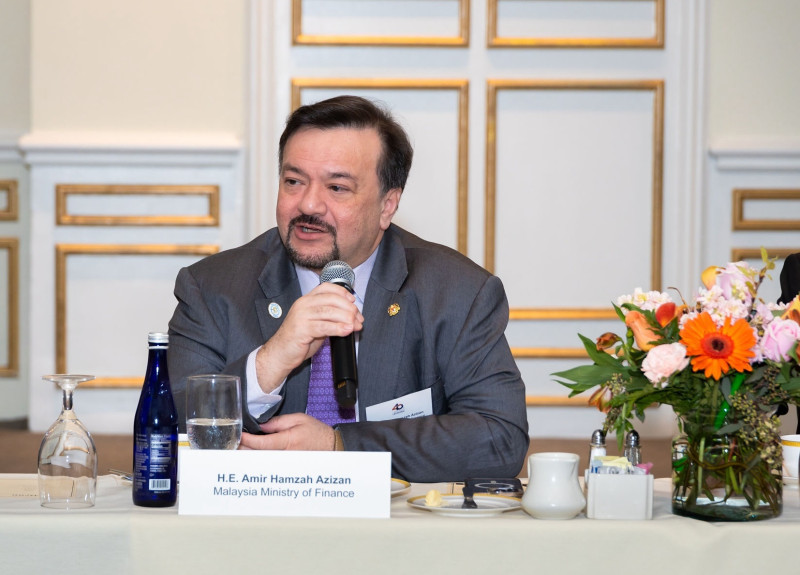
Delivering the keynote address, Minister of Finance II Datuk Seri Amir Hamzah Azizan hailed the Summit as a “foremost platform for substantive engagement between government and industry” since its inception in 2011.
He underscored the moment’s significance as ASEAN develops its post-2025 vision, anchored in “inclusivity and sustainability”.
“Inclusivity means growth, not just creating markets, but lifting the small traders, the young entrepreneurs, the underserved and the unseen,” said Amir. “Sustainability means more than climate consciousness – it is continuity of opportunity, stability and faith in institutions.”
With ASEAN on track to become the world’s fourth-largest economic bloc by 2030, Amir urged members to “strengthen resilience, enhance collaboration and progress further along the path of ASEAN economic integration”, noting the region’s projected 4.7% GDP growth in 2025 and its above-average global performance.
Economic Standing and Budget 2026
Amir highlighted Malaysia’s own economic resilience amid global uncertainty.
The economy expanded 4.4% in Q2 2025, led by services and manufacturing. Inflation has eased to 1.3% and unemployment has dropped to 3%, the lowest in over a decade.
Structural reforms and disciplined fiscal management have narrowed the deficit to 3.8%, while the ringgit has appreciated by 5.8% against the US dollar, making it one of Asia’s strongest currencies.
He presented Budget 2026 as a strategic fiscal roadmap under the Ekonomi MADANI framework and the 13th Malaysia Plan (RMK13), prioritising inclusive development, economic resilience and digital transformation.
“Malaysia stands at a strategic crossroads,” he said, describing a three-pillar approach: “raising the ceiling of national growth, raising the floor of living standards, and driving reform through good governance.”
Budget 2026 targets high-growth, high-value sectors such as semiconductors, AI, renewable energy and sustainable infrastructure.
The government has disbursed RM13 billion this year via direct aid programmes, benefitting nine million low-income individuals and households.
In 2024, Malaysia achieved a record RM378.5 billion in approved investments and has pledged a further RM120 billion in domestic investments through its GEAR-uP programme.
Structural Reform and Long-term Vision
Amir Hamzah spotlighted national infrastructure efforts such as LRT3, the East Coast Rail Link, Pan Borneo Highway and Hospital Sultanah Aminah 2, as well as education reform aligning skills development with the demands of a digital and green economy.
Moody’s, S&P and Fitch have all reaffirmed Malaysia’s sovereign ratings with a ‘Stable’ outlook, while the country achieved the largest global jump in the 2025 IMD World Competitiveness Ranking, rising 11 places to 23rd.
Looking ahead, RMK13 envisions annual growth between 4.5% and 5.5% until 2030, supported by RM611 billion in total development spending.
The plan is rooted in four pillars: enhancing economic complexity, strengthening social mobility, accelerating public service reform and improving environmental sustainability.
Malaysia’s renewable energy mix is targeted to reach 31% by 2030 and 70% by 2050. These ambitions are backed by the National AI Action Plan 2030 and RM67 billion in education investment.
Deepening ASEAN-EU Collaboration
Amir reiterated Malaysia’s commitment to fostering ties with the EU, noting that in 2024, the bloc was Malaysia’s fourth-largest trading partner, with bilateral trade totalling USD45.33 billion.
The EU also remains a key source of FDI, particularly in manufacturing, green technology and the digital economy.
“With the resumption of Malaysia-EU Free Trade Agreement negotiations this November, we anticipate fresh opportunities in digital trade, green technology transfer, and sustainable value chains,” he said.
ASEAN’s Sustainable Path Forward
As ASEAN Chair, Malaysia is spearheading regional initiatives including innovative infrastructure financing for the ASEAN Power Grid and carbon capture projects.
The ASEAN Taxonomy for Sustainable Finance—now entering its fourth version—aims to provide clearer ESG frameworks for investors.
Further initiatives such as the ASEAN-Interconnected Sustainability Ecosystem (ASEAN-ISE) and the ASEAN Common Carbon Frameworkare intended to promote market connectivity, enhance ESG comparability, and develop regional carbon markets.
Amir underscored Malaysia’s readiness to co-create a future that is inclusive, sustainable and filled with shared opportunity.
“Malaysia is ready. ASEAN is ready,” he said. “Together, we can co-create a future that is inclusive, sustainable and filled with a shared future where everyone stands to benefit.”- September 25, 2025