THE Government has officially launched its pioneering residential solar project under the Community Renewable Energy Aggregation Mechanism (CREAM), a national initiative aimed at democratising access to clean energy while accelerating the country’s shift towards a low-carbon economy.
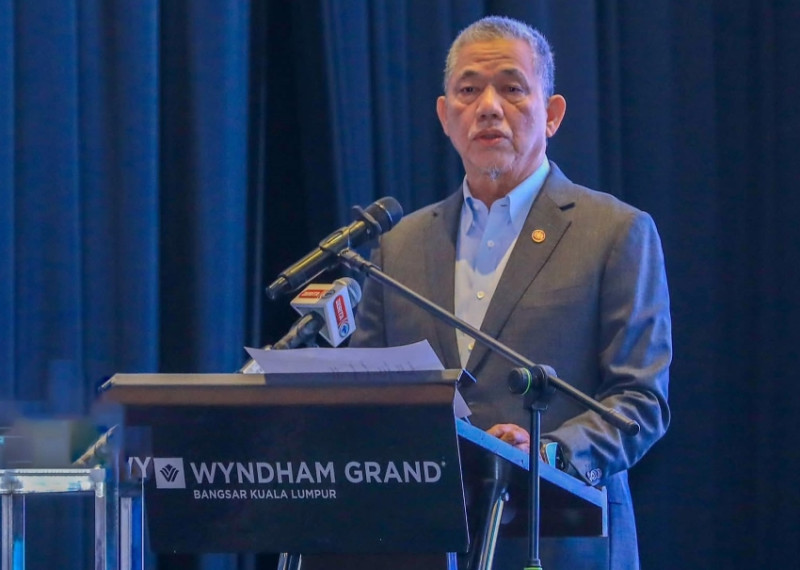
Speaking at the launch event in the City of Elmina on Thursday morning, Deputy Prime Minister II and Minister of Energy Transition and Water Transformation, Datuk Seri Fadillah Yusof, hailed the project as a key step in decentralised energy generation and a model for public-private cooperation in climate-conscious development.
“This is clear evidence of the MADANI Government’s commitment to realising the National Energy Transition Roadmap,” said Fadillah. “It reflects the kind of strategic collaboration between industry leaders like Sime Darby Property and Tenaga Nasional Berhad (TNB) that we need to secure a greener and more resilient future.”
Developed by Sime Darby Property in partnership with GSPARX – a TNB subsidiary – the residential solar scheme marks one of the first large-scale pilots under the CREAM mechanism, introduced by the Ministry earlier this year. The framework enables homeowners to lease out rooftop space to third-party aggregators who will install solar photovoltaic (PV) systems across multiple properties to generate electricity for local ‘green’ users.
Fadillah said the project was not merely a technical initiative but part of a broader commitment under the National Energy Transition Roadmap (NETR), which targets 70% renewable energy in Malaysia’s electricity mix by 2050.
“This is not simply a numerical goal. It represents our national ambition to reduce dependence on fossil fuels, boost energy security and strengthen our economy in the face of global energy volatility,” he said.
To support the commercial viability of such ventures, the government has reduced the community access charge under CREAM by 40% – from 15 sen to 9 sen per kilowatt hour. Fadillah noted that this move is designed to make rooftop solar more attractive to investors and consumers alike.
He commended Sime Darby Property’s role as a Local Renewable Energy Aggregator, describing the company’s participation as a “visionary step” beyond its core property development business. Through its leadership, Sime Darby will coordinate green energy production from leased rooftops and match this supply with corporate buyers seeking to meet environmental, social and governance (ESG) standards.
“This is corporate foresight in action – generating added value for communities and positioning Malaysia’s green economy for long-term competitiveness,” he said.
Fadillah also reaffirmed the government’s commitment to strengthening the national power grid to support increased integration of decentralised renewable sources. He called on regulators such as the Energy Commission and grid operators like TNB to enhance grid flexibility and intelligence in preparation for higher levels of clean energy penetration.
“This is not a sprint – it is a long and demanding journey,” said Fadillah. “Our energy transition will require thoughtful planning, strategic investment, and a shared commitment across sectors and society.”
He concluded by expressing hope that the residential solar initiative at Elmina would serve as a “proof of concept” for similar projects nationwide, offering both environmental benefits and direct economic opportunities to Malaysians.
“This project exemplifies the MADANI Economy in action – inclusive, progressive and sustainable. As we say, ‘Muafakat Membawa Berkat’ – through unity comes success.” - September 26, 2025