THE Government has called for urgent regional alignment on steel industry reform, unveiling its Steel Industry Roadmap 2035 as a blueprint for long-term transformation at the ASEAN Policymakers Conference on Steel and the 2025 ASEAN Iron and Steel Forum, held today at Dewan Perdana MITI.
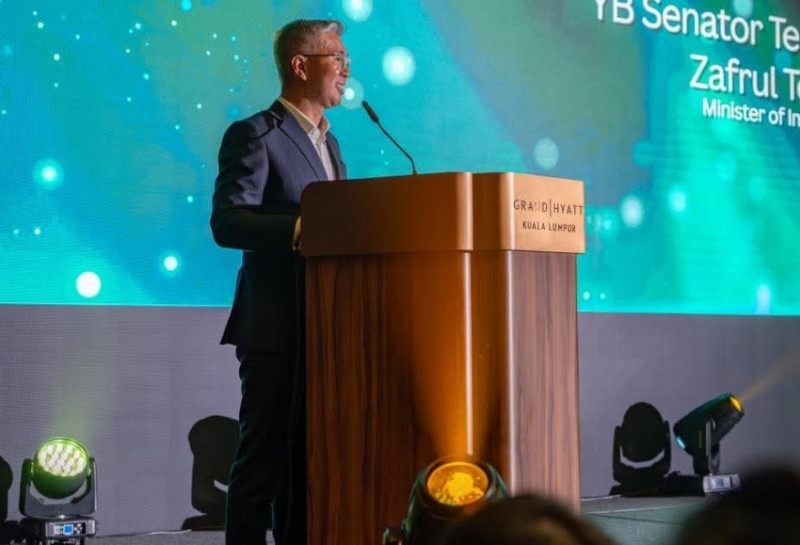
In his keynote address, Minister of Investment, Trade and Industry Tengku Zafrul Abdul Aziz emphasised the need for ASEAN to respond collectively to growing structural pressures in the iron and steel sector.
“Steel builds homes, roads and bridges, vehicles and ships, and the machinery that powers economies. Steel is the foundation of our future industrial growth,” he said.
Citing figures from the ASEAN-6, he noted that regional steel consumption reached 74 million tonnes in 2023, close to the pre-pandemic high. However, the industry remains vulnerable to global overcapacity, trade distortions, and environmental regulatory shifts.
“Globally, there is more than 600 million tonnes of excess steelmaking capacity, with much of this surplus seeking ASEAN markets,” he said. “This imbalance distorts our markets and creates an excessive burden to ASEAN’s steel industry.”
He also raised concerns over the imbalance within ASEAN itself, pointing out that the region remains overly reliant on imported flat steel products, while struggling with oversupply in long steel.
“Steel accounts for a significant share of industrial carbon emissions. It is our collective responsibility — policymakers and industry players — to explore strategies to mitigate these challenges in line with our Net Zero aspirations.”
To that end, the Steel Industry Roadmap 2035, or SIR2035, sets out a long-term restructuring strategy for Malaysia’s steel sector, in line with the New Industrial Master Plan 2030, the National Energy Transition Roadmap, and national decarbonisation targets.
“Malaysia faces a stark imbalance between supply and demand in its steel industry,” the Minister said. “Domestic projections show upstream capacity could reach 40.8 million tonnes by 2030, while domestic demand is only 14.7 million tonnes.”
The roadmap proposes an initial stabilisation phase, focusing on regulatory reform, raw material security and early decarbonisation groundwork. From 2027, the focus shifts to industrial transformation through low-carbon infrastructure, emissions standards, and technological reinvestment.
By 2050, Malaysia aims to achieve a fully green steel sector.
“This means that SIR2035 is not only a policy document; but also a national contract for our sustainable future, as well as future generations’ socio-economic well-being and resilience.”
On a regional level, Tengku Zafrul proposed an ASEAN framework to improve coordination and market discipline.
This includes the development of a shared database on steel capacity and utilisation, a common decarbonisation pathway with monitoring and verification protocols, and new mechanisms to safeguard and optimise regional scrap flows, including potential green DRI hubs.
“These burdens must not be shouldered by any single country. To effectively address them, countries must collaborate and curate a regional solution.”
He welcomed the conference as a timely ASEAN-level initiative to bridge policy dialogue and market realities, urging that it become a permanent platform for guiding regional industrial strategy.
“Let us establish this conference as a regular platform that guides ASEAN steel policy with continuity and purpose.”
Hosted by Malaysia’s Ministry of Investment, Trade and Industry in partnership with the South East Asia Iron and Steel Institute (SEAISI), the event gathered regional government officials, technical experts, industry leaders and trade representatives.
Tengku Zafrul closed with a call to action: “Together, we can forge an ASEAN steel industry that is competitive, fair, and future-ready,” he said, before officially launching the Steel Industry Roadmap 2035. - September 29, 2025