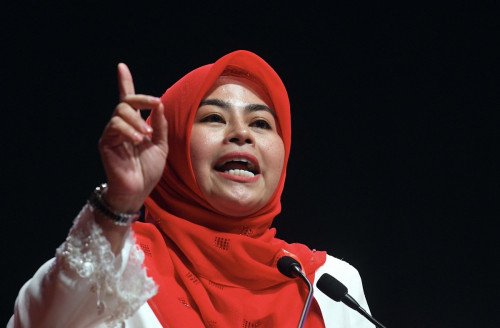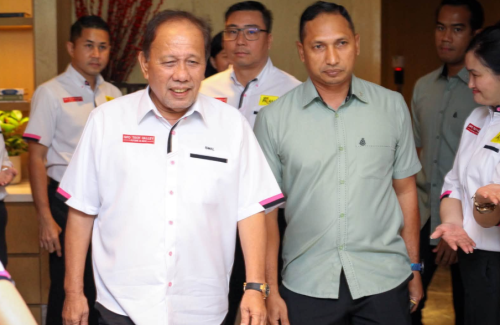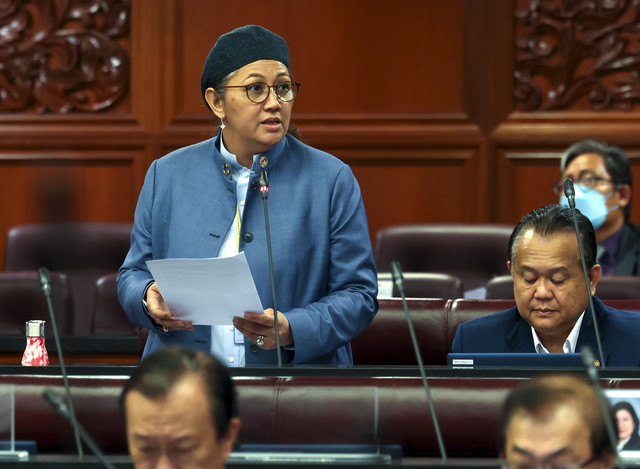
THE federal government is open to considering Sabah and Sarawak’s call for greater economic autonomy, but any such move must be approached cautiously and in accordance with the Federal Constitution and the Malaysia Agreement 1963 (MA63), Deputy Minister of Economy Datuk Hanifah Hajar Taib told the Dewan Rakyat today.
“The government understands the aspiration of Sabah and Sarawak to have greater authority in shaping their own economic development, but implementation is not as simple as it seems,” she said.
Hanifah stressed that any transfer of authority would require a formal request from the respective state governments and clear proof that they are equipped to manage administrative, financial, human resource and governance responsibilities. She added that the matter had already been discussed at the MA63 Implementation Action Council (MTPMA63), chaired by the Prime Minister and attended by the Sarawak Premier and the Sabah Chief Minister.
“God willing, once there is agreement on the scope of autonomy, it will be announced,” she said in response to a supplementary question from Datuk Anyi Ngau (GPS–Baram) during parliamentary question time.
Addressing Anyi’s initial question on efforts to reduce the rural development gap under the 13th Malaysia Plan (13MP), Hanifah said the plan would be guided by three pillars — raising the ceiling, lifting the floor and strengthening governance.
Among key priorities under 13MP, she said, would be the extension of rural roads, improved access to clean water and electricity, as well as healthcare, education and digital connectivity. Development will be driven by data, state-level priorities and actual community needs.
She noted that monitoring tools such as MyRMK and MyProjek will be used to ensure systematic and transparent project delivery.
In response to a further question from Datuk Awang Hashim (PN–Pendang) on ensuring equitable development, Hanifah said that four core strategies had been identified, including accelerating progress in lagging regions and enhancing economic integration across the country.
“Transparent monitoring mechanisms will be introduced, including regular reporting and engagement sessions held directly in rural communities to hear the people’s views,” she added. - October 8, 2025