THE Ministry of Works (KKR) has pledged to raise the standard and sustainability of Malaysia’s infrastructure and public amenities under Budget 2026, with a sharpened focus on road safety, regional connectivity, and the empowerment of local contractors.
The Ministry has received an increased allocation of RM10.692 billion for 2026, representing a 3.3 per cent rise from the RM10.349 billion allocated in 2025.
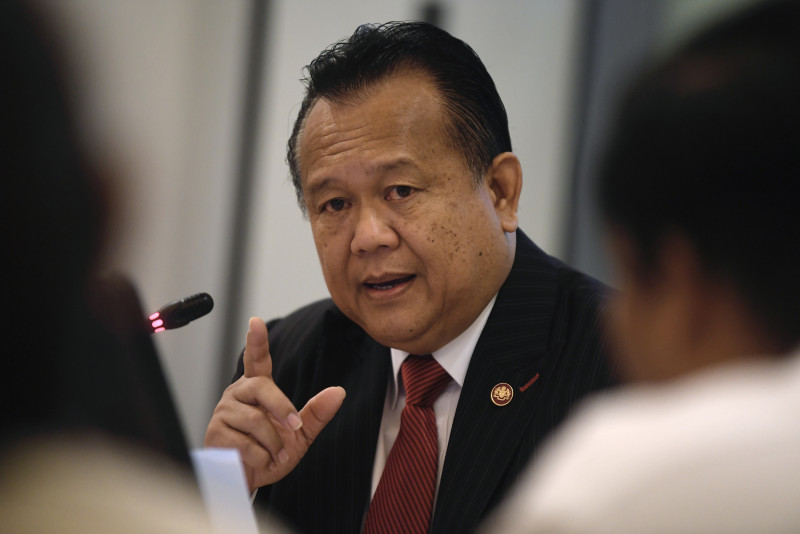
“The operating expenditure of RM1.085 billion marks a 6.1 per cent increase, and will be channelled towards upskilling our personnel and enhancing the capabilities of the Ministry with the latest technologies,” said Minister of Works, Datuk Seri Alexander Nanta Linggi, in a statement today.
The development expenditure of RM9.607 billion – up 3 per cent from 2025 – will enable the Public Works Department (JKR) to continue critical infrastructure projects while also initiating new developments nationwide.
Among key ongoing initiatives is the MYJALAN federal road maintenance programme, which has been allocated RM2.5 billion to ensure roads remain in “good, safe and comfortable condition,” said Nanta.
To improve highway safety under the Malaysian Highway Authority (LLM), 3,000 LED lights will be installed at accident-prone spots. In addition, RM260 million has been earmarked for slope stabilisation works in high-risk areas.
As part of immediate repair efforts, RM30 million has been distributed among 115 JKR District Engineers for small-scale interventions such as pothole patching, traffic light maintenance, and emergency repairs in disaster-hit zones.
In a major boost to grassroots economic participation, the allocation for Bumiputera Class G1 to G4 contractors has been raised to RM700 million in 2026 – a 55.6 per cent increase from the RM450 million set aside in 2025.
“This uplift underscores our commitment to empowering local contractors and ensuring their continued involvement in national development,” said the Minister.
Strategic regional projects remain central to the Ministry’s focus, with continued progress on the Pan Borneo Highway in Sabah, the Sabah-Sarawak Link Road (SSLR), and the Trans Borneo Highway (LTB). Additional upgrading works include the Durin-Salim Road in Sibu and the new 28-kilometre Jalan Kalabakan-Simanggaris in Sabah.
In Peninsular Malaysia, the Ministry will advance projects such as the PLUS traffic dispersal route from Juru to Sungai Dua, the Mount Erskine-Burma underground tunnel in Penang, and the upgrading of the Senai-Desaru Expressway in Johor. Further works include the construction of the Masjid Tanah–Telok Gong road in Melaka, the Batu 9 Cheras flyover in Selangor, and upgrades to the Kuantan–Segamat Expressway and Serengkam–Kuala Wau Bridge in Pahang.
To support the construction sector’s resilience and sustainability goals, the Construction Industry Development Board (CIDB) will receive RM10 million to enhance training, certification, and skills development for Bumiputera contractors and youth.
CIDB will also prioritise green building practices and the application of modern construction technologies to align with Malaysia’s shift towards a high-value, sustainable economy.
“We are committed to ensuring that our national infrastructure not only meets the growing needs of the people but is also resilient, future-ready, and inclusive,” said Nanta. - October11, 2025