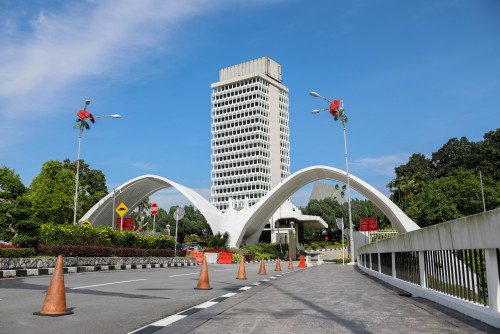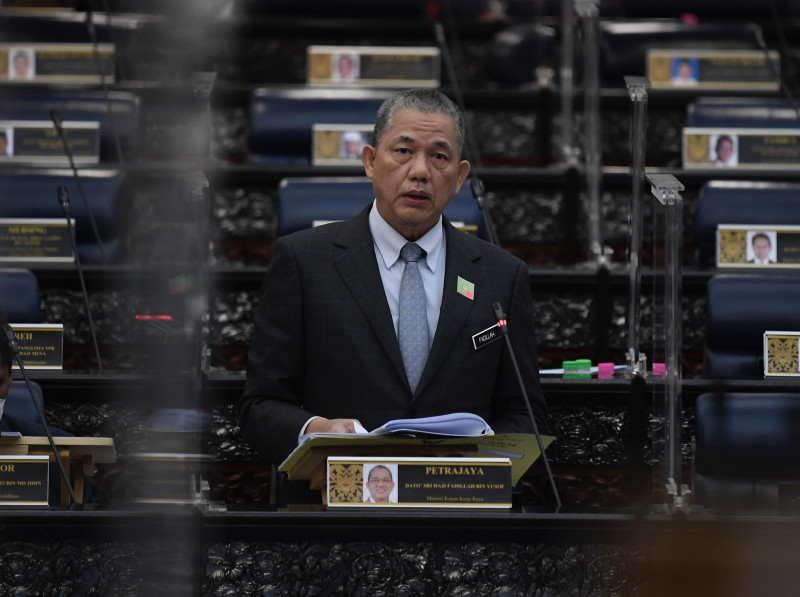
KELANTAN has been selected as the Malaysian landing site for a major ASEAN renewable energy corridor, where offshore wind power generated in Vietnam will be transmitted across the region to Singapore, Deputy Prime Minister II and Minister of Energy Transition and Water Transformation, Datuk Seri Fadillah Yusof, confirmed in Parliament today.
The project, approved in principle by the Cabinet on 21 May 2025, will be rolled out in two phases. The first includes the construction of a subsea power cable connecting Vietnam to Kelantan and the development of 2,000 megawatts (MW) of offshore wind capacity.
“Of the 2,000 MW capacity, 700 MW will be allocated for domestic use, while the remaining 1,300 MW will be exported to Singapore via Malaysia’s national transmission network,” Fadilah said in response to Datuk Mumtaz Md Nawi (PN–Tumpat) during the Dewan Rakyat session on Wednesday.
Completion of the first phase is targeted for 2034. A second phase, still under feasibility assessment, may involve a land-based route passing through Cambodia, Laos and Thailand to reach Malaysia.
Within Malaysia, the national grid will be upgraded to accommodate the new energy flow, with reinforcements planned along a corridor from Kelantan through Terengganu, Pahang, Negeri Sembilan and Johor. These upgrades are scheduled to commence in May 2025 and conclude by 2030.
“These reinforcements will benefit the national grid, improve electricity reliability and enable revenue from electricity exports to Singapore,” said Fadillah.
He clarified that ongoing green energy projects on the east coast are primarily intended for domestic use and are not designated by the government, but shaped by market forces, grid proximity and technical feasibility.
“Site selection depends on factors such as geography, proximity to the grid, land ownership, and commercial viability,” he said, emphasising the importance of federal and state government cooperation.
Fdillah also reaffirmed Malaysia’s commitment to the ASEAN Plan of Action for Energy Cooperation (APAEC), aimed at regional energy integration and a sustainable energy future.
“The Ministry welcomes both local and foreign investors to develop green energy projects across Malaysia, including the east coast,” he said.
In a separate parliamentary exchange, flood risks in housing developments were raised by Datuk Muhammad Bakhtiar Wan Chik (Balik Pulau), who asked the government to ensure homebuyers are protected from unknowingly purchasing property in flood-prone areas.
Responding, Fadillah acknowledged the increasing complexity of flood risk management amid intensifying rainfall and rising sea levels due to climate change.
He explained that all housing projects undergo technical assessments via the One Stop Centre (OSC) mechanism, including input from the Department of Irrigation and Drainage. These assessments rely on historical flood reports and local flood mitigation masterplans to evaluate drainage, infrastructure capacity and site suitability.
“Planning control is guided by the State Structure Plan and Local Plan, which determine the suitability of land use and identify flood-risk areas,” he said.
He added that new housing developments must comply with the guidelines of the Urban Stormwater Management Manual (MSMA), which mandates sustainable drainage designs including retention ponds and eco-friendly flood mitigation features.
However, older residential areas developed before MSMA’s enforcement often lack sufficient flood defences. “This makes them more vulnerable, especially during extreme rainfall events,” he said.
To address this, the 41st meeting of the National Physical Planning Council (MPFN) on 17 April 2023 endorsed the nationwide adoption of the Integrated Urban Drainage Master Plan (PISMA) for all land development.
“PISMA now serves as a reference for all parties—including local authorities and developers—to upgrade or design drainage systems and plan future developments in a more systematic, sustainable and flood-resilient manner,” Fadillah stated. - October 22, 2025