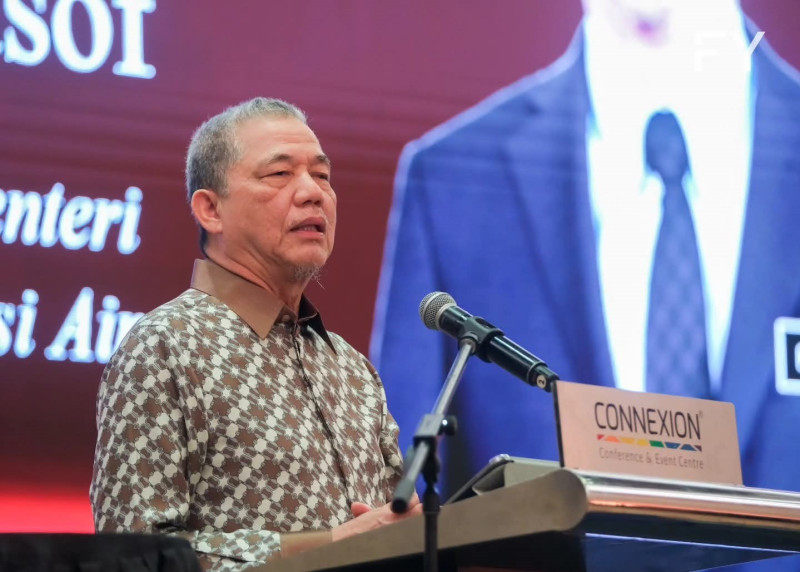
THE Government launched the MSU Centre for Climate Resilience and Strategy (M-CREST), a new research and innovation hub dedicated to strengthening national and regional resilience against the growing impacts of climate change.
Speaking at the launch ceremony at Management and Science University (MSU) today, Deputy Prime Minister II and Minister of Energy Transition and Water Transformation, Datuk Seri Fadillah Yusof, said the initiative reflects Malaysia’s ongoing commitment to balancing modernisation with environmental sustainability.
“This centre comes at a crucial time as the world faces escalating climate challenges,” he said. “It will serve as a strategic hub to drive climate-related efforts and strategies aligned with the United Nations’ Sustainable Development Goals (SDGs) and the objectives of the UN Framework Convention on Climate Change (UNFCCC).”
Fadillah commended MSU’s continued leadership in sustainability and its recognition among the world’s top 200 universities in the Times Higher Education Impact Rankings 2025.
He said the new centre would play a key role in supporting Malaysia’s long-term transition towards a low-carbon, climate-resilient future.
The centre will focus on six strategic clusters – Green and Biodiversity; Water and Ocean; Energy and Low Carbon; Waste and Circular Economy; Health, Climate and Community Resilience; and Research. These will cover areas such as climate mitigation, adaptation, community engagement, education and regional partnerships.
“Building climate resilience is about protecting our collective future, preserving natural resources and ensuring equitable access for all,” Fadillah said. “Climate change is no longer a threat of the future – it is a reality happening before our eyes.”
He reaffirmed Malaysia’s commitment to its Nationally Determined Contribution (NDC) and the target of achieving net-zero greenhouse gas emissions by 2050. He said the forthcoming National Climate Change Bill (RUUPIN) would mainstream climate actions, strengthen data governance and reporting, and introduce mechanisms such as carbon tax and emissions reduction credits.
“The Prime Minister has already announced the introduction of a carbon tax, initially targeting the steel and energy sectors, to complement the forthcoming Climate Change Bill,” Fadillah said. “This is part of Malaysia’s broader move towards a green, low-carbon economy.”
He also highlighted the development of two innovative financial instruments – the Forest Conservation Certificate (FCC) and the Forest Carbon Offset (FCO) – designed to encourage private sector participation in forest and biodiversity conservation. The FCO is expected to be operational by the first quarter of 2026.
Additionally, the government is preparing a comprehensive National Adaptation Plan (MyNAP) focusing on five key sectors: water security and coastal resources, agriculture and food security, infrastructure and urban resilience, forestry and biodiversity, and public health.
Fadillah underscored the role of universities and research institutions in providing scientific insights and evidence-based strategies.
“Institutions like MSU are not only centres of knowledge and talent but also vital platforms to promote green thinking, foster innovation and educate the public on environmental responsibility,” he said.
He encouraged M-CREST to collaborate with government agencies, including the National Water Research Institute of Malaysia (NAHRIM) and the National Water Services Commission (SPAN), particularly in using artificial intelligence and satellite technology for flood mitigation research.
Fadillah concluded by urging all sectors to unite in pursuit of sustainable progress. “Modernisation is important, but if pursued without careful planning, it risks damaging the environment and threatening future generations,” he added.
“I hope this strategic hub at MSU becomes more than symbolic – that it marks the beginning of a national partnership to strengthen climate resilience in Malaysia and across the region.” - October 30, 2025
.jpg)


_director_Datuk_M._Kumar.jpg)