MALAYSIA has successfully trained and deployed 13,679 highly skilled engineers into its semiconductor industry since the launch of the National Semiconductor Strategy (NSS) in May 2024, the Ministry of Investment, Trade and Industry (MITI) disclosed today in response to a parliamentary question.
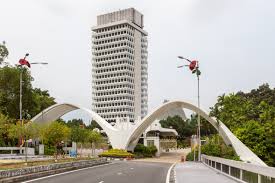
Deputy Minister Liew Chin Tong told the Dewan Rakyat today that the initiative, which identifies talent development as a critical pillar for long-term sustainability and competitiveness in the semiconductor sector, aims to reach a total of 60,000 skilled professionals by 2030 across integrated circuit (IC) design, advanced packaging, wafer fabrication, and research and development.
He highlighted that leading public universities, including Universiti Sains Malaysia (USM), Universiti Malaya (UM), Universiti Teknologi Malaysia (UTM), Universiti Putra Malaysia (UPM), Universiti Teknikal Malaysia (UTeM), and Universiti Malaysia Perlis (UNIMAP), are actively collaborating with technical training centres such as MIMOS, Advanced Semiconductor Academy of Malaysia (ASEM) – SIDEC, Penang Skills Development Centre (PSDC), Penang Chip Design Academy – InvestPenang, SMD Chip Design Centre and Academy, ADTEC, and KISMEC.
A strategic partnership was formalised on 24 July 2025 when CREST (Collaborative Research in Engineering, Science & Technology), an MITI agency, together with the Human Resource Development Corporation (HRD Corp), signed a memorandum of understanding to drive talent development under the NSS framework.
This collaboration includes the Engineering Talent for Semiconductor Industry (ETSI) programme, targeting the upskilling of 15,000 students, graduates, industry workers, and researchers to strengthen innovation and Malaysia’s global competitiveness.
The government has also integrated initiatives such as the MyMAHIR Future Skills Talent Council (FSTC) led by the Ministry of Human Resources through TalentCorp, aligning semiconductor workforce development with industry needs in the Electrical and Electronics sector, Liew said.
“Under the 2026 Budget, additional incentives for talent development in semiconductors have been announced. HRD Corp plans to provide three million training opportunities, focusing on high-tech sectors including semiconductors.”
Liew explained that the K-Youth programme and Khazanah TVET training will continue to offer work-based training to 11,000 youths without degrees, with an allocation of RM200 million.
The Flagship IC Design Programme will train 2,500 globally competitive professionals in integrated circuit design, funded with RM340 million.
The Skills Development Fund Corporation (PTPK) will receive RM650 million to support TVET skills training for over 25,000 trainees in high-tech sectors such as semiconductors, while RM5 million has been allocated to train semiconductor instructors at ADTEC Taiping, Perak.
“In addition to government-led initiatives, multinational companies engaged in chip design, fabrication, and testing are collaborating closely with public universities to develop industry-aligned curricula, high-tech laboratories, industrial attachments, and applied research programmes focused on next-generation semiconductor technologies,” Liew said.
“The approach not only ensures a sustainable pipeline of skilled workers but also enhances Malaysia’s capacity to become a regional hub for globally competitive semiconductor talent,” he added.
This disclosure was made in response to a question from Khairil Nizam Khirudin (Jerantut) during the third sitting of the 15th Parliament’s fourth session. - November 17, 2025