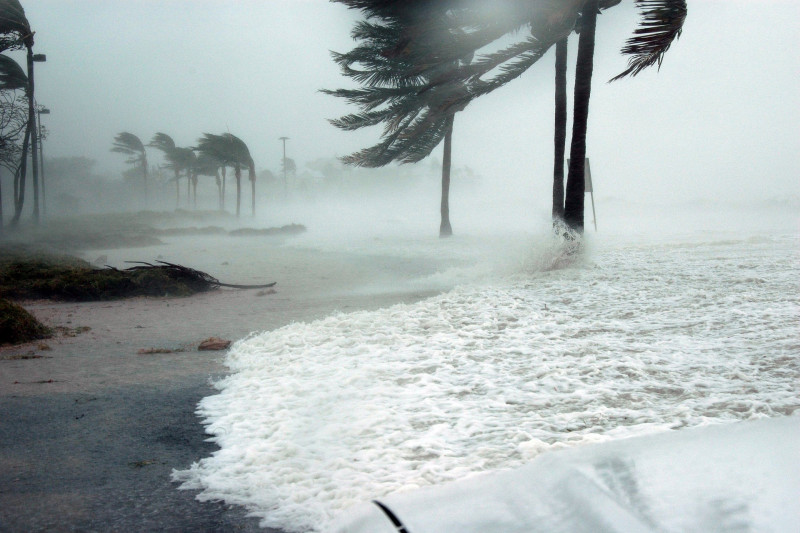
TROPICAL Storm Senyar has weakened and been downgraded to a low-pressure system, yet it continues to pose significant weather threats to Peninsular Malaysia.
Dr Mohd Hisham Mohd Anip, Director-General of the Malaysian Meteorological Department (MetMalaysia), confirmed that the system, which made landfall around midnight along the Selangor–Negeri Sembilan border, is currently moving eastwards towards the South China Sea.
"Although the system is weakening, cloud formation and rainfall activity remain active," Dr Hisham said.
"This can result in persistent heavy rain, strong winds, and turbulent seas, particularly in Pahang and Terengganu.
“This weather pattern is expected to continue until 29 November."
He urged the public to stay alert to weather updates via the MetMalaysia website, mobile app myCuaca, official social media channels, or the MET Malaysia hotline at 1-300-22-1638.
The storm’s impact has already been felt in Seremban, Negeri Sembilan, where six residents from two homes in Jalan Bukit Berlian 2, Taman Bukit Berlian, were evacuated following a landslide behind their houses.
A spokesperson for the Fire and Rescue Department (JBPM) said the incident occurred at approximately 3:50 am and that crews from Seremban and Ampangan fire stations promptly secured the area.
"There were six victims evacuated, and monitoring and safety operations are ongoing," the spokesperson confirmed.
Additional storm-related incidents include two fallen trees: one at Aeon Mall Seremban 2, which injured a 61-year-old male motorcyclist, and another in Port Dickson, where a tree fell on a parked Proton Saga, fortunately causing no injuries.
Dr Noram Irwan Ramli, Dean of the Faculty of Civil Engineering Technology at Universiti Malaysia Pahang Al-Sultan Abdullah (UMPSA), warned that structures such as temporary shelters, night market stalls, light storage units, and loose roofing are most vulnerable to winds of around 50 km/h.
"Older, poorly maintained buildings and weakened trees also pose risks of falling and blocking roads or damaging vehicles," he noted. He added that well-constructed brick, terrace, and reinforced concrete buildings remain largely safe.
Dr Noram emphasised that while Malaysia rarely experiences tropical storms, preparedness is more crucial than wind strength itself.
"This is not a major wind disaster, but it can be serious if temporary structures, lightweight objects, or surrounding areas are not secured," he said.
He recommended taking down temporary structures, securing loose objects, postponing night markets, and avoiding areas around large, weakened trees to minimise risks.
MetMalaysia had earlier reported that Senyar entered the Malacca Strait at around 3:30 pm yesterday, bringing persistent heavy rain, strong winds, and rough seas to Selangor, Perak, and parts of Pahang, with continued monitoring and updates being provided to ensure public safety. - November 28, 2025