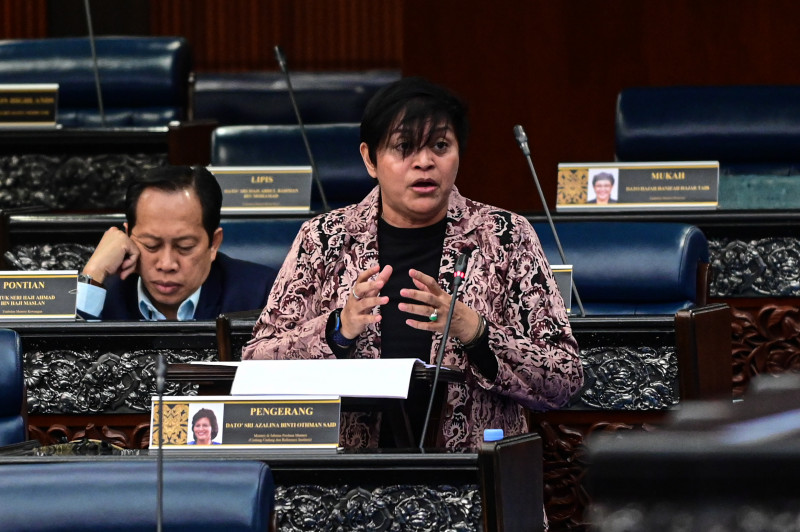
THE nation’s long-anticipated Anti-Bullying Bill 2025 was tabled for its first reading in the Dewan Rakyat today, proposing the creation of a nationwide system for handling bullying complaints and the establishment of a dedicated Anti-Bullying Tribunal.
Minister in the Prime Minister’s Department (Law and Institutional Reform) Datuk Seri Azalina Othman Said, who presented the Bill, confirmed that the next stage of debate would begin within days.
“The second reading of the Anti-Bullying Bill will be tabled on Wednesday (Dec 3),” she said.
The move follows a series of bullying cases that have sparked public outrage, including the death of Form One student Zara Qairina Mahathir of SMK Agama Tun Datu Mustapha in Sabah.
The Cabinet approved the draft last week after 12 town hall sessions held between September and October, each involving 300 to 400 participants.
These consultations drew input from school leaders, teachers, Parent-Teacher Associations, relevant agencies, children and students from higher education institutions.
The Bill introduces, for the first time, a clear and comprehensive statutory definition of bullying, covering physical, verbal and online behaviour.
The definition is intended to standardise understanding across educational institutions, enforcement agencies, parents and the wider community.
A key feature of the legislation is the empowerment of educational institutions to use their internal committees as the primary mechanism for preventing, detecting, managing and reporting bullying cases.
This is designed to ensure issues are dealt with swiftly and consistently at the institutional level.
Where cases cannot be resolved internally, the Bill provides for a child-friendly Anti-Bullying Tribunal.
The tribunal will operate through a non-adversarial process and will be authorised to offer protection, counselling and rehabilitation to those involved.
The proposed legal framework is civil in nature and emphasises prevention, victim support and the rehabilitation of offenders. It is grounded in restorative and inclusive principles intended to nurture children’s emotional and moral development.
The Bill also reinforces alternative dispute-resolution pathways, including restorative mediation, and places strong emphasis on parental involvement and longer-term support structures for both victims and perpetrators. - December 1, 2025