


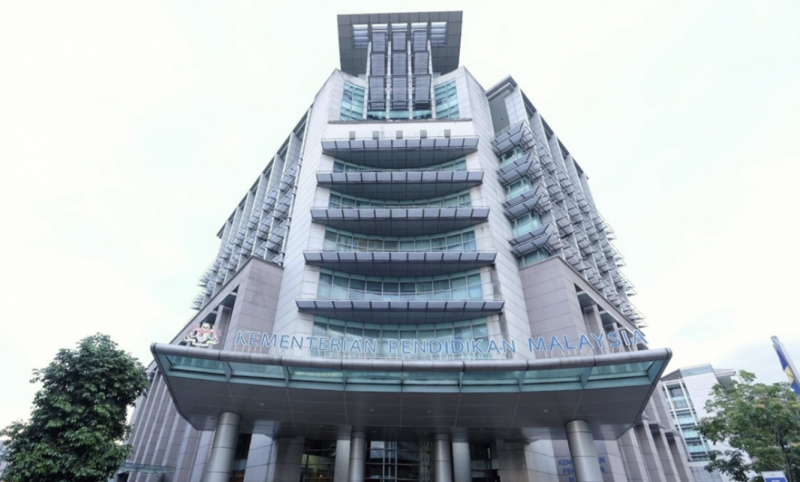
MALAYSIA’S 2027 School Curriculum (KP2027) is set to deliver one of the most sweeping education reforms in decades, placing character development and values at the heart of schooling from the earliest years.
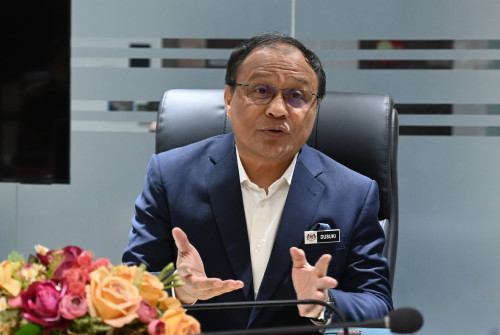
Education director-general Dr Mohd Azam Ahmad said the new curriculum would not simply adjust structures but would renew the fundamental purpose of education.
He said KP2027 sought to restore schools as environments that cultivate values, intellectual discipline and student character rather than institutions narrowly driven by academic results.
“Character formation will be the most defining feature of KP2027,” he said during a recent engagement session with the media.
Under the new approach, values will no longer be confined to textbooks. Instead, they will be woven into daily routines and observable behaviour.
Students, Dr Azam said, must witness how respect is demonstrated, how empathy is expressed and how tolerance is practised.
“Respect for teachers and peers is demonstrated in the classroom. Cleanliness and responsibility are nurtured through habits such as cleaning the table after meals, while tolerance is instilled through simple actions like queueing at the canteen. The values we seek to instil are not merely written but ‘living’ values — being happy together, helping one another and compromising during decision-making.
“This element will be integrated across all subjects and interactions, not taught as a standalone subject,” he said.
Curriculum Development Division director Nooraini Kamaruddin said KP2027 would be implemented through two principal routes.
First, a character development programme will be introduced from preschool to upper secondary.
At preschool level, character-building will occur organically through daily routines such as arranging shoes, sharing food, helping friends and keeping clean.
At primary and secondary levels, schools will allocate 60 minutes weakly for hands-on activities to cultivate targeted character traits. This, she emphasised, is not a new subject but a school-level programme.
“Character development will also be infused into all subjects, with every teacher expected to serve as a character educator — teaching not only knowledge and skills, but also related values, attitudes and behaviours.
“For example, in a Science lesson, while learning theories and using laboratory tools, students will also practise teamwork, tolerance and honesty when carrying out experiments,” she said.
Another central feature of KP2027 is Nature and Humanity: Integrated Learning — an interdisciplinary approach that brings together music, health, arts, science, TVET and digital elements.
“This approach brings learning closer to real life. Students observe nature and think like explorers,” Dr Azam said. “For example, they plant chilli, record its growth, observe sunlight, draw the sun and plant, sing about the process and share their findings. They learn through a range of intellectual disciplines without relying on memorisation.”
He said such learning would be increasingly vital in an era defined by climate change, frequent floods and rapid digitalisation.
“Children must understand the relationship between humans and nature to grow into global citizens who value the environment and collective well-being,” he added.
KP2027 will also expand the use of co-teaching, where two teachers collaborate in one classroom to plan, deliver and assess teaching and learning.
Although the method already exists in some schools, Dr Azam said it would now be strengthened and more clearly coordinated.
“Co-teaching is suitable where teachers are well-matched to manage a class collaboratively,” he said.
A music teacher and a science teacher, for example, may jointly teach Nature and Humanity: Integrated Learning.
Where staffing constraints arise, a single teacher may continue without disrupting lessons. Implementation guidelines will be issued as the key reference for schools.
The new curriculum introduces three developmental learning stages. Stage I (Years 1–2) focuses on literacy, numeracy and creating enthusiasm for school through intellectual discipline and enjoyment of learning. Stage II (Years 3–4) emphasises applying knowledge and connecting concepts to real life, such as understanding sunlight’s role in plant growth or the importance of a healthy environment. Stage III (Years 5–6) builds analytical thinking, innovation and character strength, introducing the concepts of identity, critical thinking and global citizenship.
Dr Azam said KP2027 was designed as a response to the realities of the modern world — extreme weather, economic shifts, an ageing population and digital dependency.
Schools, he argued, must no longer produce “bookworms” but well-rounded individuals with strong values, emotional resilience and creativity.
Education, he added, must remain connected to spiritual and moral values in line with the National Education Philosophy, which emphasises intellectual, spiritual, emotional and social balance.
He stressed that teachers are indispensable to the success of KP2027. “Teachers do not merely teach academic content; they shape students — nurturing their emotional development and building their character,” he said.
Describing the curriculum reform as an educational “jihad” or mission, he called for collective commitment to ensure every child is guided with love and wisdom to navigate the world beyond school. - December 8, 2025

.JPG)



.jpg)
