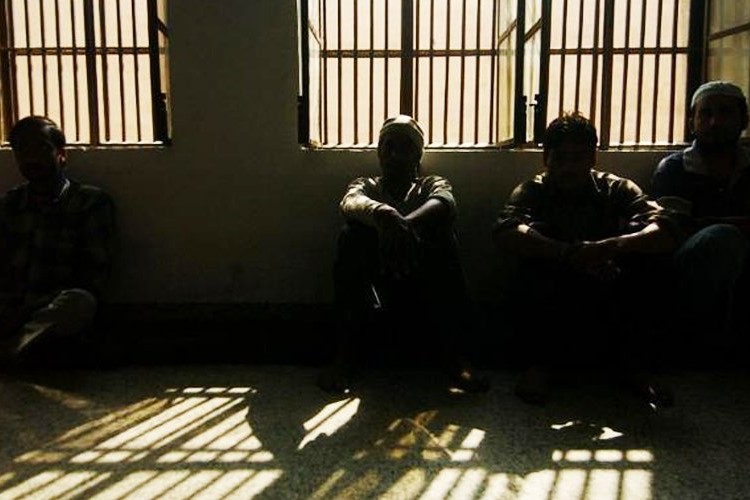
NEW findings by the Malaysian Humanitarian Organisation (MHO) indicate that the majority of Malaysians ensnared in overseas human trafficking and employment fraud schemes are recruited by acquaintances rather than through online advertisements, revealing a significant shift in the tactics employed by syndicates.
Datuk Hishamuddin Hashim, Secretary-General of MHO, told reporters at the organisation’s office that approximately 80 per cent of victims were persuaded by friends, while only a small fraction were recruited via social media.
His assessment draws from numerous field cases, including recently rescued victims from Myawaddy, Myanmar.
“I can say that 80 per cent of the victims in those locations were brought by friends, not through social media. The syndicate’s methods are evolving, using peer agents to entice victims with displays of a luxurious lifestyle,” Hishamuddin said.
He noted that young people are particularly vulnerable to overseas employment scams, often placing greater trust in friends than in official warnings.
“Most victims only realise they have been deceived after arriving abroad and being forced to work in fraud centres,” he added.
Although social media platforms such as Facebook continue to be used, Hishamuddin emphasised that these channels are no longer the primary means of recruitment.
“Social media techniques still exist, but they are not as prevalent as before,” he said.
The disclosure comes amid pleas from five Malaysian families whose children are currently trapped in Taiwan and Cambodia.
The children, aged between 18 and 24, are believed to have been forced into fraudulent schemes, subjected to physical abuse, starvation, electric shocks, and heavy ransom demands, with some facing lengthy prison sentences.
Celine, 23, whose 19-year-old brother was detained in Taiwan in December 2024, said, “My brother found the job through an online application offering employment in Taiwan.
He was sentenced to 25 years in prison after being detained and charged for involvement with a fraud syndicate there. He suffered physical abuse leaving visible scars. We are now exploring avenues to appeal the sentence and seek a reduction.”
Another mother, Ooh from Hulu Selangor, recounted how her 18-year-old son Chin was beaten, starved, and electrocuted in Cambodia. Vivian, 52, described how her 24-year-old son Brian had his passport confiscated upon arrival and was held by a syndicate demanding escalating ransoms.
In a related development, the Malaysian Ministry of Foreign Affairs successfully facilitated the repatriation of 20 victims of online fraud syndicates in Myawaddy, Myanmar.
The group was returned safely via the ICQS Bukit Kayu Hitam complex and handed over to the Royal Malaysian Police for further investigation.
“The successful return of 20 individuals demonstrates the importance of close collaboration among various agencies, including Malaysian embassies and authorities in Myanmar and Thailand,” Hishamuddin said.
“Twelve of those individuals were previously reported to us by their families, highlighting the ongoing need for vigilant monitoring and swift action.”
Hishamuddin confirmed that MHO is prepared to provide all relevant information and documentation to embassies and authorities to expedite the repatriation of Malaysian victims.
“This is a humanitarian matter, and we are committed to ensuring the safe return of all victims while supporting their families at every stage of the process,” he said.
The organisation continues to coordinate with Malaysian embassies in Taiwan, Cambodia, and other affected countries to conduct rescue operations, monitor syndicate activity, and prevent further cases of exploitation. - December 19, 2025