MALAYSIA’S rail development landscape recorded notable progress in 2025, driven by advances in flagship megaprojects, expanding regional ambitions and intensified planning for future connectivity across the peninsula and Borneo.
The East Coast Rail Link emerged as one of the year’s most significant achievements, reaching 88.08 per cent completion as of Nov 4 following the delivery of the C1B segment.
Bernama cited today that the package marked the first full civil works section to be completed, linking Kelantan to the Gombak Integrated Terminal and establishing a critical connection between the project’s eastern and western alignments.
Construction works for the C1B stretch, which began in September 2022, included the Gombak Tunnel, two major bridges and extensive subgrade works, forming a vital transport conduit across the peninsula.
The ECRL also attracted renewed international attention, with Thailand expressing interest in extending the line from Kota Baru to the Sungai Golok border. Thai Ambassador Lada Phumas said such an extension could support broader aspirations under the Pan-Asia Railway Network.
Malaysia’s other major rail initiative, the Kuala Lumpur-Singapore High Speed Rail, remained under evaluation as of Oct 7.
Transport Minister Anthony Loke said the ministry and related agencies were finalising key parameters to determine the most viable delivery model before proceeding to the request for proposal stage.
He reiterated that the project would move forward only through private sector investment, without direct government funding.
Progress was also recorded in urban rail development, with the Light Rail Transit 3 project on track to begin operations on Dec 31, subject to final reliability and safety assessments.
The reinstated scope brought the total project cost to RM21.93 billion, an increase of RM5.3 billion from the RM16.63 billion revised figure approved in 2018, though still below the original allocation of RM31.65 billion.
At the state level, Johor renewed calls for federal approval of its proposed domestic rail system to manage rising passenger volumes ahead of the Johor Baru-Singapore Rapid Transit System link, which is scheduled to open in 2027.
The proposed 4km shuttle, capable of carrying up to 10,000 passengers per hour, is expected to channel heavy passenger flows into Bukit Chagar station.
The state has indicated openness to either an Autonomous Rapid Transit or Light Rail Transit system, stressing that a decision must be made and implementation begin no later than early next year.
Penang also moved its rail agenda forward, confirming that construction of the Mutiara Line LRT will commence as scheduled in January next year, with completion targeted for December 2031.
Meanwhile, the Gemas-Johor Baru electrified double track project was completed and handed over to the government on Dec 11, 2025.
The RM8.9 billion, 192km line connecting Segamat, Kluang, Kulai and Johor Baru has been opened in phases for testing since March.
The project is being delivered through collaboration between the Transport Ministry as policy lead, Keretapi Tanah Melayu Bhd as the operator, and the Railway Asset Corporation as asset owner and driver of integrated development.
In Borneo, rail development entered a strategic planning phase with the launch of a 12-month feasibility study for the proposed Trans-Borneo Railway in June 2025.
The study, which will conclude in the third quarter of 2026, aims to assess the viability of linking Sabah, Sarawak, Brunei and Kalimantan.
Funded with RM7 million under the 12th Malaysia Plan, it covers technical, commercial, socio-economic, operational and governance aspects and will culminate in a proposed implementation timeline.
Road connectivity also advanced alongside rail initiatives, particularly the Pan Borneo Highway spanning more than 2,000km across Sabah, Sarawak and Brunei.
In Sarawak, the highway recorded 99.97 per cent completion as of August 2025, with most sections already open to traffic.
In Sabah, Phase 1A stood at 85.25 per cent completion as of October 2025 against a scheduled 93.96 per cent, while the recently started Phase 1B recorded 9.49 per cent progress compared with a targeted 13.14 per cent.
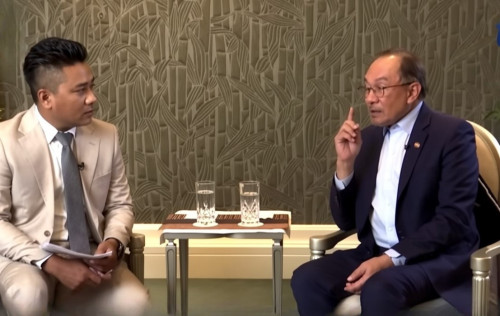
Tabling Budget 2026 in October, Prime Minister Datuk Seri Anwar Ibrahim reaffirmed the government’s commitment to strengthening national rail connectivity through strategic projects across the country.
“People’s mobility is not just about physical infrastructure. It is the lifeblood that drives the economy and the people’s livelihood. From remote rural areas to major metropolises, public transport and road systems must be efficient, safe and connected,” he said. - December 21, 2025