


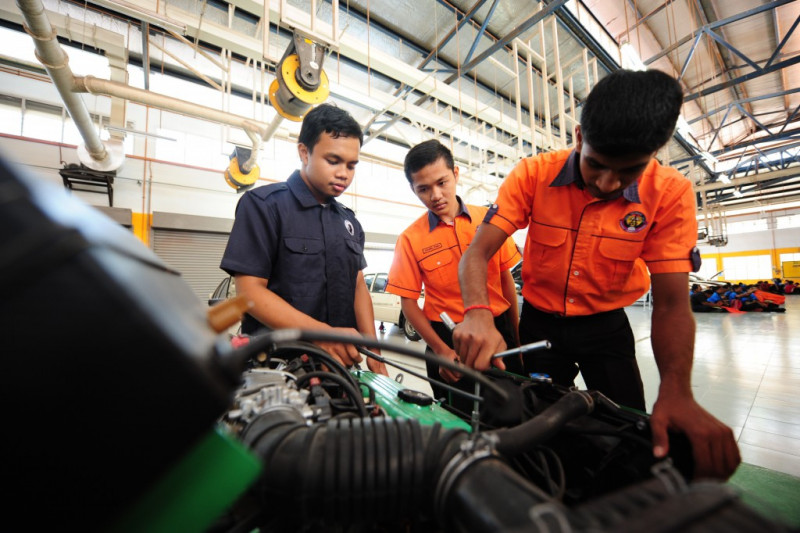
EMPLOYERS across Malaysia are increasingly turning to diploma- and certificate-level graduates as businesses seek job-ready talent capable of contributing immediately in a labour market reshaped by digitalisation, automation and service-led growth.
Industry leaders say programmes that emphasise technical, digital and vocational skills are giving school leavers a growing advantage over purely academic routes, as companies prioritise practical competencies, adaptability and workplace readiness.
Malaysian Employers Federation president Datuk Dr Syed Hussain Syed Husman said Sijil Pelajaran Malaysia leavers should seriously consider industry-aligned diploma or certificate programmes to strengthen their employment prospects.
“TVET (technical and vocational education and training) and skills diplomas are particularly valuable because they are designed around real workplace needs,” he was quoted as saying by the New Straits Times today.
He said technical and engineering diplomas remain in strong demand, particularly in electrical and electronic engineering, mechatronics, automotive technology, manufacturing and quality assurance, all of which are closely linked to Malaysia’s industrial base.
At the same time, rapid digital transformation across sectors has driven sustained demand for Information and Communication Technology diplomas in areas such as software development, computer networking and multimedia or animation.
These programmes prepare graduates for roles in information technology, creative agencies and digital services.
Diplomas in logistics, supply chain management, operations, health-related technical fields, hospitality and tourism are also seeing strong uptake, reflecting growth in e-commerce, public health services and the broader service economy.
On employability prospects, Syed Hussain identified digital, technical, healthcare and logistics disciplines as leading fields. He said digital transformation, now a top priority for Malaysian businesses, was fuelling demand for software developers, data analysts, artificial intelligence and machine-learning specialists, as well as cybersecurity professionals.
Engineering roles, particularly in electrical and electronics, semiconductors, automation and sustainable manufacturing, continue to offer solid opportunities, he added. Demand is also rising in healthcare and allied health professions, including nurses and medical technologists, as health systems expand and become more digitally integrated. Logistics, supply chain and operations management roles are similarly growing in importance alongside globalised supply chains.
Beyond technical roles, Syed Hussain said business, finance and financial technology sectors remain attractive, especially in digital banking, accounting, business analytics, administration, shared services, risk management and environmental, social and governance finance. Sustainability, renewable energy and green technology roles are also gaining momentum.
He advised students uncertain about their study choices to assess their strengths and interests, research labour market demand, explore flexible education pathways and focus on transferable skills such as communication, problem-solving, digital literacy and adaptability.
Looking ahead, Syed Hussain said the job landscape would continue to be shaped by automation, artificial intelligence, digitalisation and hybrid work arrangements.
Digital literacy, data skills, cybersecurity awareness and adaptability would become essential, while TVET and hands-on training would play an increasingly important role, particularly for technical and blue-collar positions.
“Under the 13th Malaysia Plan, human capital transformation, digital capabilities and green growth are the top priorities, and young workers will need to engage in continuous learning to stay relevant,” he said.
As competition for entry-level positions intensifies, employers are also placing growing emphasis on soft skills. Syed Hussain said school leavers should develop effective communication in both Bahasa Malaysia and English, teamwork, interpersonal skills, critical thinking, problem-solving ability, discipline, reliability and a positive work attitude.
“These skills aren’t difficult to develop. Short online courses, volunteering, part-time jobs or youth programmes can make a big difference,” he said.
Based on MEF’s engagement with employers, he said technical competencies could often be learned on the job, but soft skills and digital readiness were consistently cited as the strongest indicators of employability.
Employers now expect entry-level workers to be comfortable with professional email communication, productivity tools such as Microsoft Word, Excel and Google Workspace, responsible online research and basic cybersecurity awareness.
“Many industries now rely on digital tools, so school leavers familiar with point-of-sale systems, inventory software, scheduling or human resource applications and online customer service platforms are absorbed more quickly,” he said.
Basic exposure to data entry, data handling, social media content creation, digital marketing or introductory coding further enhances job prospects, he added.
Syed Hussain said short courses in communication, customer service, English language enhancement, teamwork, leadership, problem-solving and workplace etiquette could significantly improve performance in interviews and customer-facing roles.
For those inclined towards hands-on careers, he said introductory training in areas such as electrical wiring, automotive maintenance, hospitality fundamentals, industrial safety, logistics and warehouse operations provides a strong foundation.
These programmes are widely available through polytechnics, community colleges, industrial training centres, Giatmara and accredited TVET institutions.
Some entry-level jobs, he noted, require or recognise certifications such as food handling, first aid and CPR, barista training, retail operations and forklift operation. Courses in financial literacy, entrepreneurship, e-commerce and gig economy management can also benefit youths exploring self-employment.
He encouraged school leavers to take up part-time or temporary work to build confidence, improve adaptability and gain familiarity with workplace norms.
Customer service, retail and hospitality roles, as well as basic office positions and internships, offer valuable early exposure to professional environments.
“With the growth of online businesses, roles such as warehouse assistants, packaging and fulfilment crew, inventory assistants and non-driving delivery support are also accessible to school leavers,” he said.
Low-risk gig work, including basic graphic design, social media assistance, simple video editing and online microtasks, can also help young people build portfolios and practical experience.
Many young jobseekers struggle because they lack exposure to real workplace environments, he said, urging SPM leavers to use the waiting period before further studies to join career awareness programmes, job-shadowing initiatives, industry talks or temporary employment.
Meanwhile, JobStreet by SEEK Malaysia managing director Nicholas Lam said demand for TVET talent continues to accelerate, with related job postings rising 28.9 per cent year-on-year.
“This aligns with the Industrial Master Plan 2030, which emphasises the need for skilled technicians and operators to support sectors like automation, electrical and electronics, aerospace and green industries, all of which rely heavily on technical talent rather than purely academic qualifications,” he said.
Lam added that school leavers and fresh graduates should remain open to roles that may not perfectly match long-term ambitions, noting that flexibility and a willingness to explore high-growth sectors could significantly improve career prospects.
Early work experience, even in adjacent fields, he said, can build confidence, enhance employability and open doors to future opportunities. - January 2, 2026














.jpeg)
