__Akmal_Nasrullah_Mohd_Nasir_.jpg)
THE government has acknowledged that Malaysia’s steadily falling fertility rate and accelerating population ageing will have profound implications for the country’s economic outlook, labour force participation and regional development, and has outlined a series of long-term strategies to mitigate the impact.
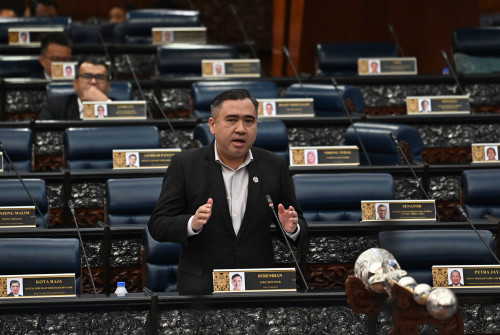
In a written reply to a parliamentary question by Datuk Dr Haji Alias Razak (PN–Kuala Nerus), Economy Minister Akmal Nasrullah Nasir said Malaysia officially became an ageing nation in 2021 and is projected to reach aged nation status by 2048, driven by longer life expectancy and a sustained decline in fertility rates.
Citing the Department of Statistics Malaysia’s Population Projections 2020–2060 report, the minister said the country’s total fertility rate fell from 1.7 children per woman in 2023 to 1.6 in 2024, and is projected to decline further to 0.7 by 2050.
The ministry warned that slower population growth and declining fertility would shrink the proportion of the working-age population, directly affecting future labour force participation and constraining Malaysia’s potential economic growth.
To address these challenges, the government has developed the National Ageing Blueprint 2025–2045, which sets out five strategic pillars covering macroeconomic and fiscal sustainability, education and skills, labour force development, lifelong health, and social protection including long-term care.
Akmal said the blueprint’s priorities have been embedded into strategies and initiatives under the 13th Malaysia Plan to prepare the country for the structural shift toward an older population.
Among the key measures outlined are efforts to boost national productivity and competitiveness, prepare institutions and services for an aged society, and reform the labour market by increasing participation among older workers, women and persons with disabilities.
On regional and demographic imbalances, the ministry said RMK13 places strong emphasis on narrowing development gaps by diversifying economic activity, particularly through the expansion of high-growth, high-value industries and other high-impact strategic sectors in less-developed regions.
These efforts will be supported by strengthening the digital economy, the halal ecosystem and sustainable tourism, as well as developing emerging sectors such as the green economy, blue economy and creative economy.
He said a stronger place-based development approach would be pursued by leveraging local economic strengths to attract quality investment, expand supply chains into underserved areas and create high-skilled, competitively paid jobs.
To ensure inclusive growth, the government will also prioritise improving social mobility through labour market reforms and by strengthening technical and vocational education and training.
Agencies such as regional development authorities, state economic development corporations, as well as small and medium enterprises and the third sector, will play a larger role in implementing these initiatives nationwide.
Akmal added these combined measures are aimed at safeguarding long-term economic resilience while ensuring balanced demographic and regional development across Malaysia. - January 28, 2026