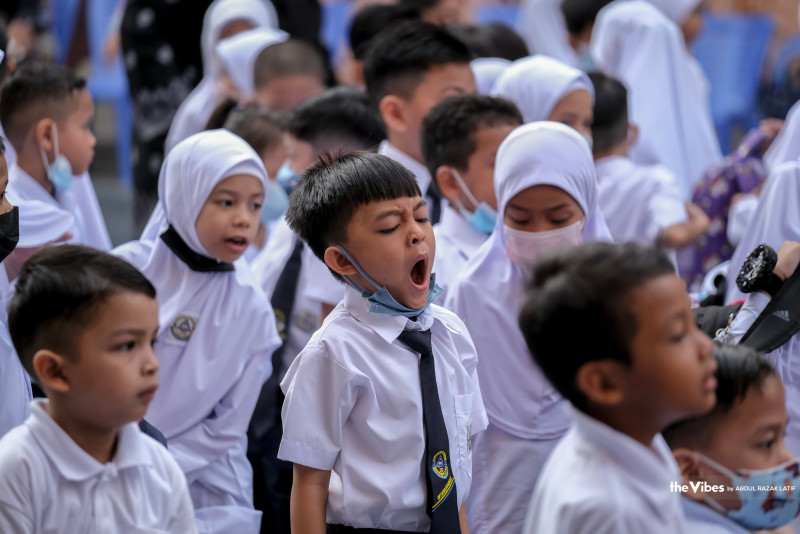
THE move to allow six-year-olds to enter Year One under the National Education Blueprint (RPN) 2026–2035 is seen as an important initiative to strengthen the national education system, including in Sabah, towards a more holistic and competitive direction.
Educators told Bernama the move will help reduce student dropouts, improve access to education and develop quality human capital from an early age, while narrowing the gap in education standards between states. Universiti Malaysia Sabah (UMS) Early Childhood Education Programme Senior Lecturer, Dr Juppri Bacotang, said the policy is also a long-term investment that can generate social and economic returns for Sabah and the nation.
In Sabah, he said the policy will prompt a review of infrastructure needs in rural and interior areas, as higher enrolment will require more classrooms and better facilities. “This implementation requires balanced resources. More trained early childhood teachers are critical to ensure an ideal teacher-pupil ratio so each child receives proper attention, which will strengthen education in Sabah,” he told Bernama.
RPN 2026-2035 was launched by Prime Minister Datuk Seri Anwar Ibrahim on Jan 20 and is jointly led by the Ministry of Higher Education through the Malaysian Higher Education Blueprint 2026– 2035 and the Ministry of Education through the Malaysian Education Blueprint 2026–2035.
Juppri believes the policy will help standardise early education, and that its objectives can be achieved with thorough preparation and assessment covering cognitive, emotional, social, and physical aspects, rather than academic performance alone.
“The learning-through-play approach should remain central to the curriculum to ensure six-year-olds develop positive traits such as discipline and self-confidence without feeling pressured in a formal school setting,” he emphasised.
On teacher availability, Juppri stressed that UMS is prepared to play a strategic role by producing competent, knowledgeable teachers who understand the socio-cultural realities of education in Sabah.
He concluded that early Year One admission could be a key mechanism to strengthen the national education ecosystem, provided it is supported by careful financial planning and strong commitment to children’s well-being from all stakeholders.
Another educator, former headmaster of Sekolah Kebangsaan Pasir Puteh, Keningau, Yazid Mohd Hasnan Tawik@Charles, described the phased implementation of the policy as a realistic step to ensure rural and interior areas in Sabah are not burdened by existing infrastructure limitations.
The chairman of Persatuan Kebajikan Masyarakat Bingkor said allowing parents a choice under the policy demonstrates the government’s concern for the preparedness of students, parents and school facilities in areas still facing basic infrastructure shortages, particularly in Sabah.
“The success of this policy in Sabah depends on careful preparation, including the addition of classrooms and preschool centres, as well as the deployment of enough trained teachers to ensure education access in rural areas is on par with urban centres,” he told Bernama. Yazid also fully supported the nationwide coordination of the preschool system under the Ministry of Education, describing it as a critical mechanism to guarantee quality curriculum and teacher training, regardless of students’ socio-economic background.
“This initiative aligns with the RPN 2026–2035 aspiration to strengthen early education as the foundation for human capital development, producing a competitive generation ready to face increasingly complex educational challenges,” he said. – February 6, 2026