THE government has reaffirmed its commitment to the economic empowerment of Bumiputera communities through the Pelan Transformasi Ekonomi Bumiputera (PuTERA35), a comprehensive strategy centred on the principles of Participation, Ownership, and Control.
Economy Minister Akmal Nasrullah Mohd Nasir told the Dewan Rakyat on Tuesday that PuTERA35 sets nine measurable targets, including increasing the contribution of Bumiputera enterprises to the national GDP to 15 per cent by 2035.
These objectives will be driven by scaling small and medium enterprises and the GEAR-uP Bumiputera programme, leveraging strategic partnerships with Government-Linked Investment Companies (GLICs) and Government-Linked Companies (GLCs) such as Khazanah Nasional, KWSP, KWAP, PNB, and Tabung Haji.
“The government recognises the critical importance of this agenda,” the Minister said.
“Bumiputera development focuses on targeted interventions across 11 high-potential sectors and HGHV industries, supported by strengthened equity financing institutions, catalytic funding, and alternative financing mechanisms managed by Bumiputera-mandated agencies.”
The strategy emphasises structured skills training, professional certification, and vocational education to enhance employability and access to high-value opportunities.
Entrepreneurship initiatives, strategic mentorship, and financing facilitation are designed to strengthen the resilience of Bumiputera enterprises, while strategic collaborations with GLICs and GLCs aim to expand large-scale Bumiputera businesses into capital markets and global value chains.
In parallel, RMK13’s development expenditure for 2026 has been set at RM83 billion, including an additional RM2 billion for unforeseen needs, with the overall cost of new and ongoing projects reaching RM892.75 billion.
Over the RMK13 period (2026-2030), the government anticipates total development allocations of RM430 billion to drive national economic growth.
“The MADANI government focuses on fundamental development expenditure that directly benefits citizens, supports infrastructure, and stimulates economic expansion,” Akmal added.
While the development expenditure share of the federal budget has declined to below 20 per cent, strategic financing via GLIC investments, public-private partnerships, and federal statutory bodies ensures large-scale projects continue without straining public finances.
For equitable regional development, RMK13 allocations for six less-developed states, including Kedah, Perlis, Kelantan, Terengganu, Sabah, and Sarawak, total RM20 billion for 2026, representing a five per cent increase over the previous year.
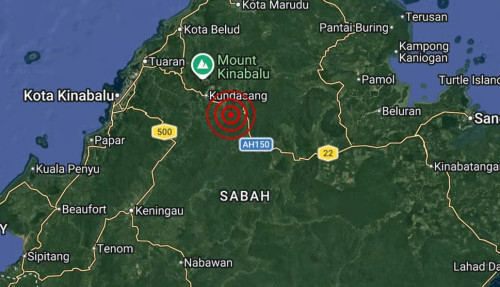
Sabah and Sarawak receive the highest allocations at RM6.49 billion and RM5.58 billion respectively, with funds directed towards basic infrastructure such as roads, clean water, electricity, and internet access.
Strategic high-impact projects like Kedah Rubber City, Taman Biopolimer Kerteh, Pekan Automotive Park, Kota Kinabalu Industrial Park, and Samalaju Industrial Park will channel RM39.48 billion in investments, generating economic spillovers and employment opportunities.
The government emphasised that development planning is guided by national priorities, sectoral needs, project readiness, and economic and social impact, ensuring that benefits are equitably distributed.
To ensure accountability, RMK13 implementation will be closely monitored through the National Policy Implementation Plan (PPD) and the MyRMK online monitoring system, providing detailed targets, timelines, and responsible agencies for each initiative.
“The aim is to ensure RMK13 is not merely a planning document but a framework that delivers tangible benefits to the people of Malaysia,” Akmal said. - February 10, 2026