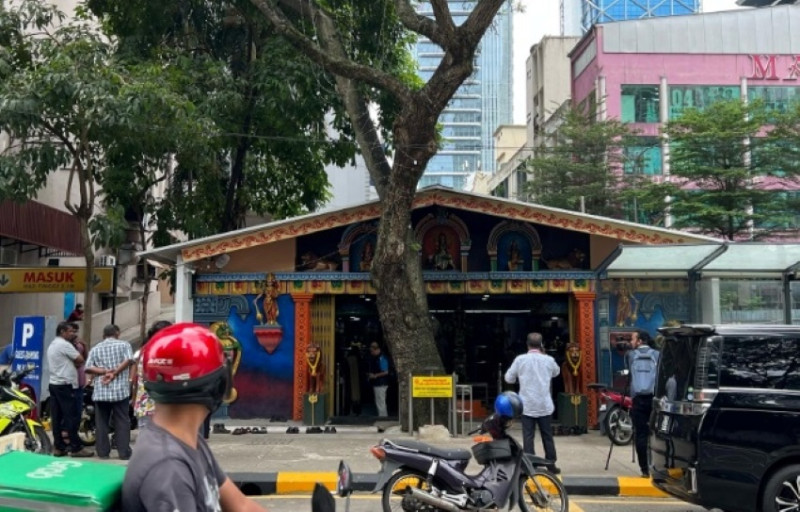
THE government has been urged to proceed with extreme caution and transparency in implementing proposals to legalise unauthorised places of worship, amid concerns over potential legal ramifications and public unease, particularly regarding sensitivities of the Muslim community.
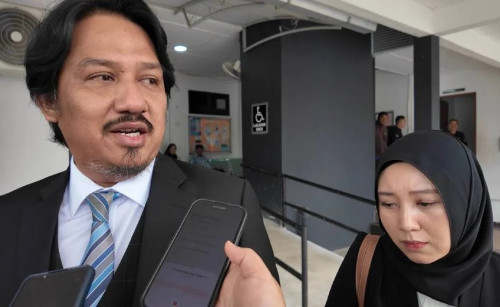
Constitutional law specialist Datuk Dr Wan Ahmad Fauzi Wan Husain said any policy touching on religious matters must first be referred to the Conference of Rulers to ensure compliance with the rule of law and uphold the supremacy of the Federal Constitution.
“The regularisation process must be clear and not serve hidden agendas. There should be reliable data and statistics on places of worship built without approval,” he said.
“Key questions include whether these structures are on land owned by the religious group or whether the group is registered with the Registrar of Societies. It is also vital to ascertain whether their practices adhere to their religious teachings without contravening national law.”
The comments follow statements by Housing and Local Government Minister Nga Kor Ming, who expressed his ministry’s readiness to facilitate the legalisation of non-Muslim places of worship built without prior approval.
Kor Ming indicated that the ministry would assist through special provisions and coordination with local authorities to ensure that unauthorised religious sites on unzoned land can operate legally in accordance with existing guidelines.
On the legal front, Wan Ahmad Fauzi cautioned that although Article 11 of the Federal Constitution guarantees freedom of religion, this right has defined limits.
He noted that non-Muslim groups may manage their own affairs and raise funds, but they cannot receive allocations from federal or state taxes.
He also highlighted that educational funding under Article 12 is reserved exclusively for Islamic religious institutions.
“Most importantly, they cannot propagate their beliefs to Muslims or undertake activities contrary to public order, health, or morality,” he said.
Wan Ahmad further warned that the term “regularisation” could be easily misunderstood, potentially undermining social cohesion if mishandled.
He urged the ministry to demonstrate firmness against illegal construction rather than providing shortcuts that might be seen as bypassing the law.
“Authorities must avoid creating the narrative that non-Muslim religions can be practised with the same freedoms and privileges as Islam,” he added.
“Our Constitution allows for ‘constitutional discrimination’ to protect the fundamental structure of the nation, including the position of Islam, the monarchy, and the special position of the Malay community.” - February 19, 2026



.jpeg)