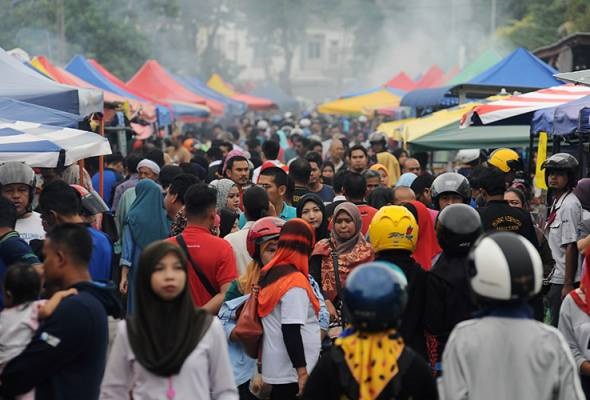
VISITORS to Ramadan bazaars across Malaysia have expressed frustration after some traders reportedly raised food prices while attributing the increase to the ongoing crisis in the Middle East.
The complaints surfaced on social media, where consumers questioned the justification for sudden price adjustments at local stalls.
In a post shared on the Threads platform, a user identified as Fauzi_abdullah claimed that the price of food at a bazaar he visited had risen by RM2.
According to him, the vendor cited the conflict involving Iran and disruptions to shipping routes near the Strait of Hormuz as the reason for the increase.
“Earlier I went to the bazaar and the popia I usually buy had gone up by RM2. I asked why the price had increased. The auntie replied that it was because of the Iran war crisis and ships cannot pass through the Strait of Hormuz. I was stunned,” he wrote.
The post quickly attracted a stream of humorous responses from other users, many of whom mocked the explanation by linking everyday food prices to geopolitical tensions.
One commenter wrote, “The popia must have been fried using Iranian oil,” while another joked, “Maybe the popia skin arrived by ship.”
Others, however, suggested that some traders might be taking advantage of the situation to increase prices unnecessarily.
One user remarked that the economic effects of the conflict had yet to fully materialise.
“The economic downturn has not even started yet; the government is still cushioning the impact.
Maybe by May we will feel it. But with food I am not sure, perhaps suppliers have already increased prices in advance,” the user said.
Another added that the Strait of Hormuz had only recently been disrupted and questioned whether the impact on local food prices could realistically be felt so quickly.
“The Strait of Hormuz was only just blocked. Surely it is too soon for prices to be affected already,” the user commented.
The discussion highlights growing public sensitivity over food prices during the Ramadan period, particularly as global geopolitical tensions raise concerns about supply chains and the cost of essential goods. - March 14, 2026