.jpg)

THERE is no question that many Malaysians feel let down by this government.
Some have good reasons. Many simply have frustrations.
But if we are honest with ourselves, only a handful of groups have genuine grounds to complain that their lives have fundamentally failed to improve: the poor—Malay, Chinese and Indian alike—and our students, whose future has become increasingly uncertain.
The liberal elite, whether intellectual or financial, should perhaps spend less time shouting over symbolic issues and more time focusing on the struggles of ordinary Malaysians.
It is easy to be outraged from the comfort of privilege. It is much harder to solve the problems that matter.
The truth is uncomfortable.
The Indian community has been failed for decades—not simply by governments, but by much of our own political leadership.
We make up less than eight per cent of the population, yet somehow have more political parties claiming to represent us than all the other communities combined.
Why?
Because too many have sought positions rather than progress. Titles rather than transformation.
Too many have been content to become junior partners whose political survival depended on pleasing others rather than standing up for their own community—or for Malaysia.
And we continue to fall for the same colonial lie: that only an Indian politician can protect Indian interests.
What utter nonsense
It was a British imperial strategy designed to divide us. Ironically, even Britain no longer believes it.
If we truly want Indian Malaysians to prosper, then Indian leaders must stop thinking like minority leaders and start thinking like Malaysian leaders.
Solve the problems of all poor Malaysians, and Indians will be among the greatest beneficiaries.
The Chinese community faces a different challenge.
Historically, they have been remarkably successful at supporting one another economically.
There is much to admire in that. But even that success depends on something larger: confidence in Malaysia itself.
No business thrives in a failing nation.
No community prospers while the country declines.

Our economy only works when every Malaysian—Malay, Chinese, Indian, Kadazan, Dayak, Orang Asli and everyone else believes they have a future here.
And then there is the Malay community.
It is time to say something that many are afraid to say.
The politics of victimhood has gone on for far too long. It's getting old and tiring.
How can the majority honestly claim to be powerless when it overwhelmingly controls Parliament, the civil service, the police, the judiciary and much of the country’s economic architecture?
To keep telling ordinary Malays that Chinese and Indians are somehow existential threats is not merely inaccurate—it is simply a lie and deeply unfair to Malays themselves.
It keeps people afraid instead of ambitious.
Dependent instead of confident.
And confident people build nations.
Insecure people build walls.
Albert Einstein apparently said that a sign of insanity is doing the same thing over and over again while expecting a different result.
For decades, we have repeated the same political formula, the same racial narratives and the same policies, yet wonder why Malaysia continues to underperform despite possessing extraordinary advantages.
We are one of the most blessed nations on Earth
Rich in resources. Rich in talent. Rich in culture. Rich in geography.
Yet somehow, we continue to behave like a poor nation fighting over scraps amongst ourselves instead of building a bigger table for everyone.
It really takes a special kind of talent to screw up what we've been blessed with.
The reality is remarkably simple.
The Malays are the backbone of this country.
That is a demographic fact. The rest of us are its limbs.
But a body cannot function with only a strong spine. Nor can powerful limbs compensate for a weak back.
The spine needs the limbs. The limbs need the spine. One without the other is useless.
That is Malaysia.
That has always been Malaysia.
And it will always be Malaysia.
The politicians who seek to divide us understand this perfectly.
They know they cannot win by inspiring us. So they win by frightening us.
One day, they waved a keris. The next day, someone else waved a Bible.
Another waves an idol. The symbols change.
The business model never does.
Fear. Division. Power. Repeat.
These people survive because they continue playing the oldest colonial game ever invented: divide and rule.
It is time Malaysians stopped being played.
Some politicians do not even believe the things they say. Others genuinely do.
Frankly, I am not sure which is more dangerous.
Meanwhile, the rest of us pay the price.
The world is not waiting for Malaysia.
Vietnam is not waiting. Indonesia is not waiting. Thailand is not waiting. Singapore certainly is not waiting.
While we argue about race and religion, our neighbours compete for investment, talent and opportunity. Often, with our own talent migrating to them.
They are baking bigger pies. We are still fighting over crumbs.
Negeri Sembilan offers us an opportunity to send a message—not merely to one party or another, but to every politician in this country.
We have woken up.
Vote for candidates who represent what Malaysia needs, not merely what makes us feel good today, or because we just feel like cutting our collective noses to spite our faces.
Reward integrity. Reward competence.
Reward those who unite rather than divide.
Do not reward those who flirt with constitutional instability, political betrayal or silent coups against the mandate given by the people.
Pragmatism is not surrender
It is wisdom.
Nothing broken over sixty years will be repaired in two.
Real reform is incremental. It requires patience. It requires courage. And above all, it requires consistency.
Do not throw the baby out with the bathwater because progress is slower than you hoped.
To the liberal elite—and to those comfortably commenting from overseas—remember that most Malaysians cannot simply pack a suitcase and leave if things go wrong.
They must live with the consequences.
Pragmatic idealism is not a compromise.
It is recognising the world as it is while refusing to give up on what it could become.
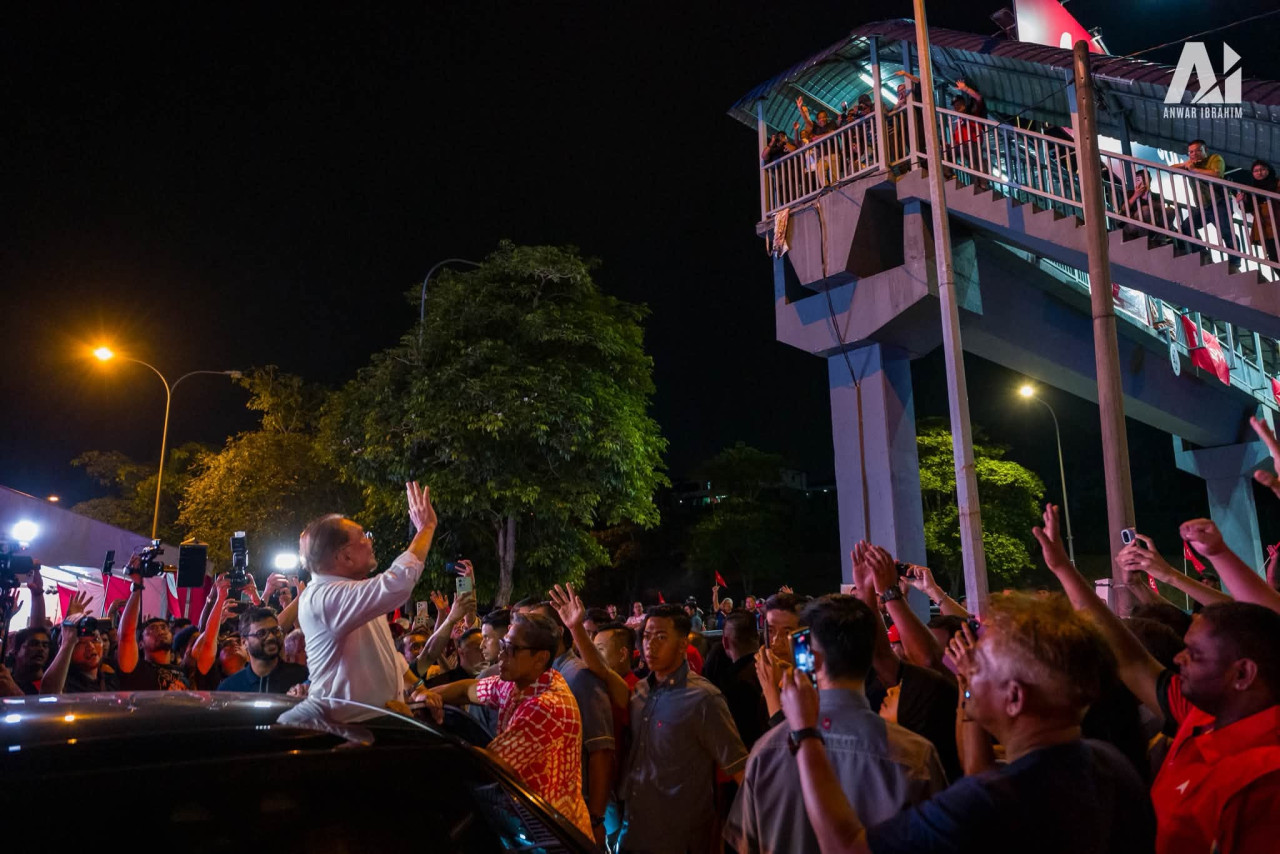
This Unity Government is exactly that—a unity government.
It is made up of political parties that would never naturally choose one another.
We did not give any single party an overwhelming mandate.
So let us stop acting surprised that governing is so complex and requires compromise.
That is democracy.
The state of Negeri Sembilan has long represented something precious.
It is one of Malaysia’s finest examples of genuine multicultural harmony.
Not tolerance. Acceptance. There is a profound difference.
Tolerance says, “I will put up with you.”
Acceptance says, “You belong.”
That is the Malaysia worth defending.
Keep the gates strong. Do not allow the barbarians to enter
Push them back, further away—not with hatred, but with ballots.
To DAP, stop behaving as though you are still in opposition. You are not.
You have governed at both the federal and state levels for years.
Leadership demands more than criticism.
It demands empathy. Discretion. Humility. And responsibility.
To my fellow Indians, stop believing that only Indian parties can represent Indian interests.
Our future lies in producing Malaysian leaders, not merely Indian politicians.
When we fight for every struggling Malaysian, we strengthen ourselves in the process.
And to my Malay brothers and sisters, let me say this with respect and sincerity.
You are not victims. You are not under siege.
The overwhelming majority of Chinese and Indians cannot replace you or diminish your place.
They seek only what you seek: security, dignity, opportunity and a better future for their children.
Our futures rise or fall together.
If Malaysia succeeds, every community succeeds. If Malaysia fails, no community escapes the consequences.
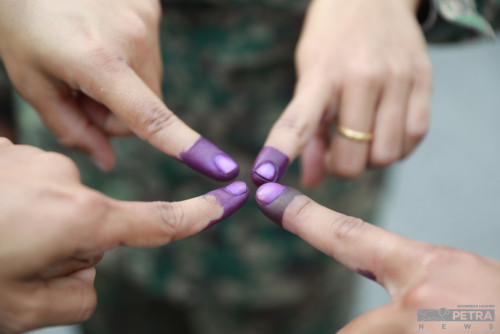
This weekend, vote not with anger. Vote with wisdom. Not for race. Not for religion. Not for slogans.
Vote for the Malaysia your children deserve.
Play chess. Not checkers. - July 30, 2026
Datuk Dr Vinod Sekhar is the publisher of The Vibes and Chairman of the Petra Group