By Murray Hunter
FOR several years, it has been long suspected that Thai Southern insurgents have used Malaysia along the border areas in the Narathiwat/Kelantan region.
There are beliefs that the Barisan Revolusi Nasional (BRN) insurgents have used Malaysia as a safe haven for over two decades.
Even the police Special Branch has come up empty on the issue.
A major problem in identifying these insurgents is that most of them hold dual citizenship, which is illegal in Malaysia.
This is concealed where parents apply for documents on both sides of the border without disclosing that they have applied for birth documents on the other side.
One of the major reasons this issue is rarely brought up is that discussion of the matter is potentially damaging to the good-neighbourly relationship that Malaysian and Thai authorities have developed over the years.
Thai authorities don’t undertake hot pursuits across the border, allowing insurgents to escape.
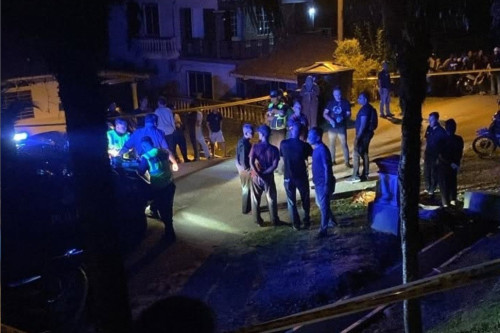
In Sungai Kolok, small IEDs have been triggered off from the Malaysian side of the border in Rantau Panjung, allowing culprits to escape detection by Thai security forces.
However, the Thai National Security Council secretary-general, Chatchai Bangchuad, has now publicly brought up this issue.
The 4th Army chief of staff, Chaiyapruek Dungprapt, has been even more forthright after last Wednesday’s insurgency attack in the Rangae district in Narathiwat, which killed five paramilitary rangers.
These latest attacks have created much shock among residents of the Deep South.
The Royal Thai Army now wants to pursue perpetrators of such violence across borders.
However, the defence minister, Lt Gen Adul Boonthamcharoen, is playing down the matter diplomatically.
The Anutin Charnvirakul administration is much more concerned about keeping good relations with Malaysia.
Violence within the deep south, which consists of Pattani, Yala, and Narathiwat, has increased over the last nine months for unknown reasons.
Malaysia has been facilitating peace talks between the Thai government and the umbrella organisation MARA Patani, which is supposed to be representing the rebels. After all the years in negotiations, a full terms-of-reference (TOR) for any really constructive peace talks has not yet been achieved.
The authorities in Thailand see the insurgents as criminals whom they want to bring to justice.
Successive governments have been reluctant to label the insurgent groups in the Deep South as "terrorists", even though many of their violent acts, including roadside bombings targeting officials, civilians and public property, qualify as acts of terrorism.
This is still a great debate about how the insurgency within the Deep South should be handled.
Regular changes of the Thai government over the last few years have not assisted. On the insurgents’ side, on the ground, there has been a generational change in the activists involved.
Their agendas may not match those of the current BRN leadership.
The 4th Army, directly involved with the security in the deep south, has also changed its approach many times.
It’s now questionable how much MARA Patani actually represents those involved on the ground.
These issues greatly hinder any progress in discussions.
Another issue, is that the Patani-Muslims themselves have a completely different set of ideas, and are not part of any talks.
After two decades of active conflict, more than 7,800 people, mostly civilians, have died in the insurgency.
The Thai authorities are looking towards Malaysia to assist more in this matter, as the insurgency just continues unabated. – July 28, 2026