THE Government has been urged to take a more active diplomatic role in addressing the escalating conflict in West Asia following continued hostilities involving the United States, Israel and Iran, with proposals for the country to help spearhead a broader international mediation effort.
Dr Maszlee Malik, who chairs the International Relations Bureau of PKR, said Malaysia should collaborate with South Africa and Brazil to form a joint mediation initiative grounded in neutrality and a commitment to ending violence through dialogue and adherence to international law.
He said Malaysia should issue a joint proposal with the two countries to act as intermediaries in peace negotiations, emphasising impartiality and the urgency of returning all parties to the negotiating table.
The former education minister, in a statement, said the proposed coalition would not rely on force but on credibility and sustained diplomatic engagement.
“This alliance will not depend on military strength. It will rely on credibility, perseverance and moral authority,” he said.
Maszlee outlined a three-pronged approach, beginning with the establishment of the mediation coalition linking Malaysia, South Africa and Brazil, which he said would represent regions across Southeast Asia, Africa and Latin America with a shared commitment to peaceful dispute resolution.
He also called for an emergency session of the Organisation of Islamic Cooperation to activate a collective framework centred on dialogue, peace and negotiation, as well as parallel engagements involving civil society groups, religious leaders and intellectuals from Iran, Gulf states and the wider Muslim world to help rebuild trust strained by ongoing hostilities.
“Furthermore, Malaysia should also organise parallel dialogue involving civil society organisations, religious leaders and intellectual figures from Iran, Gulf countries and the wider Muslim world in order to rebuild trust and mutual respect among all parties that has been eroded by war,” he said.
Maszlee said Malaysia is well placed to act as a mediator due to its geographical distance from the conflict, its tradition of neutrality and its lack of direct political involvement, factors he argued enhance its credibility as a facilitator.
“With the mediation expertise of Malaysia together with South Africa and Brazil representing Southeast Asia, Africa and Latin America, there is shared alignment and credibility in their commitment to upholding international law, remaining non-partisan and prioritising the peaceful resolution of disputes,” he said.
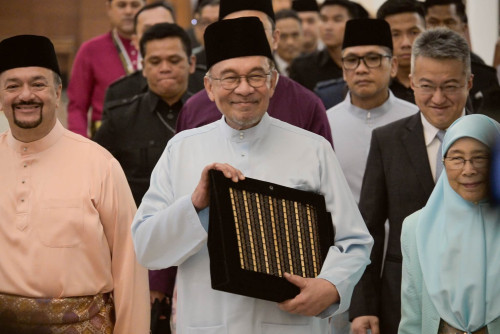
He also cited the “dialogue of civilisations” framework promoted by Prime Minister Datuk Seri Anwar Ibrahim as a possible ethical basis for bridging geopolitical and sectarian divides.
Maszlee described recent military actions by the United States and Israel as violations of international law under Article 2(4) of the United Nations Charter, while affirming Iran’s right to self-defence under Article 51.
“Denying this right means exposing every small and medium-sized country, including Malaysia, to the interests of oppressive great powers,” he said.
He further noted that Gulf Cooperation Council countries have been indirectly affected by the conflict due to the presence of foreign military installations on their soil, which may render parts of the region potential targets despite their non-involvement.
“This war must be stopped. Innocent lives cannot be allowed to continue being lost,” he said, urging an immediate return to diplomatic negotiations.
“This war must be stopped. The lives of innocent people must not be allowed to continue being lost,” he said, calling for an immediate end to hostilities and a renewed commitment to diplomacy.
He concluded that Malaysia should step forward as a voice for peace, emphasising sovereignty, justice and the dignity of all nations, rather than remaining a passive observer in an increasingly volatile regional crisis. - March 23, 2026