MALAYSIA has welcomed the ten-point ceasefire framework agreed between the United States and Iran, emphasising the need for the agreement to be translated into a comprehensive peace accord for the broader West Asia region, including Iraq, Lebanon, and Yemen.
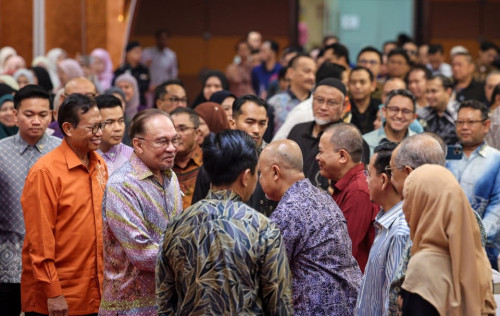
Prime Minister Datuk Seri Anwar Ibrahim said Malaysia is prepared to support and facilitate all efforts to achieve lasting peace and stability in the region following the conflict involving the United States and Iran under the proposed ten-point plan.
“The ten-point plan represents a positive development for the restoration of peace and stability, not only for the region but for the world,” Anwar said in a statement.
He added that “peace negotiations will not bear fruit if the proceedings are clouded by deception or pretense. It is vital that this ten-point framework be translated into a comprehensive peace agreement, not only for Iran but also for Iraq, Lebanon, and Yemen.”
The plan, according to news reports, includes guarantees that Iran will no longer be attacked, the permanent cessation of hostilities rather than a temporary truce, an end to Israeli attacks in Lebanon, and the removal of all United States sanctions on Iran.
It also involves halting regional conflicts involving Iran’s allies, conditional on Tehran reopening the Strait of Hormuz, and levying a fee of US$2 million per vessel transiting the strait.
Revenue from the fee would be shared with Oman and allocated for reconstruction, rather than compensation, while Iran would establish safe passage rules for ships navigating the strait.
Anwar called on the international community to ensure unrestricted humanitarian access for civilians affected by the conflict and to safeguard the rights of Palestinians, particularly in Gaza.
“Let this be a turning point towards lasting peace. The world can no longer afford anything other than peace,” he said.
He also expressed appreciation for Pakistan’s role in brokering the agreement, praising Prime Minister Shehbaz Sharif and Army Chief Asim Munir for their steadfast and courageous diplomacy.
“Pakistan’s willingness to engage with all parties, without fear or bias, reflects the highest tradition of Muslim solidarity and international responsibility,” Anwar said.
In a separate statement, Bernama cited Malaysia’s Foreign Ministry strongly condemning the provocative entry by an Israeli minister into the Al-Aqsa Mosque compound in East Jerusalem on 7 April.
The ministry described the act, carried out while the site was closed to Muslim worshippers, as a “blatant violation of international law, UN resolutions, and the sanctity of Islam’s third holiest site.”
“Such reckless actions undermine regional peace and stability, and trample upon the religious rights of Muslims worldwide,” the ministry said, emphasising that “the protection and respect of Al-Aqsa and other holy sites in Jerusalem is a non-negotiable obligation under international law.”
Wisma Putra urges the international community to condemn Israel’s actions, demand an immediate cessation of aggressive acts, and ensure full respect for the sanctity of holy sites, in accordance with international humanitarian law.
The ministry reaffirmed Malaysia’s steadfast solidarity with the Palestinian people and its commitment to safeguarding their religious, cultural, and national heritage, reiterating support for the establishment of an independent and sovereign State of Palestine based on pre-1967 borders, with East Jerusalem as its capital. - April 8, 2026